Types of Fire Extinguishers Explained: Choosing the Right Fire Extinguisher for Every Fire Class

Types of Fire Extinguishers Explained: Choosing the Right Fire Extinguisher for Every Fire Class
Fire emergencies can occur in virtually any workplace, from construction sites and warehouses to laboratories and manufacturing facilities. Selecting the correct fire extinguisher is critical because using the wrong extinguisher can make a fire worse, increase property damage, or place employees at greater risk.
Understanding the different types of fire extinguishers and the fire classes they are designed to combat is an essential part of every workplace fire safety program. Employers should ensure that suitable extinguishers are installed, regularly inspected, and that employees receive proper training on their safe use.
In this guide, you’ll learn about the various fire extinguisher types, their applications, and how to select the right extinguisher for your workplace.
Why Choosing the Correct Fire Extinguisher Matters
Different fires require different extinguishing agents. For example, water is highly effective on paper fires but extremely dangerous when used on electrical fires or burning cooking oils.
Choosing the appropriate extinguisher helps:
- Protect employees from injury
- Minimize equipment damage
- Reduce downtime after fire incidents
- Meet workplace fire safety regulations
- Improve emergency preparedness
Using the correct extinguisher can often stop a small fire before it develops into a major emergency.
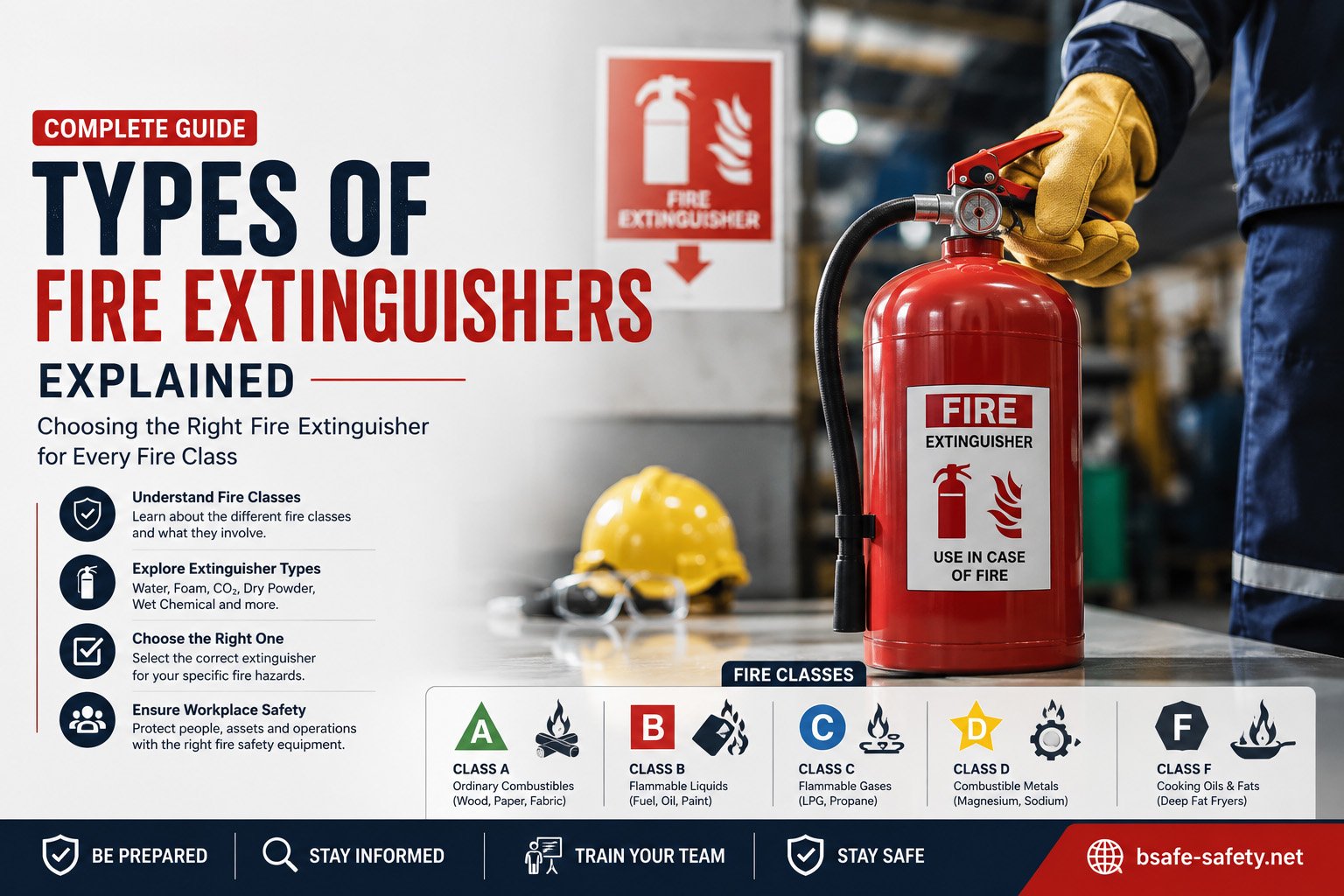
Understanding Fire Classes
Before selecting an extinguisher, it is important to understand the type of fire involved.
Class A Fires
Class A fires involve ordinary combustible materials such as:
- Wood
- Paper
- Cardboard
- Fabric
- Plastics
These are the most common fires found in offices, warehouses, schools, and construction projects.
Class B Fires
These fires involve flammable liquids including:
- Fuel
- Diesel
- Petrol
- Oil
- Paint
- Solvents
- Chemicals
Class B fires are common in workshops, fuel storage facilities, and chemical plants.
Class C Fires
These involve flammable gases such as:
- Propane
- Butane
- LPG
- Natural gas
Class D Fires
These fires involve combustible metals including:
- Magnesium
- Titanium
- Sodium
- Lithium
These require specialized extinguishing agents.
Class F (or Class K)
Cooking oil and grease fires found in:
- Commercial kitchens
- Restaurants
- Food processing facilities
These fires require wet chemical extinguishers.
Common Types of Fire Extinguishers
Water Fire Extinguishers
Water fire extinguishers are designed primarily for Class A fires involving combustible materials such as wood, paper, textiles, and cardboard.
They work by cooling the burning material below its ignition temperature.
Best for:
- Offices
- Schools
- Warehouses
- Construction sites
- Paper storage
Do NOT use on:
- Electrical fires
- Flammable liquids
- Cooking oil fires
Foam Fire Extinguishers
Foam extinguishers create a blanket over burning liquids, cutting off oxygen while also cooling the fire.
Suitable for:
- Class A Fires
- Class B Fires
Common applications include:
- Fuel storage
- Workshops
- Garages
- Industrial facilities
CO₂ Fire Extinguishers
Carbon Dioxide (CO₂) extinguishers remove oxygen around the fire and leave no residue after discharge.
They are widely used around electrical equipment because they do not damage sensitive electronics.
Ideal for:
- Electrical panels
- Server rooms
- Laboratories
- Offices
- Data centers
Not recommended for:
- Outdoor environments with strong winds
- Deep-seated Class A fires
Dry Powder Fire Extinguishers
Dry Powder extinguishers are among the most versatile fire extinguishers available.
They are effective against:
- Class A
- Class B
- Class C
- Electrical Fires
Industries using dry powder extinguishers include:
- Oil & Gas
- Chemical plants
- Warehouses
- Construction projects
- Manufacturing
Although highly effective, powder extinguishers leave significant residue that requires cleanup after use.
Wet Chemical Fire Extinguishers
Wet Chemical extinguishers are specifically developed for commercial kitchens.
They suppress cooking oil fires by creating a cooling soap-like layer over burning oils.
Recommended for:
- Restaurants
- Hotels
- Commercial kitchens
- Food processing facilities
Suitable for:
- Class F Fires
- Small Class A Fires
Clean Agent Fire Extinguishers
Clean Agent extinguishers use non-conductive gases that leave no residue.
These are commonly installed where expensive equipment must be protected.
Examples include:
- Data centers
- Telecommunication rooms
- Museums
- Medical laboratories
- Control rooms
Fire Extinguisher Selection Guide
Selecting the right extinguisher depends on the hazards present in your workplace.
| Fire Hazard | Recommended Extinguisher |
|---|---|
| Paper & Wood | Water |
| Fuel & Solvents | Foam |
| Electrical Equipment | CO₂ |
| Multiple Industrial Hazards | Dry Powder |
| Cooking Oils | Wet Chemical |
| Sensitive Electronics | Clean Agent |
Where Fire Extinguishers Should Be Installed
Fire extinguishers should be strategically placed where employees can access them quickly during an emergency.
Typical installation areas include:
- Building entrances
- Emergency exits
- Warehouses
- Manufacturing areas
- Electrical rooms
- Chemical storage rooms
- Laboratories
- Kitchens
- Loading docks
- Fuel storage locations
The location should always be clearly marked and easily accessible.
Fire Extinguisher Inspection and Maintenance
Installing extinguishers is only the first step.
Routine inspections help ensure they will function properly during an emergency.
Inspection checklist:
- Pressure gauge within operating range
- Safety pin intact
- No corrosion
- No leakage
- Hose undamaged
- Inspection tag updated
- Easily accessible
- Proper mounting height
Annual maintenance should always be performed by qualified personnel according to local regulations.
Common Mistakes When Using Fire Extinguishers
Many workplace injuries occur because employees use extinguishers incorrectly.
Avoid these common mistakes:
- Using water on electrical fires
- Using the wrong extinguisher type
- Standing too close to the flames
- Ignoring evacuation procedures
- Attempting to fight large fires
- Failing to inspect extinguishers regularly
Employee fire safety training significantly reduces these risks.
Fire Safety Best Practices for Every Workplace
Fire prevention is always more effective than fire suppression. Every workplace should implement a comprehensive fire safety program that combines proper equipment, employee training, and regular inspections.
A strong fire safety strategy should include:
- Installing the correct types of fire extinguishers
- Performing regular equipment inspections
- Conducting employee fire safety training
- Maintaining clear emergency exits
- Installing fire alarms and emergency lighting
- Proper storage of flammable materials
- Routine fire drills
- Compliance with local fire safety regulations
Combining appropriate fire extinguishers with proper Personal Protective Equipment (PPE) and emergency response planning significantly reduces workplace risks.
Conclusion
Choosing the correct types of fire extinguishers is one of the most important aspects of workplace fire safety. Since different fire hazards require different extinguishing agents, understanding fire classes and extinguisher capabilities helps protect employees, minimize property damage, and ensure regulatory compliance.
Whether your facility handles combustible materials, flammable liquids, electrical equipment, or hazardous chemicals, selecting the proper fire extinguisher is essential for maintaining a safe working environment. Regular inspections, employee training, and routine maintenance further strengthen your organization’s fire prevention strategy.
Frequently Asked Questions (FAQ)
What are the main types of fire extinguishers?
The most common fire extinguisher types include Water, Foam, CO₂, Dry Powder, Wet Chemical, and Clean Agent extinguishers.
Which fire extinguisher is best for electrical fires?
CO₂ fire extinguishers are commonly recommended because they leave no residue and do not conduct electricity.
Can water extinguishers be used on electrical fires?
No. Water conducts electricity and may cause serious injury when used on energized electrical equipment.
What fire extinguisher should be used for flammable liquid fires?
Foam and Dry Powder extinguishers are commonly used for Class B fires involving fuels, oils, solvents, and other flammable liquids.
How often should fire extinguishers be inspected?
Visual inspections should be performed regularly, while annual maintenance should be carried out by qualified personnel in accordance with local fire safety regulations.
Where should fire extinguishers be installed?
They should be installed in easily accessible locations near potential fire hazards, emergency exits, warehouses, production areas, laboratories, kitchens, and electrical rooms.
Are all fire extinguishers suitable for every fire?
No. Each extinguisher is designed for specific fire classes. Using the wrong extinguisher can increase the danger and worsen the fire.
Reference: National Fire Protection Association (NFPA) – NFPA 10: Standard for Portable Fire Extinguishers