Complete Guide to First Aid Kits: Types, Contents, and Workplace Requirements

Complete Guide to First Aid Kits: Types, Contents, and Workplace Requirements
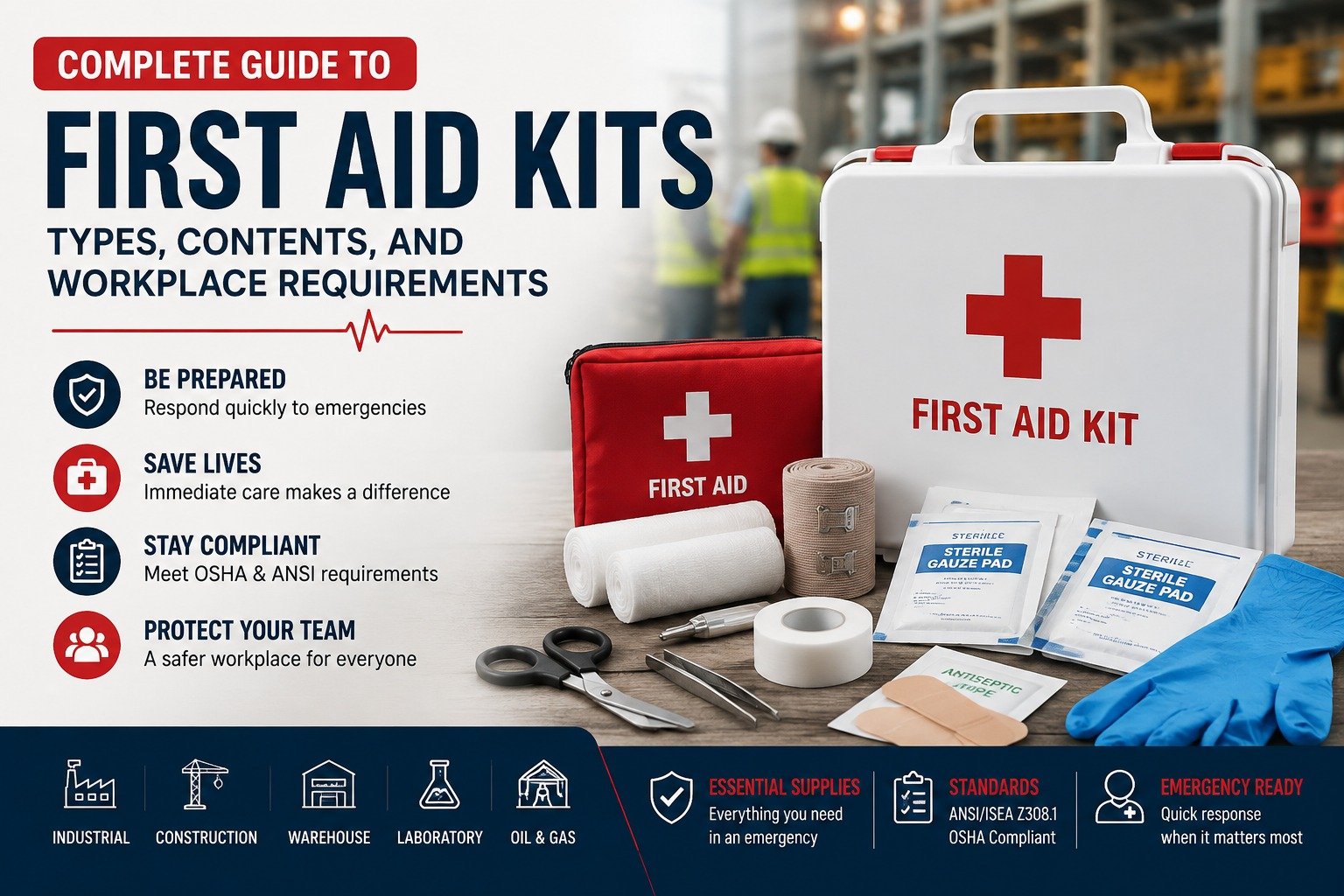
A workplace first aid kit is one of the most important safety resources in any industrial facility.
Accidents can happen in any workplace, regardless of the industry. Whether it is a construction site, manufacturing plant, warehouse, laboratory, or office, having a properly equipped First Aid Kit allows immediate response before professional medical assistance arrives.
 A well-stocked first aid kit helps reduce the severity of injuries, minimizes downtime, and supports compliance with workplace safety regulations such as OSHA and ANSI recommendations.
In this guide, we’ll explain everything you need to know about workplace first aid kits, including their importance, essential contents, applicable standards, and how to choose the right kit for your business.
Why Every Workplace Needs a First Aid Kit
Providing immediate medical assistance is one of the most important responsibilities of employers.
A properly maintained first aid kit can help:
- Treat minor injuries immediately
- Reduce infection risks
- Stabilize injured workers
- Improve workplace safety
- Meet OSHA safety recommendations
- Reduce accident severity
- Support emergency response plans
Industries that commonly require first aid kits include:
- Construction
- Manufacturing
- Warehouses
- Oil & Gas
- Chemical Plants
- Laboratories
- Schools
- Healthcare
- Logistics
- Commercial Offices
What Should a Workplace First Aid Kit Contain?
Although contents vary depending on workplace risks, a standard industrial first aid kit typically includes:
- Adhesive bandages
- Sterile gauze pads
- Elastic bandages
- Medical tape
- Antiseptic wipes
- Burn treatment gel
- Eye pads
- Scissors
- Tweezers
- Disposable gloves
- CPR face shield
- Instant cold packs
- Triangular bandage
- Emergency blanket
- First aid manual
Larger workplaces often require additional supplies based on the number of employees and potential hazards.
Choosing the Right First Aid Kit
Not every workplace requires the same first aid equipment.
Consider the following factors:
Number of Employees
Small offices may only require compact kits, while factories often need larger kits designed for dozens of workers.
Workplace Hazards
High-risk industries usually require additional medical supplies for burns, cuts, chemical exposure, or crush injuries.
Accessibility
First aid kits should always be easy to locate and clearly identified with appropriate safety signage.
Compliance
Choose kits that comply with recognized standards such as ANSI/ISEA recommendations and OSHA workplace safety guidelines.
Types of First Aid Kits
Several types of first aid kits are available depending on the application.
Workplace First Aid Kits
Designed for factories, warehouses, offices, and construction sites.
Portable First Aid Kits
Compact kits suitable for vehicles, field workers, and mobile teams.
Industrial First Aid Kits
Contain larger quantities of medical supplies for high-risk workplaces.
Emergency Response Kits
Include additional trauma supplies for more serious incidents.
First Aid Kits and Workplace Safety Compliance
Many workplace safety regulations require employers to provide suitable first aid supplies.
Employers should:
- Inspect kits regularly
- Replace expired items
- Restock used supplies
- Keep kits easily accessible
- Train employees in basic first aid procedures
Maintaining properly stocked kits is an important part of an overall workplace emergency response program.
First Aid Kits Available at BSAFE
BSAFE offers reliable workplace first aid solutions suitable for industrial and commercial environments.
Recommended products include:
These kits provide essential medical supplies for treating common workplace injuries while supporting emergency preparedness.
Additional Emergency Equipment
A complete emergency response plan should include more than first aid kits.
Depending on workplace risks, additional equipment may include:
- Emergency Eyewash Stations
- Rescue Stretchers
- Safety Gloves
- Protective Clothing
- Safety Helmets
- Chemical Spill Kits
- Fire Safety Equipment
Combining these products helps create a safer workplace for employees and visitors.
Best Practices for Maintaining First Aid Kits
To ensure readiness:
- Inspect kits monthly
- Replace expired medical supplies
- Restock immediately after use
- Store kits in visible locations
- Train employees regularly
- Keep emergency contact numbers nearby
Routine inspections help ensure the kit remains effective during emergencies.
Conclusion
A properly maintained First Aid Kit is one of the most important components of any workplace safety program. From treating minor injuries to supporting emergency response procedures, first aid kits help protect employees while contributing to regulatory compliance and improved workplace preparedness.
Choosing the right kit based on workplace hazards, employee numbers, and applicable safety standards ensures organizations are prepared when emergencies occur.
FAQ
What is a workplace First Aid Kit?
A workplace first aid kit contains essential medical supplies used to provide immediate treatment for common injuries before professional medical help arrives.
How often should a First Aid Kit be inspected?
Most workplaces should inspect first aid kits at least once a month and replace expired or used items immediately.
What is the difference between a 25-person and a 50-person First Aid Kit?
The main difference is the quantity of medical supplies provided, making larger kits suitable for workplaces with more employees.
Does OSHA require First Aid Kits?
OSHA requires employers to provide adequate first aid supplies that match workplace hazards and employee needs.
Where should First Aid Kits be located?
They should be placed in visible, easily accessible locations throughout the workplace.
Reference: For official workplace first aid regulations and employer requirements, please visit the OSHA Medical and First Aid Standard (29 CFR 1910.151).