Safety Gloves Guide: How to Choose the Right Protective Gloves for Every Industry

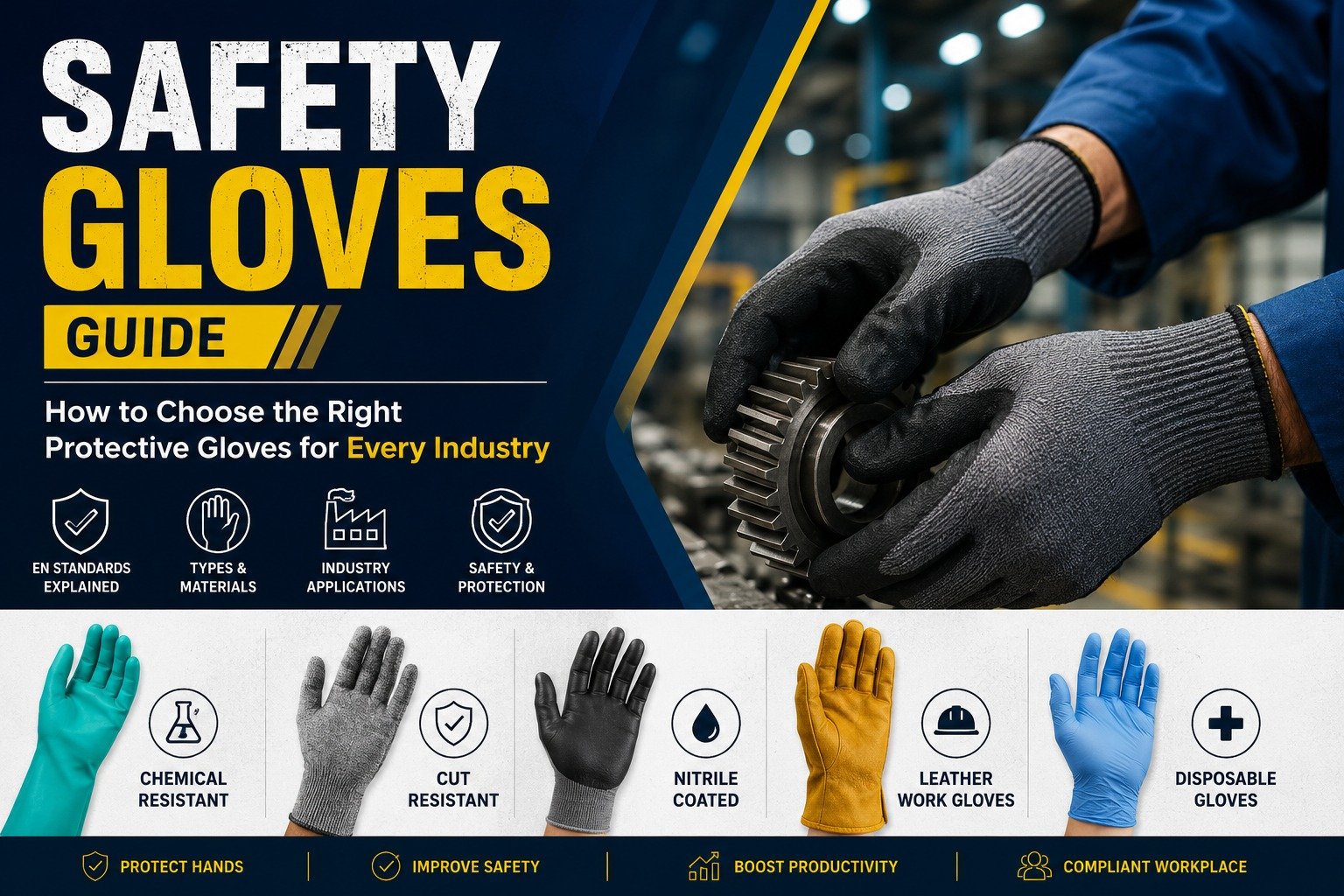
Safety Gloves Guide: How to Choose the Right Protective Gloves for Every Industry
Hands are among the most vulnerable parts of the body in industrial workplaces. Every day, workers face hazards such as sharp objects, chemicals, heat, cold, oils, electrical risks, and mechanical impacts. Choosing the correct Safety Gloves is one of the most effective ways to prevent workplace injuries while improving productivity and comfort.

Modern industrial gloves are designed for specific hazards rather than offering universal protection. From chemical-resistant nitrile gloves to cut-resistant gloves for metal fabrication, every task requires a glove engineered for the job.
This guide explains the different types of industrial safety gloves, their applications, international standards, and how to choose the right glove for your workplace.
Why Are Safety Gloves Important?
Proper hand protection helps reduce workplace injuries and improves worker confidence during daily operations.
Benefits include:
- Protection against cuts and abrasions
- Chemical resistance
- Improved grip in wet or oily conditions
- Protection against extreme temperatures
- Reduced hand fatigue
- Better compliance with workplace safety regulations
- Increased productivity
Safety gloves are an essential part of every Personal Protective Equipment (PPE) program across construction, manufacturing, laboratories, oil & gas, food processing, and maintenance industries.
Types of Safety Gloves
Industrial gloves are classified according to the hazards they are designed to protect against.
1. Chemical Resistant Gloves
Chemical-resistant gloves protect workers from hazardous liquids, acids, solvents, oils, and industrial chemicals.
These gloves are commonly manufactured from:
- Nitrile
- Neoprene
- PVC
- Butyl
- Natural Rubber
Industries include:
- Chemical plants
- Laboratories
- Pharmaceutical production
- Food processing
- Maintenance
2. Cut Resistant Gloves
Workers handling sheet metal, glass, or sharp machinery require gloves specifically designed to resist cuts.
Modern cut-resistant gloves use advanced fibers such as:
- HPPE
- Kevlar
- Steel fiber blends
Common applications:
- Automotive
- Aerospace
- Metal fabrication
- Glass manufacturing
- Machinery assembly
3. Nitrile Coated Work Gloves
Nitrile-coated gloves provide excellent grip and abrasion resistance, particularly when working with oily components.
Advantages include:
- Better grip
- Oil resistance
- Longer service life
- Excellent dexterity
Suitable for:
- Warehouses
- Automotive
- Logistics
- Manufacturing
4. Leather Work Gloves
Leather gloves remain one of the most popular choices for heavy-duty applications.
They provide:
- Excellent durability
- Abrasion resistance
- Comfort
- Reliable grip
Ideal for:
- Construction
- Agriculture
- Civil engineering
- Heavy maintenance
5. Disposable Nitrile Gloves
Disposable nitrile gloves are designed for hygiene-sensitive environments where contamination control is essential.
Typical industries include:
- Laboratories
- Pharmaceutical manufacturing
- Food processing
- Medical environments
- Chemical sampling
How to Choose the Right Safety Gloves
Selecting the right industrial gloves depends on understanding the hazards involved in the job. Choosing gloves based only on comfort or appearance can expose workers to serious injuries.
When selecting safety gloves, consider the following factors:
Hazard Type
Identify the primary workplace hazard:
- Mechanical hazards
- Sharp objects
- Chemicals
- Heat
- Cold environments
- Oils and grease
- Biological contaminants
Each hazard requires a different glove material and certification.
Glove Material
Different materials provide different levels of protection.
| Material | Best For |
|---|---|
| Nitrile | Chemicals, oils, solvents |
| Latex | General industrial work |
| Polyurethane (PU) | Precision assembly |
| Leather | Construction and heavy-duty work |
| HPPE | Cut resistance |
| PVC | Chemical splash protection |
Grip Requirements
Workers handling slippery or oily materials should use textured or foam-coated gloves for improved grip and better control.
For dry environments, lightweight PU-coated gloves often provide excellent dexterity.
Dexterity
Assembly work often requires precision.
Thin coated gloves allow workers to:
- Handle small components
- Improve productivity
- Reduce hand fatigue
Comfort
Workers wear gloves for several hours every day.
Comfort features include:
- Breathable liners
- Flexible coatings
- Lightweight construction
- Ergonomic fit
Better comfort usually means higher compliance with PPE requirements.
Understanding Safety Glove Standards
International safety standards help users choose gloves with verified protection levels.
EN 388 – Mechanical Protection
EN 388 measures protection against:
- Abrasion
- Blade cut
- Tear resistance
- Puncture resistance
- Impact (where applicable)
Workers in construction, logistics, manufacturing, and metal fabrication should always look for EN 388 certified gloves.
EN ISO 374 – Chemical Protection
Chemical-resistant gloves should comply with EN ISO 374.
This standard evaluates protection against:
- Acids
- Solvents
- Chemicals
- Micro-organisms
It helps users select gloves suitable for hazardous chemical environments.
EN 407 – Heat Protection
Gloves certified under EN 407 provide protection against:
- Contact heat
- Convective heat
- Radiant heat
- Molten metal splashes
These gloves are commonly used in welding and foundries.
EN 511 – Cold Protection
For cold storage, outdoor work, and winter operations, EN 511 certified gloves provide protection against:
- Cold air
- Contact cold
- Water penetration
Choosing Gloves for Different Industries
Different industries require specialized hand protection.
Construction
Construction workers often require gloves resistant to:
- Abrasion
- Cuts
- Punctures
Recommended glove types include leather gloves, nitrile-coated gloves, and cut-resistant gloves.
Chemical Industry
Chemical plants require gloves resistant to aggressive chemicals.
Recommended options include:
- Nitrile gloves
- Chemical-resistant gloves
- Disposable nitrile gloves
Automotive Industry
Automotive workers frequently handle:
- Oils
- Grease
- Sharp parts
- Small components
Foam nitrile gloves and cut-resistant gloves provide an excellent combination of grip and dexterity.
Agriculture
Agricultural workers benefit from gloves resistant to:
- Chemicals
- Fertilizers
- Pesticides
- Abrasion
Warehousing & Logistics
Warehouse workers typically need lightweight gloves that provide:
- Grip
- Comfort
- High dexterity
Common Mistakes When Choosing Safety Gloves
Many workplace injuries occur because workers use the wrong type of glove.
Common mistakes include:
- Using one glove for every application
- Ignoring chemical compatibility
- Choosing oversized gloves
- Wearing damaged gloves
- Reusing disposable gloves
- Selecting gloves without checking safety certifications
- Using worn-out gloves beyond their service life
Proper glove selection significantly improves workplace safety and productivity.
Best Practices for Glove Maintenance
To maximize glove performance and lifespan:
- Inspect gloves before every use.
- Replace damaged or heavily worn gloves immediately.
- Store gloves in a clean, dry location away from direct sunlight.
- Follow the manufacturer’s cleaning and maintenance recommendations.
- Never use chemical-contaminated gloves beyond their intended service life.
- Train employees on proper glove selection and inspection procedures.
Proper maintenance not only extends glove life but also ensures consistent protection for workers.
Frequently Asked Questions (FAQ)
What are safety gloves used for?
Safety gloves protect workers from common workplace hazards such as cuts, abrasions, chemicals, oils, heat, cold, and biological contaminants. They are an essential component of Personal Protective Equipment (PPE) across many industries.
Which gloves are best for chemical handling?
Nitrile chemical-resistant gloves are among the best options for handling hazardous chemicals because they offer excellent resistance to oils, solvents, acids, and many industrial chemicals.
What is the difference between nitrile and leather gloves?
Nitrile gloves are designed primarily for chemical resistance and handling oils or liquids, while leather gloves provide excellent durability, abrasion resistance, and comfort for heavy-duty mechanical work.
Which gloves are suitable for construction workers?
Construction workers commonly use:
- Leather work gloves
- Cut-resistant gloves
- Nitrile-coated gloves
The correct choice depends on the specific hazards of each task.
How often should industrial safety gloves be replaced?
Safety gloves should be replaced immediately if they become:
- Torn
- Punctured
- Chemically contaminated
- Excessively worn
- Unable to provide proper grip or protection
Routine inspection before every use is recommended.
Conclusion
Selecting the right Safety Gloves is essential for reducing workplace injuries and maintaining a safe, productive working environment. Every industry faces different hazards, making it important to choose gloves specifically designed for the task, whether that involves chemical handling, cut protection, cold environments, or general industrial work.
High-quality industrial gloves not only improve worker safety but also enhance comfort, grip, and efficiency throughout the workday. By understanding glove materials, international safety standards, and workplace risks, businesses can build stronger PPE programs and ensure long-term protection for their workforce.
Whether you work in construction, manufacturing, oil & gas, laboratories, agriculture, or logistics, investing in the correct protective gloves is one of the simplest and most effective ways to improve occupational safety.
External References
- OSHA – Personal Protective Equipment
https://www.osha.gov/personal-protective-equipment