Emergency Eyewash Stations: Complete Guide to Workplace Eye Safety

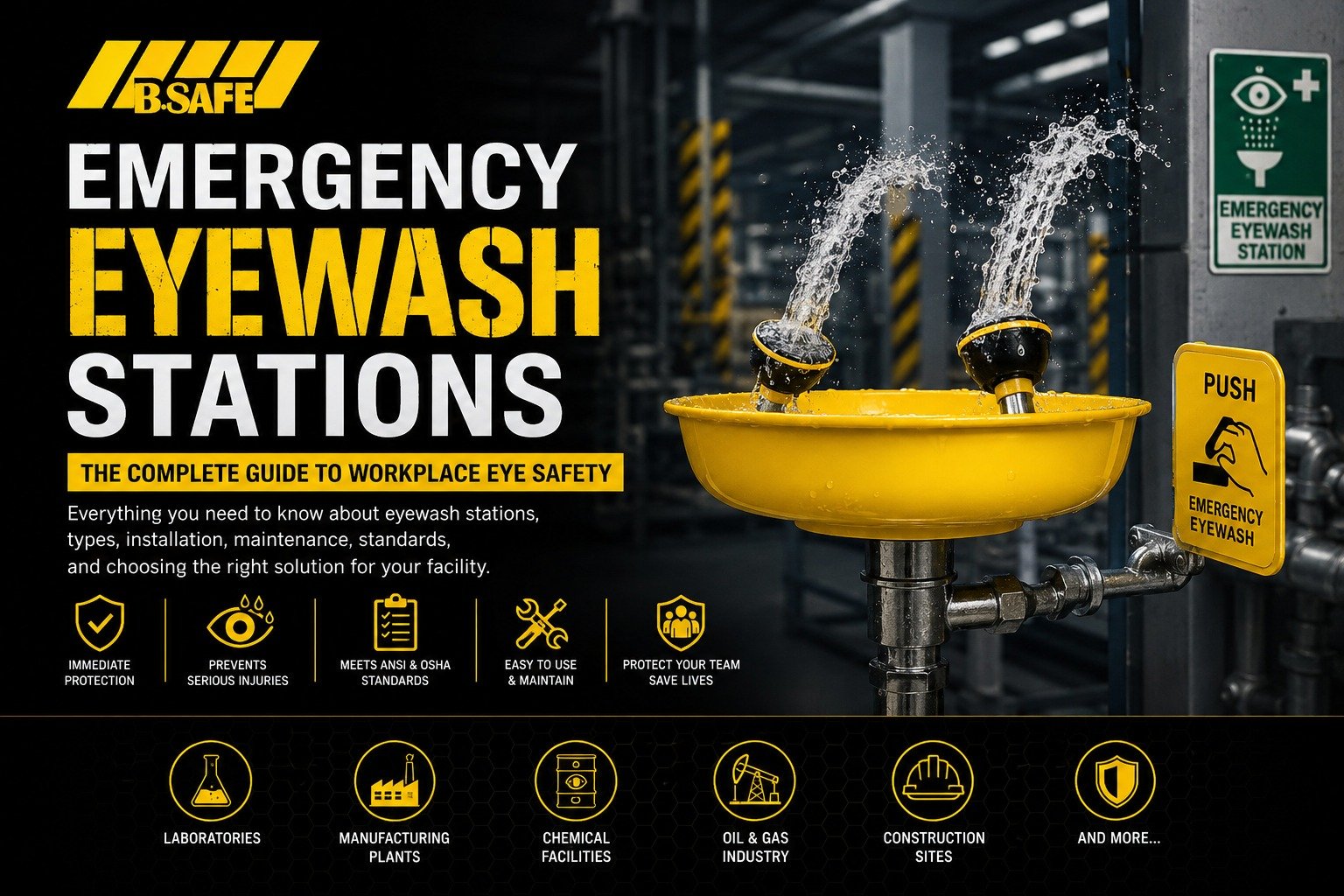
Emergency Eyewash Stations: Complete Guide to Workplace Eye Safety
Every year, thousands of workers suffer eye injuries caused by hazardous chemicals, dust, flying particles, hot liquids, and other workplace contaminants. In many cases, the severity of an eye injury depends on how quickly the affected person can flush the hazardous substance from their eyes.
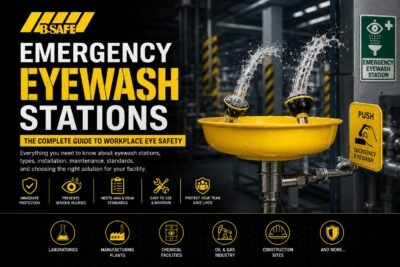 An Emergency Eyewash Station provides immediate first aid by delivering a continuous flow of clean water to rinse harmful materials before permanent damage occurs. Whether installed in laboratories, manufacturing plants, chemical storage facilities, pharmaceutical industries, oil & gas sites, or construction projects, emergency eyewash equipment is considered one of the most important components of workplace safety.
Organizations that handle hazardous chemicals are encouraged to install emergency eyewash stations according to recognized safety standards, ensuring workers can reach the equipment within seconds whenever an emergency occurs.
This guide explains everything you need to know about emergency eyewash stations, including their purpose, types, applications, installation requirements, maintenance procedures, and how to choose the right solution for your facility.
What is an Emergency Eyewash Station?
An Emergency Eyewash Station is a safety device specifically designed to flush hazardous chemicals, dust, smoke, metal particles, biological contaminants, and other dangerous substances from the eyes immediately after exposure.
Unlike ordinary sinks or faucets, emergency eyewash stations deliver a controlled flow of clean water that gently rinses both eyes simultaneously without causing additional injury.
They are widely installed anywhere workers are exposed to hazardous materials, including:
- Chemical laboratories
- Industrial manufacturing facilities
- Pharmaceutical production
- Oil & Gas plants
- Petrochemical industries
- Universities and research laboratories
- Water treatment plants
- Mining operations
- Warehouses handling chemicals
- Battery manufacturing plants
Why Are Emergency Eyewash Stations So Important?
Eye injuries can occur within seconds, especially when employees work with corrosive chemicals or airborne particles.
Without immediate flushing, exposure may result in:
- Chemical burns
- Permanent vision damage
- Corneal injuries
- Eye infections
- Temporary blindness
- Permanent blindness
Installing emergency eyewash equipment significantly reduces injury severity while improving workplace emergency preparedness.
Immediate response is often the difference between full recovery and permanent eye damage.
Common Workplace Hazards That Require Eyewash Stations
Emergency eyewash stations are recommended wherever employees may encounter hazardous substances.
Typical hazards include:
- Acids
- Alkalis
- Solvents
- Laboratory chemicals
- Paints
- Industrial cleaners
- Dust particles
- Metal grinding particles
- Wood dust
- Battery acids
- Welding debris
- Biological contaminants
Industries with chemical processing or laboratory operations should always include emergency eyewash systems within their emergency response plan.
Types of Emergency Eyewash Stations
Different workplaces require different types of emergency equipment depending on the hazards present.
1. Wall Mounted Eyewash Stations
Wall-mounted units are permanently connected to the facility’s water supply and provide immediate eye flushing whenever needed.
Advantages include:
- Space-saving installation
- Continuous water supply
- Easy activation
- Ideal for laboratories
- Low maintenance
2. Pedestal Mounted Eyewash Stations
Pedestal-mounted models are free-standing units commonly installed in industrial facilities where wall mounting is impractical.
Benefits include:
- High stability
- Suitable for large work areas
- Easy accessibility
- Durable stainless steel construction
3. Emergency Shower & Eyewash Combination Units
Some industrial accidents affect not only the eyes but also the face, neck, arms, and entire body.
Combination units provide:
- Full-body emergency shower
- Integrated eyewash
- Simultaneous operation
- Fast chemical decontamination
These systems are commonly installed in chemical plants and laboratories where workers face high chemical exposure risks.
4. Portable Eyewash Stations
Portable eyewash stations are designed for locations without a permanent water supply.
They are commonly used in:
- Construction sites
- Mining operations
- Temporary work areas
- Remote industrial facilities
- Outdoor maintenance projects
Portable units offer flexibility while still providing immediate emergency response.
5. Mobile Self-Contained Emergency Shower & Eyewash
For highly mobile workplaces, self-contained emergency units provide complete protection without requiring plumbing connections.
They are ideal for:
- Oil & Gas fields
- Mobile laboratories
- Remote chemical operations
- Outdoor industrial maintenance
ANSI & OSHA Requirements for Emergency Eyewash Stations
Installing an emergency eyewash station is only part of creating a safe workplace. To ensure employees receive effective emergency treatment, organizations should follow internationally recognized workplace safety standards.
Two of the most widely referenced standards are:
- ANSI/ISEA Z358.1 – Emergency Eyewash and Shower Equipment
- OSHA 29 CFR 1910.151(c) – Medical Services and First Aid
These standards provide guidance on where emergency eyewash stations should be installed, how quickly they must be accessible, and how they should perform during an emergency.
Some of the key recommendations include:
- Equipment should be located within approximately 10 seconds walking distance from the hazard.
- The path to the eyewash station should remain clear and unobstructed.
- Equipment should be installed on the same level as the workplace hazard.
- The station should provide continuous flushing for at least 15 minutes.
- The water should be clean, tepid, and delivered at a gentle pressure suitable for flushing the eyes.
Following these recommendations helps organizations improve emergency preparedness while reducing the severity of workplace injuries.
Where Should Emergency Eyewash Stations Be Installed?
Selecting the correct installation location is just as important as choosing the right equipment.
Emergency eyewash stations should always be installed near areas where hazardous materials are handled regularly.
Typical installation locations include:
- Chemical laboratories
- Pharmaceutical production lines
- Manufacturing plants
- Petrochemical facilities
- Battery charging stations
- Chemical storage rooms
- Paint mixing rooms
- Water treatment plants
- Mining operations
- Research laboratories
- Warehouses storing hazardous materials
Employers should also consider traffic flow, visibility, lighting, and accessibility when selecting installation points.
How to Choose the Right Emergency Eyewash Station
Every workplace presents different hazards, so selecting the correct eyewash solution depends on several factors.
Type of Hazard
Different hazards require different emergency equipment.
For example:
- Chemical splash
- Corrosive liquids
- Dust exposure
- Flying metal particles
- Hot liquids
- Biological contaminants
Facilities with significant chemical risks often require a combination emergency shower and eyewash station.
Water Supply Availability
If a permanent water supply is available, fixed eyewash stations are usually the best option.
However, remote workplaces may require:
- Portable eyewash stations
- Self-contained emergency shower systems
These provide protection without requiring plumbing infrastructure.
Workplace Size
Large industrial facilities often require multiple eyewash stations to ensure workers can reach emergency equipment quickly.
A risk assessment should determine:
- Number of stations
- Installation locations
- Employee travel distance
- Type of emergency equipment required
Environmental Conditions
Outdoor installations should consider:
- High temperatures
- Freezing weather
- Corrosive environments
- Dust exposure
- UV radiation
Selecting corrosion-resistant stainless steel units improves durability and long-term performance.
Emergency Eyewash Station Maintenance
Even the highest-quality emergency eyewash station becomes ineffective if it is not properly maintained.
Routine inspection ensures the equipment functions immediately during emergencies.
Recommended maintenance includes:
Weekly Inspection
Inspect the unit every week to:
- Verify water flow
- Remove stagnant water
- Check spray pattern
- Confirm accessibility
- Inspect activation handles
Monthly Inspection
Perform additional checks including:
- Water pressure
- Corrosion
- Leaks
- Drainage
- Protective covers
- Valve operation
Annual Inspection
A complete annual inspection should verify compliance with workplace safety requirements and manufacturer recommendations.
Many organizations also document inspections as part of their occupational safety management system.
Common Mistakes When Using Emergency Eyewash Stations
Despite having emergency equipment installed, many workplaces still make avoidable mistakes.
Common issues include:
Installing Too Far from the Hazard
Workers should never have to travel long distances after chemical exposure.
Blocking Access
Boxes, pallets, equipment, or machinery should never obstruct access to emergency stations.
Poor Maintenance
Dirty nozzles or blocked water lines may prevent effective flushing.
Inadequate Employee Training
Employees should know:
- Where emergency eyewash stations are located.
- How to activate them.
- How long to continue flushing.
- Who to notify after an incident.
Proper training significantly improves emergency response.
Benefits of Emergency Eyewash Stations
Installing emergency eyewash stations provides several important benefits.
Faster Emergency Response
Immediate flushing reduces chemical contact time and minimizes injury severity.
Improved Employee Protection
Workers gain confidence knowing emergency equipment is always available.
Reduced Workplace Downtime
Fast treatment often reduces recovery time and minimizes operational disruption.
Better Regulatory Compliance
Installing approved emergency eyewash equipment supports compliance with recognized workplace safety standards.
Lower Long-Term Costs
Preventing severe eye injuries helps reduce:
- Medical expenses
- Workers’ compensation claims
- Lost productivity
- Legal risks
Emergency preparedness is both a safety investment and a business investment.
Frequently Asked Questions (FAQ)
How long should an emergency eyewash station be used?
Most workplace safety standards recommend flushing the eyes continuously for at least 15 minutes after exposure to hazardous chemicals or contaminants. For certain highly corrosive chemicals, longer flushing times may be necessary while awaiting medical assistance.
Can a regular sink replace an emergency eyewash station?
No. Regular sinks and faucets are not designed to provide the controlled, continuous flow required to safely flush both eyes simultaneously. Emergency eyewash stations are specifically engineered to deliver gentle water flow that minimizes additional eye injury.
How often should emergency eyewash stations be inspected?
Industry best practices recommend:
- Weekly activation and inspection to verify proper water flow and remove stagnant water.
- Monthly visual inspections for leaks, corrosion, accessibility, and overall condition.
- Annual inspections to verify compliance with applicable workplace safety standards.
Which industries require emergency eyewash stations?
Emergency eyewash stations are commonly required in workplaces where employees may be exposed to hazardous substances, including:
- Chemical manufacturing
- Pharmaceutical facilities
- Oil & Gas plants
- Laboratories
- Mining operations
- Water treatment plants
- Construction sites
- Metal fabrication facilities
- Battery manufacturing plants
What should employees do immediately after a chemical splash?
Employees should:
- Go immediately to the nearest emergency eyewash station.
- Begin flushing both eyes without delay.
- Hold the eyelids open while rinsing.
- Continue flushing for at least 15 minutes.
- Remove contact lenses if possible during flushing.
- Seek immediate medical attention after rinsing.
Related Workplace Safety Equipment
Emergency eyewash stations are only one component of a comprehensive workplace safety program. Depending on workplace hazards, organizations should also consider implementing:
- Emergency safety showers
- Respiratory protection equipment
- Chemical spill response kits
- Personal protective equipment (PPE)
- Fire safety equipment
- First aid stations
Using multiple layers of protection significantly reduces workplace risks and helps organizations maintain a safer working environment.
Learn More About ANSI Emergency Eyewash Standards
Understanding internationally recognized safety standards helps organizations ensure their emergency eyewash equipment is installed, tested, and maintained correctly. The ANSI/ISEA Z358.1 standard provides detailed guidance on installation requirements, water flow performance, inspection procedures, and accessibility recommendations for emergency eyewash and shower equipment.
Final Thoughts
An emergency eyewash station is one of the most important pieces of safety equipment in any workplace where hazardous chemicals, airborne particles, or other eye hazards are present. Immediate access to properly maintained eyewash equipment can significantly reduce the severity of eye injuries and, in many cases, help prevent permanent vision loss.
Selecting the right eyewash station involves evaluating workplace hazards, choosing the appropriate equipment type, ensuring proper installation, and performing regular inspections and maintenance. Employee training is equally important, as workers must know where emergency equipment is located and how to use it correctly during an emergency.
By following internationally recognized safety standards and incorporating emergency eyewash stations into a comprehensive occupational safety program, organizations can improve regulatory compliance, protect their workforce, minimize downtime, and create a safer working environment for everyone.