Portwest Safety Boots: Types, Features and How to Choose

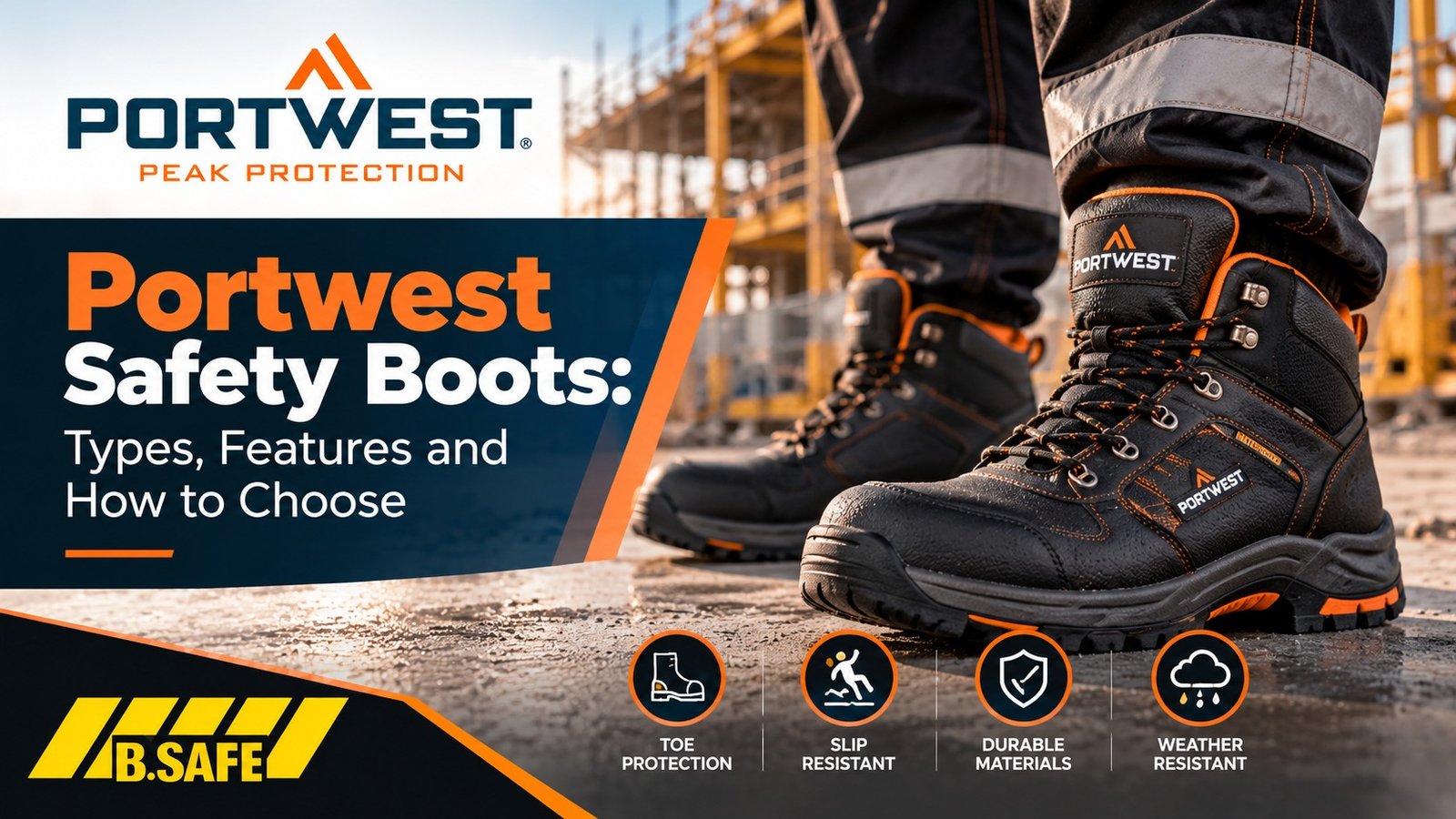
Portwest Safety Boots: Types, Features and How to Choose
Choosing the right safety boots is essential for protecting workers against workplace hazards while maintaining comfort throughout the working day. In construction, manufacturing, warehouses, and outdoor industrial environments, footwear should be selected according to the risks workers face rather than appearance alone.
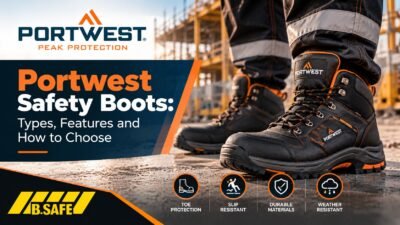 Portwest safety boots offer options for businesses looking for protective work footwear for different working conditions. At B.SAFE, you can explore Portwest footwear options, including the FW23 Steel Action Leather Mid Boot S3 SRC and FW95 Safety Wellington Boots S5.
This guide explains the key features to consider when choosing industrial safety boots, the differences between common footwear types, and how to identify an option that suits your workplace.
Why Are Safety Boots Important?
Ordinary footwear may not provide the protection required in industrial environments. Depending on the task, workers may face falling objects, sharp materials, slippery floors, wet conditions, or other hazards.
Suitable safety footwear can help address specific risks when its protective features match the workplace requirements.
When evaluating safety boots, consider:
- Toe protection against impact and compression.
- Midsole protection against penetration from sharp objects.
- Slip resistance appropriate to the working surface.
- Water resistance or waterproof construction where needed.
- Resistance to oils, fuels, or specific substances when documented by the manufacturer.
- Fit, support, and comfort for the expected duration of use.
Not every safety boot includes all these features. Always check the specifications and certification of the exact model before purchasing.
Understanding Safety Boot Ratings
Safety footwear classifications help buyers compare protective features, but the correct choice depends on the applicable standard and the product’s verified specifications.
What Are S3 Safety Boots?
S3 is a classification under EN ISO 20345 editions that use this designation. It generally includes toe protection and additional requirements relating to features such as penetration resistance, water penetration or absorption of the upper, and outsole performance.
The exact requirements depend on the standard edition and any additional markings on the footwear. Check the product label and technical documentation instead of relying on the rating alone.
For workplaces where workers need protective leather footwear, the Portwest FW23 boot is one option to investigate.
What Are S5 Safety Wellington Boots?
S5 is a classification associated with certain types of safety footwear, particularly waterproof boots. Under the relevant EN ISO 20345 classification, S5 footwear includes toe protection, penetration-resistant construction, and other required properties.
Wellington-style safety boots can be useful in wet or dirty working conditions where their materials and documented chemical resistance are appropriate.
For example, the Portwest FW95 Safety Wellington Boots S5 listed by B.SAFE have a PVC/Nitrile construction, a steel toe cap, and a steel midsole according to the product listing.
Remember that a footwear classification does not mean the boot is suitable for every chemical, surface, or workplace hazard. Verify the product’s documented limitations before use.
Portwest Safety Boots Available at B.SAFE
When comparing Portwest safety footwear, start by matching the product’s features to the work environment.
1. FW23 Steel Action Leather Mid Boot S3 SRC
The Portwest FW23 Steel Action Leather Mid Boot S3 SRC is a leather mid-cut safety boot listed in the B.SAFE Portwest range.
Its product designation identifies it as S3 SRC footwear. Before choosing it, review the current product documentation to confirm the applicable standard edition, construction, protective components, and suitability for your workplace.
This type of boot may be worth considering when evaluating protective footwear for general industrial or site work, provided the product’s documented features meet the identified risks.
Explore the model: Visit the Portwest product range at B.SAFE and look for FW23 – Steel Action Leather Mid Boot S3 SRC Black.
2. FW95 Safety Wellington Boots S5
The Portwest FW95 Safety Wellington Boots S5 are designed for work environments where waterproof safety footwear is required.
According to the B.SAFE product listing, the boots include:
- S5 safety classification.
- Steel toe cap.
- Steel midsole.
- PVC/Nitrile construction.
- Waterproof design.
- Outsole designed to resist oil and fuel.
- Anti-static properties.
Review the product documentation for full details, including the limits of its resistance to workplace substances and the applicable certification.
Wellington boots may be appropriate for certain wet, outdoor, agricultural, utility, and industrial environments. However, they should only be used where their documented protection matches the hazards and working conditions.
How to Choose the Right Portwest Safety Boots
Selecting safety footwear should be part of a workplace risk assessment. Use the following steps to narrow down suitable options.
Step 1: Identify the Main Workplace Hazards
Start by identifying the risks workers encounter during their tasks.
For example:
- Falling objects may require suitable toe protection.
- Sharp materials on the ground may require penetration-resistant construction.
- Wet environments may require waterproof footwear.
- Slippery floors may require an outsole suited to the surface and contaminants.
- Contact with oils, fuels, or chemicals requires verified compatibility with the specific substance.
One boot should not be assumed to address every risk. Evaluate the complete list of hazards before deciding.
Step 2: Choose the Appropriate Footwear Type
Leather safety boots and Wellington safety boots serve different practical needs.
Leather boots may be suitable for many general industrial and construction tasks, depending on their specifications. Wellington boots may be preferable when waterproof coverage and easy cleaning are priorities.
Consider the conditions workers face throughout the shift, including whether they move between indoor and outdoor areas.
Step 3: Verify the Safety Standard
Check the manufacturer’s documentation, footwear markings, and applicable safety standards.
Do not rely only on product names, online descriptions, or general claims. Confirm the precise protective properties required by your workplace and whether the selected model meets them.
Step 4: Evaluate Fit and Comfort
Safety footwear should fit securely without creating excessive pressure or restricting movement.
When comparing sizes and designs, consider:
- Toe-box space.
- Heel stability.
- Foot width.
- Weight and flexibility.
- Socks and any approved insoles.
- The length of the working shift.
Workers should follow the manufacturer’s fitting guidance and report discomfort that affects safe movement.
Step 5: Consider the Working Surface
The right outsole depends on the floor, contamination, and work activity. A surface covered with water, oil, mud, or loose materials can present different slip hazards.
Check the footwear’s documented slip-related performance and assess whether it is appropriate for the actual surface. No outsole eliminates every risk of slipping.
Step 6: Plan Inspection and Replacement
Inspect safety boots regularly for damaged uppers, worn outsoles, compromised toe areas, damaged penetration-resistant components, or other defects.
Follow the manufacturer’s care instructions and replace footwear when its protective condition is no longer reliable.
Safety Boots for Different Industries
Different industries have different footwear requirements. The examples below can help guide the selection process, but the final choice must follow the workplace risk assessment.
Construction and General Site Work
Construction workers may face falling materials, uneven surfaces, sharp debris, and changing weather conditions. Protective boots should provide the features required by the site’s risk assessment.
Warehousing and Manufacturing
Workers may encounter moving equipment, heavy materials, slippery floors, and long periods of standing or walking. Toe protection, suitable outsole performance, and correct fit are important considerations.
Agriculture and Outdoor Work
Wet ground, mud, and frequent cleaning may make waterproof footwear useful. The chosen boot must still provide the appropriate protection against mechanical and environmental hazards.
Utilities and Industrial Maintenance
Maintenance tasks can involve a mixture of risks. Employers should select footwear based on the specific work being performed and any additional requirements related to electricity, chemicals, heat, or other hazards.
Do not assume that a general-purpose safety boot is suitable for specialized electrical or chemical protection without the relevant documentation.
Common Mistakes When Buying Safety Boots
Choosing by Rating Alone
A rating is useful, but it does not replace checking the complete product specifications and the needs of the job.
Ignoring Fit
Poorly fitting boots can cause discomfort and interfere with safe movement. Correct sizing is an important part of the selection process.
Assuming Waterproof Means Chemical-Proof
Waterproof construction does not automatically mean a boot is suitable for every chemical. Check the manufacturer’s compatibility information for the substance involved.
Overlooking Outsole Suitability
Slip-related performance depends on the footwear, surface, and contaminants. Consider the actual floor conditions rather than assuming every safety boot provides the same grip.
Delaying Replacement
Damaged or excessively worn footwear may no longer provide its intended protection. Establish regular inspection and replacement procedures.
Why Consider Portwest Safety Boots from B.SAFE?
B.SAFE provides access to selected Portwest products for businesses looking for workplace safety equipment. Its Portwest range includes the FW23 leather mid boot and FW95 Safety Wellington Boots S5, allowing buyers to investigate different footwear options.
Before placing an order, compare the product specifications, confirm the required protection for your worksite, and check current pricing, availability, sizing, and certification with the B.SAFE team.
Explore the Portwest brand page to review the available range, or view the FW95 Safety Wellington Boots S5 product page for further details.
Frequently Asked Questions
What should I look for when buying Portwest safety boots?
Start with the workplace hazards, then compare the required toe protection, penetration resistance, outsole properties, water protection, fit, and applicable safety standards. Verify the specifications of the exact model.
What is the difference between S3 and S5 safety footwear?
S3 and S5 are classifications used under relevant editions of EN ISO 20345. S3 commonly applies to safety footwear with additional protective features, while S5 is associated with safety boots, including waterproof construction and penetration resistance. Always verify the applicable standard edition and individual product markings.
Are Portwest Wellington boots suitable for wet workplaces?
The FW95 Safety Wellington Boots S5 listed by B.SAFE are described as waterproof. Their suitability for a particular workplace depends on the other hazards present and the product’s documented protective capabilities.
How often should safety boots be replaced?
There is no single replacement interval for every worker or boot. Inspect footwear regularly and follow the manufacturer’s guidance. Replace it when damage, wear, or contamination compromises its protective function.
Where can I find Portwest safety boots?
You can browse the Portwest range at B.SAFE and review individual product specifications before selecting a suitable model.
Conclusion
Choosing the right Portwest safety boots starts with understanding the hazards workers face and confirming the protective features required for each task. Leather safety boots and Wellington boots can serve different needs, but the model’s documented specifications, fit, and suitability for the working environment should guide the decision.
Explore Portwest footwear through B.SAFE, compare the available options, and verify the product details before purchasing to help support a safer and more suitable workplace footwear program.