Ansell Safety Gloves: How to Choose the Right Industrial Gloves

Ansell Safety Gloves: How to Choose the Right Industrial Gloves
Choosing the right safety gloves is essential for protecting workers’ hands in industrial environments. From handling chemicals and sharp materials to assembling electronic components and performing general tasks, each application requires gloves with suitable protective properties.
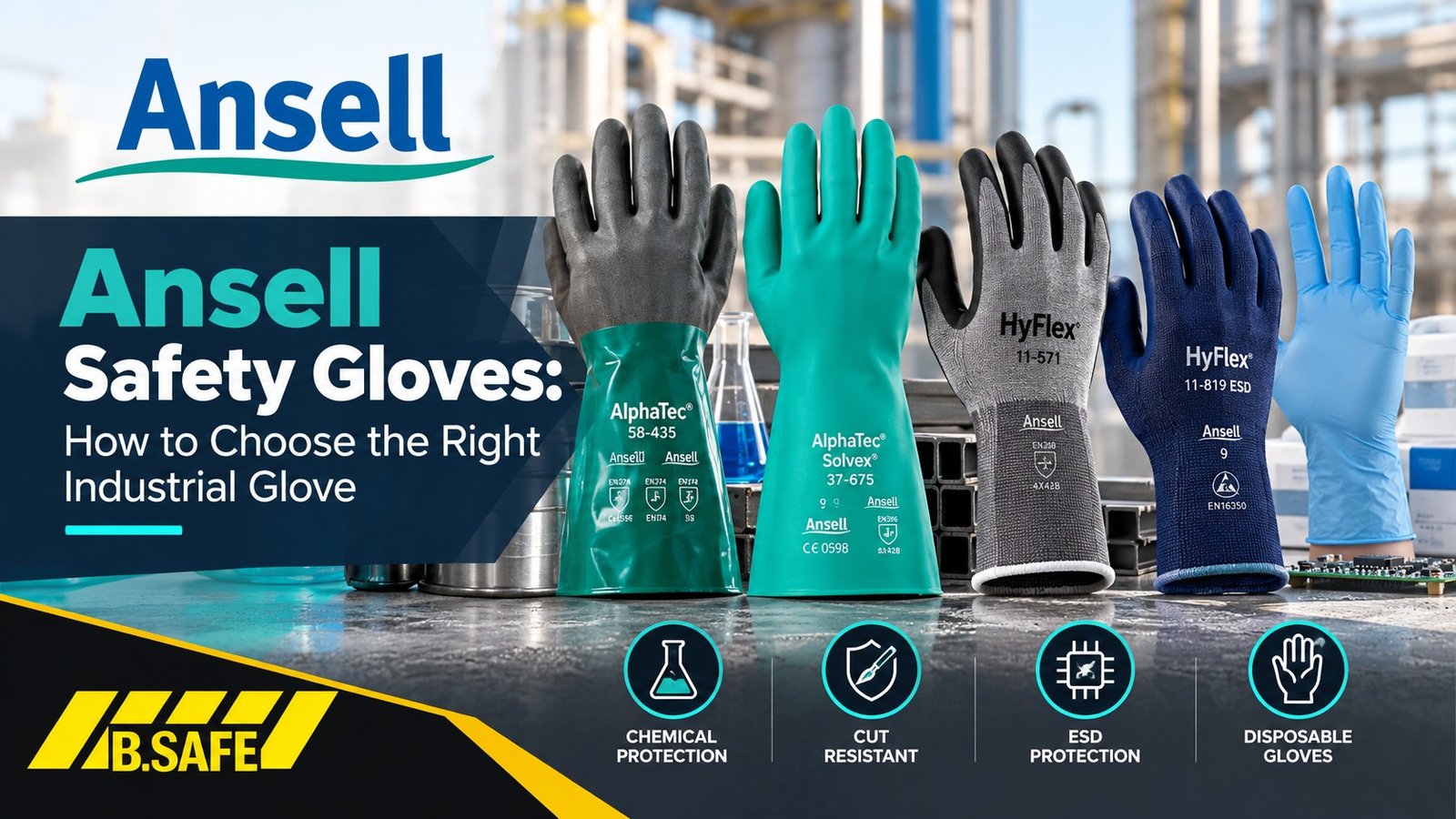
 Ansell safety gloves are available in different product families designed for specific workplace needs. At B.SAFE, businesses can explore selected Ansell gloves for chemical protection, cut resistance, electrostatic discharge (ESD) applications, and disposable use.
This guide explains the main types of Ansell protective gloves, how to compare their intended applications, and what to consider before choosing the right gloves for your workplace.
Why Choose Ansell Safety Gloves?
Ansell develops hand protection solutions for a range of industrial and professional applications. Its glove families address different requirements, including chemical handling, mechanical protection, precision work, and single-use applications.
When choosing Ansell gloves, the most important consideration is whether the specific product matches the hazards and working conditions involved.
Before purchasing, evaluate:
- The type of hazard workers may encounter.
- The level of protection required for the task.
- The glove material and construction.
- Grip, dexterity, and comfort.
- Compatibility with chemicals or other substances, where relevant.
- Applicable safety standards and product documentation.
- Fit, inspection, and replacement requirements.
No single glove is suitable for every industrial task. Selecting the correct model starts with a workplace risk assessment and a review of the manufacturer’s specifications.
Types of Ansell Safety Gloves
Ansell offers different glove solutions for different applications. The following categories can help businesses identify the type of protection they need.
1. Ansell Chemical Resistant Gloves
Chemical-resistant gloves are used in workplaces where hands may be exposed to chemicals, cleaning agents, oils, solvents, or other substances.
The appropriate glove depends on the chemical involved, its concentration, temperature, exposure duration, and the conditions of use. Glove material alone does not establish compatibility with every chemical.
B.SAFE offers the following Ansell AlphaTec products.
AlphaTec 58-435 Chemical Resistant Gloves
The Ansell AlphaTec 58-435 Chemical Resistant Gloves are designed for applications requiring chemical protection and a practical grip in demanding working conditions.
When evaluating this model, review its product documentation for the intended chemical applications, protection ratings, dimensions, and usage limitations.
These details are particularly important when selecting gloves for industrial maintenance, chemical handling, or tasks involving wet and oily components.
AlphaTec Solvex 37-675 Chemical Resistant Gloves
The Ansell AlphaTec Solvex 37-675 Chemical Resistant Gloves are nitrile gloves designed for chemical protection.
The manufacturer’s product information describes a 0.38 mm thickness, cotton flocking for comfort, and chemical resistance classified under EN 374 Type A. Listed applications include cleaning, maintenance, and chemical handling.
These features can help businesses evaluate the glove for suitable wet or dry industrial tasks. However, chemical compatibility must always be checked against the specific substance and the manufacturer’s chemical resistance data.
For tasks involving potentially hazardous chemicals, never select gloves based only on a general description such as chemical-resistant. Verify the precise compatibility and breakthrough information for the substance being handled.
2. Ansell Cut Resistant Gloves
Cut-resistant gloves are designed to help protect hands when workers handle materials with sharp edges or perform tasks involving cutting hazards.
They may be used in manufacturing, material handling, assembly, and other operations where the risk assessment identifies a need for cut protection.
However, cut resistance does not mean that a glove is cut-proof. Protection levels vary, and the selected glove must match the task.
HyFlex 11-571 Cut Resistant Gloves
The Ansell HyFlex 11-571 Cut Resistant Gloves are part of the HyFlex range of industrial hand protection products.
When considering this model, check the manufacturer’s documentation for its cut resistance rating, construction, grip characteristics, and recommended applications.
For example, a glove selected for handling sheet materials may have different requirements from one used for precision assembly or general material handling.
The correct selection should balance the necessary protection with dexterity and comfort so workers can perform their tasks safely.
3. Ansell ESD Gloves for Electronics and Sensitive Components
Electrostatic discharge, commonly known as ESD, occurs when accumulated electrical charge is released between objects or surfaces. In environments handling sensitive electronic components, uncontrolled discharge can damage products or disrupt manufacturing processes.
ESD gloves may form part of an electrostatic control program, depending on their tested properties and the requirements of the workplace.
HyFlex 11-819 ESD Gloves
The Ansell HyFlex 11-819 ESD Gloves are intended for applications where electrostatic discharge control is an important consideration.
When evaluating this product, verify the manufacturer’s stated ESD performance, applicable standards, and suitability for the specific work environment.
ESD protection is not interchangeable with ordinary anti-static claims. Businesses should assess the glove alongside other controls, such as grounding procedures, work surfaces, garments, footwear, and the site’s overall electrostatic control requirements.
These considerations are particularly important in electronics assembly, component handling, and other processes involving electrostatic-sensitive products.
4. Ansell Disposable Nitrile Gloves
Disposable nitrile gloves are used in applications where single-use hand protection is appropriate. Depending on the product’s intended use and specifications, they may be considered for inspection, handling, laboratory tasks, and selected industrial operations.
Disposable gloves should be chosen according to their documented protective properties, fit, and the conditions in which they will be used.
Microflex 93-143 Disposable Nitrile Gloves
The Ansell Microflex 93-143 Disposable Nitrile Gloves are a disposable glove option available through B.SAFE.
Before selecting this product, review the manufacturer’s documentation for its intended applications, relevant standards, material characteristics, and limitations.
Do not assume that every disposable nitrile glove is suitable for prolonged chemical exposure, every solvent, or every medical or laboratory application. The required protection must be confirmed for the specific task.
Disposable gloves should also be changed according to workplace procedures and the manufacturer’s instructions, particularly if they become damaged, contaminated, or unsuitable for continued use.
How to Choose the Right Ansell Gloves
Selecting suitable industrial gloves requires a structured approach. The following steps can help businesses compare available options more effectively.
Step 1: Identify the Workplace Hazard
Start by identifying what workers may encounter during their tasks.
Common hazards include:
- Chemical splashes or contact with hazardous substances.
- Sharp edges and cut hazards.
- Abrasion or other mechanical risks.
- Electrostatic discharge affecting sensitive components.
- Contamination that requires single-use gloves.
Different hazards require different protective properties. A glove designed for one risk should not automatically be considered suitable for another.
Step 2: Select the Appropriate Glove Category
Match the identified hazard to the type of glove required.
For example, chemical handling may require a suitable chemical-resistant glove, while handling sharp materials may require cut-resistant protection. Electronics work may require a glove with verified ESD properties, and selected short-duration tasks may call for disposable gloves.
Where multiple hazards exist, confirm that the selected glove addresses all relevant requirements.
Step 3: Verify Product Standards and Technical Data
Check the manufacturer’s product documentation, protective ratings, and instructions.
For chemical protection, confirm compatibility with the exact substance and exposure conditions. For cut protection, review the applicable test rating. For ESD applications, verify the required electrical performance.
Do not rely solely on a product name or general marketing description.
Step 4: Consider Grip and Dexterity
Workers may need to hold tools, manipulate small components, or handle materials in wet or dry conditions.
The glove should provide suitable grip and allow the movements required for the task without compromising necessary protection.
Where possible, evaluate fit and usability under representative working conditions before introducing a glove across an entire team.
Step 5: Check Fit and Comfort
Gloves should fit correctly and be appropriate for the worker’s hand size and task.
Consider finger movement, cuff length, grip, and comfort during the expected period of use. Poor fit can affect handling performance and encourage workers to use PPE incorrectly.
Step 6: Establish Inspection and Replacement Procedures
Reusable gloves should be inspected and maintained according to the manufacturer’s instructions. Disposable gloves should be changed according to the applicable workplace procedures.
Remove gloves from service when they are damaged, contaminated, or no longer suitable for their intended use.
Ansell Gloves for Different Industries
Different industries have different hand protection requirements. The examples below illustrate where particular glove categories may be considered, subject to the actual risk assessment and product specifications.
Chemical Processing and Industrial Maintenance
Workers may need chemical-resistant gloves when handling specific substances, performing maintenance, or cleaning equipment.
The selected glove must be compatible with the chemicals and the expected exposure conditions. Consult the manufacturer’s chemical resistance data before use.
Manufacturing and Material Handling
Cut-resistant gloves may be appropriate where workers handle sharp materials or perform tasks with identified cut hazards.
Select the required cut protection level based on the task, and ensure that the glove provides the necessary dexterity and grip.
Electronics Assembly
ESD gloves may be considered as part of an electrostatic control program when handling sensitive electronic components.
Their suitability depends on the required electrical performance and compatibility with the other controls used in the work area.
Inspection and General Single-Use Applications
Disposable nitrile gloves may be suitable for selected inspection, handling, and other single-use tasks.
Confirm the glove’s intended use and protection limits rather than assuming that disposable gloves provide universal chemical or contamination protection.
Common Mistakes When Choosing Safety Gloves
Assuming All Chemical Gloves Protect Against Every Chemical
Chemical resistance varies according to the glove material, substance, concentration, temperature, and contact duration. Always verify compatibility using the manufacturer’s documentation.
Choosing Cut Protection Without Checking the Rating
Cut-resistant gloves have different performance levels. Select the required rating based on the actual hazard and the applicable standard.
Confusing ESD Gloves with General Anti-Static Gloves
ESD performance must be verified against the requirements of the work environment. Do not assume that a general anti-static claim guarantees suitability for sensitive electronic processes.
Using Disposable Gloves Beyond Their Intended Purpose
Disposable gloves are not automatically suitable for prolonged exposure, aggressive chemicals, or every industrial application. Follow the manufacturer’s guidance and workplace procedures.
Ignoring Fit and Comfort
The glove must allow the worker to perform the task safely while providing the required protection. Correct sizing and usability are important parts of the selection process.
Explore Ansell Safety Gloves at B.SAFE
B.SAFE provides access to selected Ansell hand protection products for businesses looking to evaluate industrial glove options.
You can explore the following models:
- AlphaTec 58-435 Chemical Resistant Gloves
- AlphaTec Solvex 37-675 Chemical Resistant Gloves
- HyFlex 11-571 Cut Resistant Gloves
- HyFlex 11-819 ESD Gloves
- Microflex 93-143 Disposable Nitrile Gloves
Visit the Ansell brand page at B.SAFE to explore the listed range.
Before purchasing, confirm current availability, pricing, sizing, product specifications, and suitability for the intended application with the B.SAFE team.
Frequently Asked Questions
What are Ansell safety gloves used for?
Ansell safety gloves are available in different types for applications such as chemical handling, cut protection, ESD-related tasks, and selected single-use applications. The correct model depends on the hazard and its documented protective properties.
Which Ansell gloves are suitable for chemical handling?
The AlphaTec 58-435 and AlphaTec Solvex 37-675 are chemical-resistant glove options listed by B.SAFE. Their suitability depends on the exact chemical, exposure conditions, and the manufacturer’s compatibility data.
What are Ansell HyFlex 11-571 gloves designed for?
The HyFlex 11-571 is listed as a cut-resistant glove. Review its current technical documentation to confirm its protective rating and intended applications before selecting it for a task.
What does ESD mean in safety gloves?
ESD stands for electrostatic discharge. ESD gloves may be used as part of an electrostatic control program when their documented electrical performance meets the requirements of the workplace.
What are disposable nitrile gloves used for?
Disposable nitrile gloves may be suitable for selected single-use handling, inspection, and other tasks. Their protective limits and suitability must be confirmed from the manufacturer’s specifications.
Where can I buy Ansell safety gloves?
You can explore the selected Ansell gloves listed above through B.SAFE’s product pages or visit the Ansell brand page.
Conclusion
Choosing the right Ansell safety gloves means matching the glove’s protective properties to the hazards workers face. Chemical-resistant, cut-resistant, ESD, and disposable gloves serve different purposes and should be evaluated according to their documented specifications.
Explore the available Ansell products at B.SAFE, review the manufacturer’s technical data, and confirm that the selected glove meets your workplace requirements before purchasing.