Construction Safety Nets: Types, Applications and How to Choose

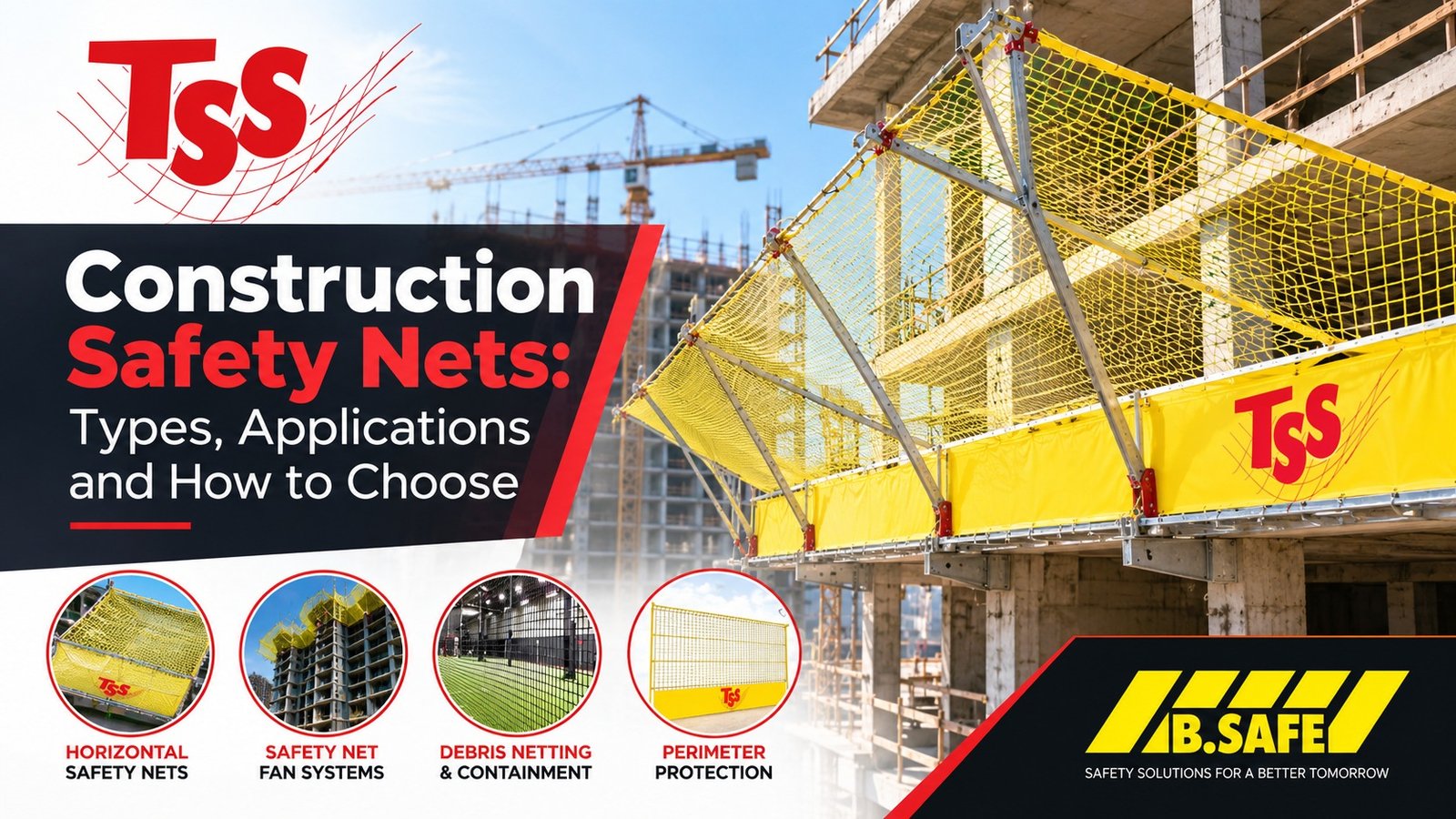
Construction Safety Nets: Types, Applications and How to Choose
Construction sites involve significant risks when workers operate at height, install roof structures, work near open edges, or handle materials above other work areas. A suitable fall protection strategy helps reduce these risks and supports safer working conditions throughout a construction project.
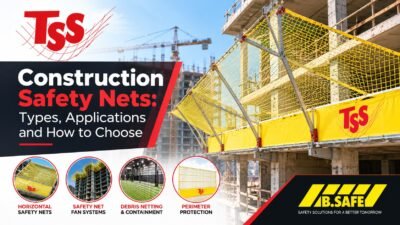 Construction safety nets are an important part of many fall protection plans. Depending on their design and intended use, they can help catch a falling person or contain certain falling materials. However, selecting the right net requires more than comparing dimensions or prices. Project teams must consider the work environment, fall hazards, installation requirements, applicable standards, and inspection procedures.
In this guide, we explain the main types of construction safety nets, where they are used, how to choose a suitable solution, and what to consider when evaluating safety net systems for your project.
What Are Construction Safety Nets?
Construction safety nets are protective net systems installed in designated areas to reduce the consequences of falls or help control falling materials. They are commonly considered for building construction, roofing, steel erection, industrial facilities, and other projects involving work at height.
Unlike personal fall protection equipment, which is worn or attached to an individual worker, a properly selected and installed safety net can provide collective protection across a work area.
The correct solution depends on the hazard being controlled. A net intended to arrest a person’s fall is not automatically suitable for containing small tools, debris, or other materials. These applications may require different mesh sizes, additional debris protection, or a separate containment system.
Why Are Safety Nets Important on Construction Sites?
Working at height can expose workers and people below the work area to serious hazards. Safety net systems may help manage these risks when they are selected and installed as part of a broader site safety plan.
Key benefits can include:
- Fall consequence reduction: A suitable fall-arrest net can help reduce the severity of a fall when correctly designed, installed, and maintained.
- Collective protection: One system may protect a designated work area rather than relying only on individual workers’ equipment.
- Greater freedom of movement: Workers may be able to perform certain overhead tasks without the same movement restrictions associated with some personal fall protection arrangements.
- Support for safer construction operations: Properly planned netting can form part of a coordinated approach to working at height.
- Falling material control: Where specifically designed for the purpose, suitable netting or an approved debris net can help contain certain materials.
Safety nets do not eliminate every fall hazard. Prevention measures, safe access, edge protection, appropriate work procedures, and personal fall protection may also be required following a site-specific risk assessment.
Types of Construction Safety Nets
Different net systems serve different purposes. Before selecting a product, identify the exact hazard and confirm that the system is designed for the intended application.
1. Horizontal Safety Nets
Horizontal safety nets are installed beneath an elevated work area, such as a roof, floor deck, or structural framework. They are designed to catch a person who falls into the protected area when the system is properly specified and installed.
Typical applications include:
- Steel structure erection.
- Roof installation and construction.
- Work involving floor openings or elevated platforms.
- Selected industrial construction and maintenance activities.
The required net dimensions, position, anchorage, available clearance, and expected deflection must all be considered during planning.
2. Safety Net Fan Systems
A safety net fan is a specialized system used on suitable building projects to provide protection around exposed building edges and help control falling objects within its intended design limits.
These systems may be considered on multi-storey construction projects where work is taking place near the building perimeter. The specific configuration, attachment method, coverage area, and permitted use must be confirmed with the manufacturer or qualified installer.
Explore the TSS Safety Net Fan available from B.SAFE for more information about this product.
3. Debris Netting and Containment Nets
Debris netting is used to help contain certain tools, materials, or construction debris and reduce the risk of objects reaching areas below the work zone.
It is important to distinguish debris containment from fall arrest. A lightweight debris net should not be treated as a system for catching a falling worker unless it has been specifically designed, tested, and approved for that purpose.
When choosing debris protection, consider the size and type of material, potential impact loads, wind exposure, attachment points, and the need to keep people away from the drop zone.
4. Perimeter and Edge Protection Systems
Perimeter protection systems are designed to help prevent people or materials from falling over exposed edges. Depending on the product, they may use mesh panels, barriers, guardrails, or other engineered components.
These systems serve a different function from a safety net positioned below a work area. Where practicable, preventing a fall with suitable edge protection should be considered before relying on a system intended to arrest a fall.
For projects requiring perimeter protection, explore the TSS Meshguard System and confirm its intended applications and installation requirements with the supplier.
Construction Safety Nets vs. Edge Protection: What Is the Difference?
Although both solutions support work-at-height safety, they work in different ways.
| Feature | Construction Safety Nets | Edge Protection Systems |
|---|---|---|
| Main purpose | Catch a falling person or provide a specified containment function | Help prevent people or materials from falling over an exposed edge |
| Typical location | Beneath or around a designated work area, depending on system design | Along exposed edges, openings, or other designated boundaries |
| Protection approach | Fall arrest or containment, according to the system’s approved use | Fall prevention or perimeter separation |
| Key selection factors | Net classification, dimensions, clearance, anchorage, and installation | Barrier design, height, loading requirements, fixings, and site conditions |
These systems may complement each other, but they are not automatically interchangeable. The appropriate combination depends on the risk assessment, site layout, applicable regulations, and manufacturer instructions.
How to Choose the Right Construction Safety Net
Selecting the correct safety net system is essential for its effectiveness. Consider the following factors before purchasing or specifying equipment.
1. Identify the Hazard
Start by determining what the system must protect against. Is the main concern a worker falling from an elevated level, objects falling onto people below, or exposure to an unprotected building edge?
Each hazard may require a different solution. Do not select a product based only on the general description “safety net.”
2. Confirm the Intended Application
Check whether the net is designed for fall arrest, debris containment, perimeter protection, or another specific purpose. Review the manufacturer’s technical documentation and verify that the intended application matches the conditions on site.
3. Review Applicable Standards
For construction safety nets intended to arrest falls, EN 1263-1 addresses safety requirements and test methods, while EN 1263-2 addresses installation requirements and positioning limits.
Project teams should confirm which standards and local regulations apply to their location and the selected product. Do not assume that every net sold for construction use meets these requirements.
4. Check Dimensions, Clearance, and Deflection
The net must cover the required area and be positioned to provide the necessary protection. Planning should account for the distance a person could fall, the net’s expected deflection, and any structures or objects beneath it.
Insufficient clearance may allow a person to strike the ground or another obstruction even if the net catches the fall.
5. Evaluate Anchorage and Supporting Structures
The net and its attachment system must be compatible with the supporting structure and expected loads. Anchorage locations, connection components, fixing arrangements, and structural capacity should be assessed by competent professionals.
Never assume that an existing beam, handrail, or other building component is suitable for anchoring a safety net without verification.
6. Consider Environmental Conditions
Wind, weather exposure, ultraviolet radiation, construction dust, sharp edges, and contact with chemicals may affect a net or its components. Confirm the product’s limitations and inspection requirements before using it in exposed or demanding environments.
7. Plan Installation, Inspection, and Rescue
A safety net system is only as reliable as its installation and maintenance. Installation, modification, and removal should be carried out by trained and competent personnel in accordance with the applicable requirements.
The project must also have inspection procedures and a practical rescue plan for anyone caught by the net after a fall.
Installation and Inspection: What Should Site Teams Consider?
Correct installation is critical to the performance of a safety net system. Even a suitable product may fail to provide the intended protection if it is positioned incorrectly, attached to unsuitable supports, or used outside its design limits.
Before work begins, responsible personnel should confirm that:
- The selected system is suitable for the identified hazard.
- Installation follows the manufacturer’s instructions and applicable standards.
- The supporting structure and anchorage arrangements have been assessed.
- The net is positioned appropriately in relation to the working level.
- Sufficient clearance is available beneath the net to accommodate expected deflection.
- The system has been inspected and approved for use by a competent person.
- Workers understand the restrictions, inspection process, and emergency procedures.
The net should be inspected at the intervals required by the applicable rules and manufacturer’s instructions. Checks should look for cuts, abrasion, damaged stitching or connections, deterioration, contamination, and signs of incorrect installation.
If a net catches a falling person, stop work in the affected area and arrange an assessment by a competent person before the system is used again. Follow the manufacturer’s instructions regarding inspection, repair, or replacement.
TSS Construction Safety Solutions Available at B.SAFE
B.SAFE provides access to selected TSS products for construction and industrial safety applications. Depending on your project’s requirements, the following products may be worth reviewing.
TSS Safety Net Fan
The TSS Safety Net Fan is a product to consider when evaluating suitable net-based protection for building projects. Confirm its exact configuration, intended use, coverage, and installation requirements before specifying it for a particular site.
TSS Meshguard System
The TSS Meshguard System is another option to evaluate when planning protection around exposed areas. Review its technical documentation to establish whether it meets the project’s perimeter protection requirements.
The right choice depends on the hazard, building design, installation conditions, applicable standards, and required level of protection. If you are unsure which system is appropriate, provide the project details to the supplier before making a decision.
Visit the TSS brand page at B.SAFE to explore the available product range.
Frequently Asked Questions About Construction Safety Nets
What are construction safety nets used for?
Construction safety nets can be used to catch falling workers or contain certain materials, depending on their design and approved application. They are commonly considered for roofing, structural steel erection, and other work-at-height activities.
Are construction safety nets a replacement for fall prevention?
No. Safety nets are generally used to reduce the consequences of a fall when prevention cannot fully eliminate the risk. Suitable edge protection, safe access, work planning, and other preventive measures should also be considered.
Which standards apply to construction safety nets?
EN 1263-1 covers safety requirements and test methods for relevant safety nets, while EN 1263-2 covers installation requirements and positioning limits. Applicable local requirements and the product’s technical documentation must also be checked.
How often should safety nets be inspected?
Inspection frequency depends on applicable regulations, the manufacturer’s instructions, site conditions, and the system’s use. Nets should be checked after installation and at required intervals by competent personnel. Additional inspection may be necessary following damage, severe weather, or a fall-arrest event.
Can the same net catch people and construction debris?
Not necessarily. A net intended to arrest a person’s fall is not automatically suitable for containing small debris or tools. Verify the system’s approved purpose and whether additional debris protection is required.
How can I choose a suitable safety net for my project?
Identify the hazard, working height, protected area, supporting structure, clearance, environmental conditions, and relevant standards. Then compare suitable systems using their technical documentation and seek guidance from a qualified installer or supplier.
Conclusion
Construction safety nets can play an important role in reducing the risks associated with working at height, but their effectiveness depends on selecting the right system and using it correctly.
Before choosing a solution, assess the hazard, confirm the product’s intended application, review relevant standards, and plan for proper installation and inspection. Where appropriate, combine net systems with effective fall prevention measures to build a more complete site safety strategy.
Explore the TSS Safety Net Fan, review the TSS Meshguard System, or visit the TSS brand page to discuss suitable options for your project.
Contact B.SAFE to request product information and help identify a suitable safety solution for your construction site.