ZYfire Fire Hoses: Types, Applications and How to Choose

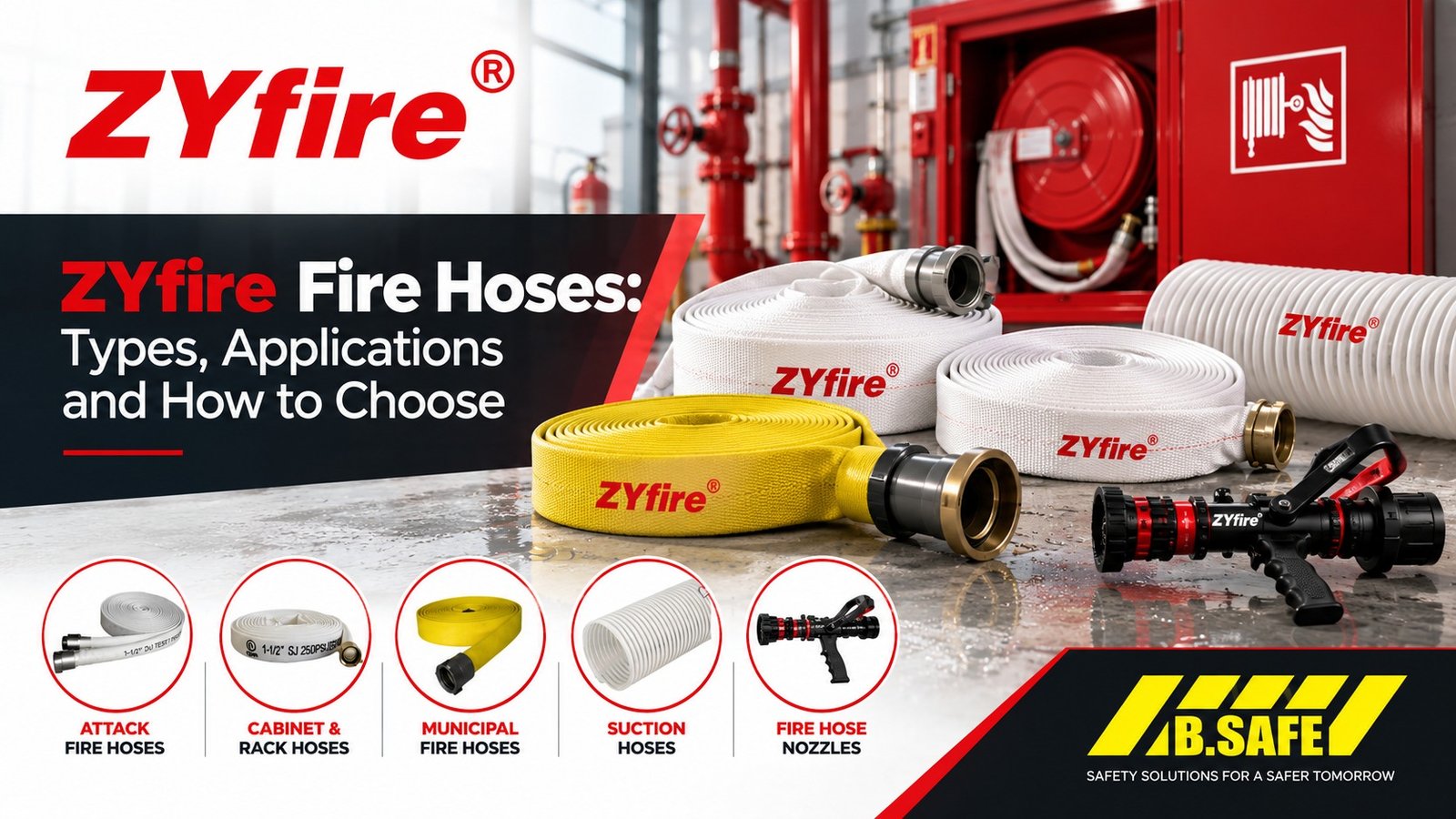
ZYfire Fire Hoses: Types, Applications and How to Choose
Fire protection systems depend on reliable equipment to deliver water where it is needed during an emergency. Among the most important components are fire hoses, which connect water supplies to firefighting teams, hose cabinets, hydrant systems, and other fire protection installations.
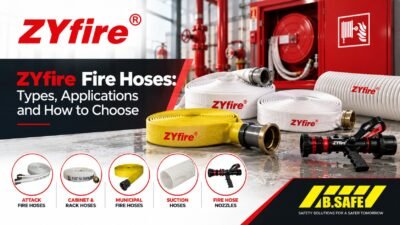 ZYfire fire hoses are designed for different firefighting and water-delivery applications. However, not every hose is suitable for every environment. Choosing the right product requires an understanding of its lining material, working pressure, diameter, intended application, and applicable certification requirements.
In this guide, we explore the main types of fire hoses, explain the differences between attack hoses and cabinet hoses, and introduce selected ZYfire products available through B.SAFE.
What Are Fire Hoses Used For?
Fire hoses are flexible conduits designed to transport water or other approved firefighting media from a supply point to the location where it is required.
They are used in a wide range of fire protection environments, including:
- Commercial and industrial buildings.
- Fire hose cabinets and hose rack systems.
- Municipal and professional firefighting operations.
- Industrial facilities requiring dedicated fire protection equipment.
- Selected marine and other specialist fire protection applications, where the equipment is appropriately approved.
The correct hose depends on the system in which it will operate. Factors such as water pressure, flow requirements, hose length, connection type, environmental exposure, and applicable fire safety standards must all be considered before selection.
Types of ZYfire Fire Hoses
Different firefighting applications require different hose constructions. Understanding these differences helps facility managers, fire safety contractors, procurement teams, and firefighting professionals identify suitable products.
1. Attack Fire Hoses
Attack fire hoses are used to deliver water to a firefighting operation. They must be compatible with the intended water supply, nozzle, fittings, operating pressure, and deployment conditions.
Depending on their construction, attack hoses may use different inner lining materials and outer textile jackets.
A suitable attack hose should be selected according to the fire protection system’s technical requirements rather than appearance or price alone.
ZYfire offers attack hose options for different applications, including the following products available from B.SAFE:
These products have different lining materials and intended applications, so their specifications should be reviewed before choosing between them.
2. Fire Cabinet and Rack Hoses
Fire cabinet and rack hoses are used in designated hose storage arrangements within buildings and other facilities.
These installations require hoses that are compatible with the cabinet or rack configuration, available water supply, connections, and required operating conditions.
When selecting a cabinet hose, consider:
- Hose diameter and length.
- Compatibility with existing couplings and fittings.
- Working pressure requirements.
- Lining material and expected service conditions.
- Applicable approval and certification requirements.
- Storage space and ease of deployment.
For applications requiring a hose cabinet or rack solution, review the Sintack U Attack Fire Hose and verify its suitability against the project’s specifications.
3. Municipal Fire Hoses
Municipal fire hoses are used in fire protection systems and firefighting applications where the hose must meet the requirements of the intended installation.
The appropriate construction depends on the application, expected pressure, connection requirements, exposure conditions, and applicable standards.
The ZYfire Municipal Fire Hose is an option to evaluate when sourcing hoses for relevant fire protection applications.
Before specifying a municipal fire hose, confirm its exact technical documentation, dimensions, lining construction, and approved uses.
4. TPU-Lined Fire Hoses
TPU stands for thermoplastic polyurethane, a material used as an inner lining in certain fire hoses.
The lining is one of the factors that influences a hose’s characteristics, but it should not be the only selection criterion. The complete hose construction, outer jacket, pressure rating, fittings, and intended application must also be considered.
The ZYfire TPU Lined Fire Hose can be reviewed by buyers looking for this type of construction.
Always check the specific product documentation to confirm its performance characteristics and suitability for the required operating environment.
ZYfire Sintack D vs. Sintack U: What Is the Difference?
Two products in the B.SAFE ZYfire range are the Sintack D and Sintack U attack hoses. Although both are firefighting hose products, their documented constructions and applications differ.
| Feature | Sintack D | Sintack U |
|---|---|---|
| Inner lining | EPDM rubber | TPU |
| Outer jacket | Polyester textile jacket | Polyester textile jacket |
| Stated application | Industrial firefighting and fire brigade use | Rack hose and cabinet hose applications |
| Selection priority | Verify pressure rating and intended firefighting use | Verify compatibility with the hose rack or cabinet system |
| Product page | View Sintack D | View Sintack U |
The manufacturer’s product information describes Sintack D as an EPDM-lined hose for industrial firefighting and fire brigade applications, while Sintack U uses a TPU lining and is intended for rack and cabinet hose applications. <Cite refs={[“turn435284search0″,”turn435284search1”]}/>
This does not mean one is universally better than the other. The correct choice depends on the fire protection design, operating conditions, required approvals, and compatibility with the existing equipment.
How to Choose the Right ZYfire Fire Hose
Selecting a fire hose is a technical decision. The following factors can help buyers identify a suitable product for their fire protection requirements.
1. Identify the Intended Application
First, determine where and how the hose will be used.
Is it intended for a fire cabinet, hose rack, industrial firefighting operation, municipal fire protection installation, or another specialist application?
The answer helps narrow the available options and establishes which technical requirements must be checked.
2. Check the Hose Diameter
The internal diameter affects the relationship between water flow, pressure loss, and compatibility with the system.
The hose diameter must match the system design, connections, and flow requirements. A larger diameter is not automatically better, because the correct size depends on the complete installation.
Confirm the required diameter with the fire protection system designer or responsible technical professional.
3. Verify Working Pressure
Working pressure is one of the most important factors in fire hose selection.
The selected hose must be suitable for the expected operating pressure and the pressure conditions of the installed system. Buyers should distinguish between working pressure, test pressure, and burst pressure because these values serve different purposes.
Do not choose a hose based on its maximum burst pressure alone. Confirm that its rated operating limits meet the requirements of the actual installation.
4. Compare Lining Materials
Different lining materials are used in fire hose construction, including EPDM rubber and TPU.
The appropriate material depends on the product design and intended operating conditions. Buyers should review the manufacturer’s technical data rather than assuming that one lining is always more durable or suitable than another.
For example, Sintack D is documented with an EPDM rubber lining, while Sintack U uses a TPU lining. The complete hose specification should guide the final decision.
5. Check Hose Length and Storage Requirements
The hose must be long enough to reach the required operating area while remaining compatible with the intended storage arrangement.
For hose cabinets and racks, confirm that the selected length and diameter suit the cabinet dimensions and system design.
For firefighting operations, the required hose length also depends on deployment arrangements, access routes, and the distance between the water supply and the point of use.
6. Confirm Couplings and Connections
A hose must connect securely to the relevant water supply, equipment, and nozzle.
Before purchasing, verify the coupling type, connection dimensions, compatibility requirements, and any necessary adapters. An otherwise suitable hose may not be appropriate if its fittings are incompatible with the installed system.
7. Review Standards and Certifications
Fire hose standards and approval requirements vary by product type and intended application.
Depending on the system, buyers may need to check relevant requirements such as EN 14540, DIN 14811, UL 19, FM approval, or other applicable standards and certifications.
These references are not interchangeable, and not every product necessarily complies with all of them. Confirm the exact approvals documented for the specific hose model, size, and configuration before purchasing.
8. Consider Maintenance and Inspection
Fire hoses are safety-critical equipment and should be inspected and maintained according to the manufacturer’s instructions, applicable standards, and the site’s fire protection procedures.
Inspection arrangements may include checking for visible damage, deterioration, leakage, damaged couplings, contamination, and signs of incorrect storage.
Any hose showing signs of damage or failing an inspection should be assessed by qualified personnel and removed from service when required.
Common Fire Hose Selection Mistakes to Avoid
Choosing a hose based only on a product name or general description can lead to compatibility and performance problems.
Avoid these common mistakes:
- Ignoring the intended application: A hose designed for a cabinet installation may not be the right choice for a different firefighting operation.
- Choosing the wrong diameter: The hose must meet the system’s flow and connection requirements.
- Confusing pressure ratings: Working pressure, test pressure, and burst pressure are different values.
- Assuming all linings perform identically: Confirm the material and its suitability using the product documentation.
- Overlooking fittings: Connections must be compatible with the existing equipment.
- Assuming all products share the same approvals: Verify certifications for the exact model and configuration.
- Neglecting inspection: Regular checks and proper storage help maintain equipment readiness.
Explore ZYfire Fire Hoses at B.SAFE
B.SAFE provides access to selected ZYfire products for fire protection and industrial applications. Buyers can review the available product information and compare options according to their project requirements.
Attack Hose Sintack D
The Attack Hose Sintack D is an option to evaluate for industrial firefighting and fire brigade applications. Review the product’s pressure ratings, dimensions, lining, and documented approvals before specifying it.
Sintack U Attack Fire Hose
The Sintack U Attack Fire Hose uses a TPU lining and is described by the manufacturer for rack and cabinet hose applications. Confirm its compatibility with the intended installation and the required technical specifications.
Municipal Fire Hose
The Municipal Fire Hose can be reviewed for relevant fire protection applications. Check the product page for the specifications and approvals applicable to the model offered.
TPU Lined Fire Hose
The TPU Lined Fire Hose is another option to consider when a TPU-lined construction is required. Its suitability should be confirmed against the system design and operating conditions.
To explore the broader range, visit the ZYfire brand page at B.SAFE.
Frequently Asked Questions About ZYfire Fire Hoses
What are ZYfire fire hoses used for?
ZYfire offers fire hose products for different applications, including industrial firefighting and hose cabinet or rack installations. The suitable model depends on the intended use and its technical specifications.
What is the difference between Sintack D and Sintack U?
The manufacturer’s product information describes Sintack D as an EPDM-lined hose for industrial firefighting and fire brigade applications, while Sintack U uses a TPU lining and is intended for rack and cabinet hose applications. Always verify the exact specifications for the product being purchased.
What does TPU-lined fire hose mean?
It means that the hose uses thermoplastic polyurethane as its inner lining material. The overall performance and suitability still depend on the complete hose construction and the manufacturer’s ratings.
How do I choose the right fire hose diameter?
The diameter should match the system design, required water flow, pressure conditions, and connection specifications. Consult the responsible fire protection designer or technical professional when determining the required size.
Are all ZYfire fire hoses suitable for the same pressure?
No. Pressure ratings vary by model, diameter, and configuration. Confirm the specified working pressure and other relevant ratings in the technical documentation for the exact product.
Which standards should I check before buying a fire hose?
The relevant standards depend on the hose type and intended application. Check the product documentation and the requirements of the local authority, project specification, and fire protection system.
Where can I buy ZYfire fire hoses?
You can explore selected products through the ZYfire brand page at B.SAFE and review the individual product pages for further information.
Conclusion
Choosing the right fire hose is essential for ensuring compatibility with a fire protection system and its intended operating conditions. Buyers should consider the application, hose diameter, pressure rating, lining material, couplings, applicable approvals, and inspection requirements before making a decision.
ZYfire offers different hose constructions for different firefighting applications, including Sintack D, Sintack U, municipal fire hoses, and TPU-lined options.
Explore the ZYfire fire hose range at B.SAFE or contact the B.SAFE team to request product information and identify options that match your project’s technical requirements.