First Aid Training: Complete Guide to Workplace First Aid

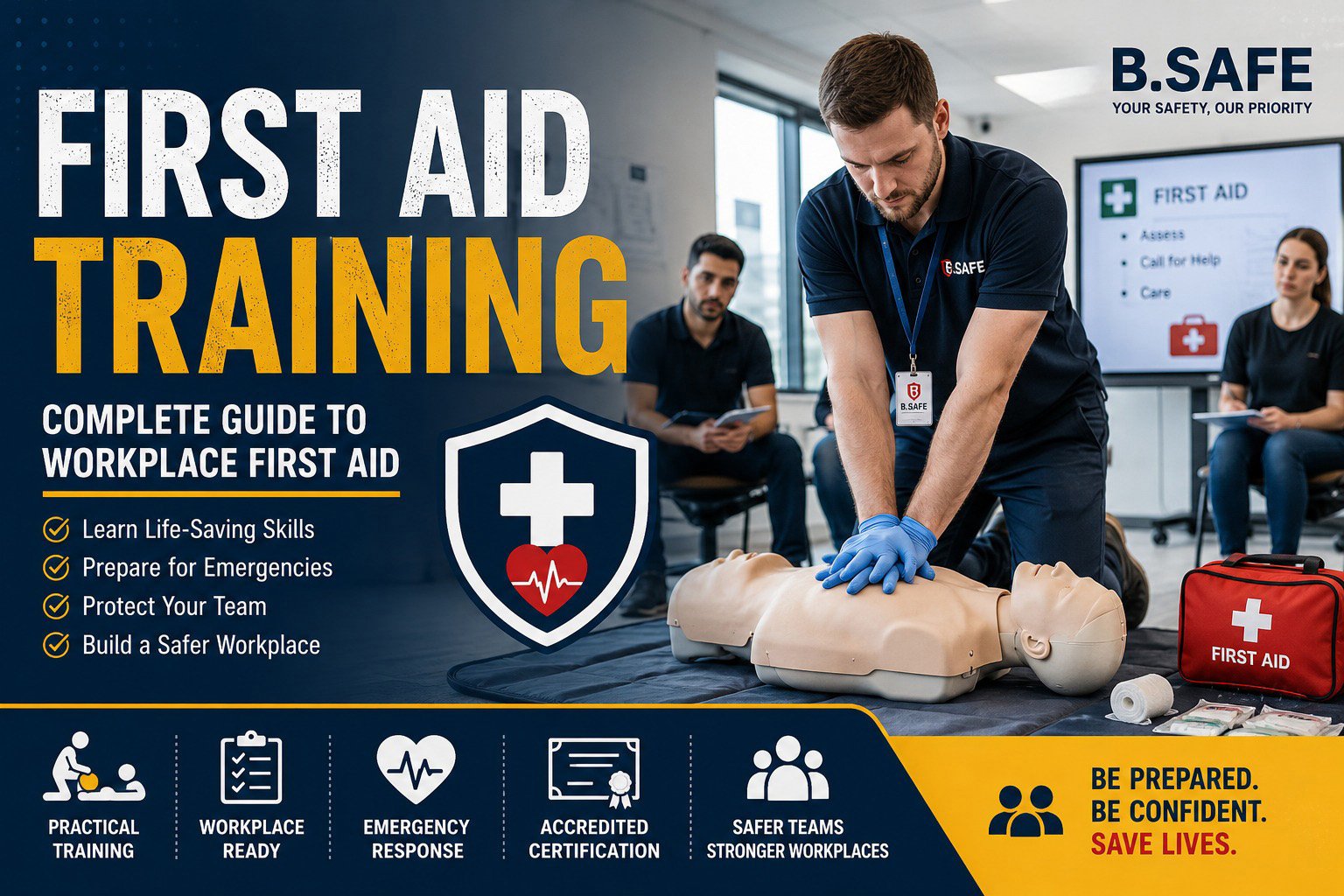
First Aid Training: Complete Guide to Workplace First Aid
First aid training is an essential part of an effective workplace safety program. Accidents, injuries, and medical emergencies can happen in almost any working environment, from construction sites and factories to warehouses, offices, laboratories, and industrial facilities.
 Having a workplace first aid training program helps employees respond quickly and appropriately when an injury or medical emergency occurs before professional medical assistance becomes available.
A properly trained employee can provide immediate assistance, help reduce the severity of an injury, and support a safer workplace emergency response system.
In this guide, we explain what first aid training is, why it is important, what a typical first aid course covers, who should receive training, and how businesses can build an effective workplace first aid program.
What Is First Aid Training?
First aid training is a structured training program designed to teach employees how to respond to common workplace injuries and medical emergencies.
A First Aid Training Course normally combines theoretical knowledge with practical exercises. Depending on the course and workplace hazards, participants may learn how to assess an emergency situation, provide basic first aid, respond to bleeding and injuries, and support a person until professional medical help arrives.
The exact training requirements should be based on the hazards and conditions of the workplace.
For general industry in the United States, OSHA’s 29 CFR 1910.151(b) states that when an appropriate medical facility is not in near proximity, a person or persons must be adequately trained to render first aid and adequate first aid supplies must be readily available.
Why Is Workplace First Aid Training Important?
Workplace emergencies can develop within seconds. Employees may experience cuts, burns, falls, impact injuries, chemical exposure, or other medical emergencies depending on the nature of their work.
Training employees in first aid can help organizations establish a faster and more organized response.
Faster Emergency Response
The first few minutes following an accident can be critical. A trained employee can recognize an emergency, assess the situation, and take appropriate initial action while emergency services are being contacted.
Better Workplace Preparedness
First aid training is part of a broader emergency preparedness strategy. Employees who understand their responsibilities are more likely to respond calmly and effectively during an incident.
Improved Employee Safety Awareness
Training can also increase awareness of workplace hazards. Employees learn to recognize potential risks and understand how injuries and emergencies can occur in their working environment.
Support for Workplace Safety Programs
First aid training can complement other workplace safety programs, including risk assessment, fire safety, emergency response, and personal protective equipment programs.
OSHA identifies safety and health training as one of the important elements of an effective workplace first-aid program.
What Does a First Aid Training Course Cover?
The exact content of a First Aid Course depends on the training provider, workplace hazards, industry, and local requirements.
A workplace-oriented course may cover several important areas.
Emergency Scene Assessment
Participants learn how to approach an emergency safely and assess the situation before providing assistance.
This includes identifying immediate hazards, protecting themselves and others, and determining whether emergency medical services are required.
Basic First Aid Response
Training may cover appropriate responses to common workplace injuries, including:
- Cuts and wounds
- Bleeding
- Burns
- Falls
- Sprains and strains
- Minor injuries
- Shock
- Other common workplace emergencies
The course should be adapted to the types of injuries and illnesses that employees may reasonably encounter in their workplace.
CPR and Emergency Response
Depending on the course, first aid training may also include CPR and other emergency response skills.
These skills can be particularly valuable in workplaces where employees may be exposed to physical hazards, machinery, electrical hazards, confined spaces, or other high-risk conditions.
Emergency Communication
Effective emergency response is not only about providing first aid. Employees also need to know how to communicate an emergency, contact emergency services, provide accurate information, and guide responders to the incident location.
First Aid Equipment
Participants can also learn how to identify and use basic first aid supplies and understand the importance of keeping emergency equipment accessible and ready for use.
Who Should Receive First Aid Training?
The number of employees who should receive training depends on the workplace, its hazards, employee distribution, working hours, and access to professional medical services.
Organizations should evaluate their individual workplace conditions when developing their first aid program.
Employees who may benefit from training include:
- Workplace safety representatives
- Supervisors and managers
- Site personnel
- Construction workers
- Industrial workers
- Warehouse employees
- Maintenance teams
- Laboratory personnel
- Remote workers
- Emergency response team members
- Designated workplace first aid providers
For workplaces with multiple shifts, remote areas, or large facilities, organizations should consider whether trained personnel are available when and where they may be needed.
First Aid Training for Different Industries
First aid requirements and training priorities can vary significantly between industries.
Construction
Construction workers may face risks from falls, cuts, struck-by hazards, machinery, electrical equipment, and other job-site hazards.
Training should therefore reflect the specific risks present at the construction site.
Manufacturing
Manufacturing environments may involve machinery, moving equipment, chemicals, sharp materials, heat, and other hazards.
A workplace first aid program should be developed around the site’s specific risk profile.
Warehousing and Logistics
Warehouse employees may experience slips, falls, lifting injuries, cuts, or incidents involving material-handling equipment.
First aid training can form an important part of warehouse emergency preparedness.
Laboratories
Laboratory workers may be exposed to chemicals, biological materials, glassware, and other specialized hazards.
First aid and emergency response training should be appropriate to the substances and processes used in the facility.
Offices
Although office environments generally have different risk profiles, employees can still experience falls, cuts, burns, medical emergencies, and other incidents.
A basic workplace first aid program can help offices respond effectively when emergencies occur.
How to Choose a Workplace First Aid Course
Organizations should not select a course based only on the word “certification.”
The training should be appropriate for the actual workplace and the hazards employees may encounter.
Consider the following factors:
Course Content
Review the subjects covered by the training and determine whether they match the risks present in your workplace.
Practical Training
Practical exercises can help participants understand how to respond to emergency situations rather than relying only on theoretical information.
Instructor Qualifications
Organizations should verify the qualifications and experience of the training provider and instructors.
Workplace-Specific Hazards
A good training program should consider the environment in which employees work.
Construction, manufacturing, laboratories, warehouses, and offices may require different approaches to first aid preparedness.
Training Records
Organizations should maintain appropriate records of employee training and monitor when refresher or additional training may be required.
First Aid Training and OSHA Requirements
OSHA’s general industry standard 29 CFR 1910.151 addresses medical services and first aid.
Under 1910.151(b), when an infirmary, clinic, or hospital is not in near proximity to the workplace, employers must ensure that a person or persons are adequately trained to render first aid and that adequate first aid supplies are readily available.
However, it is important to understand that OSHA does not certify first aid training programs, instructors, or trainees. OSHA explains that employers are responsible for assessing workplace hazards and ensuring that the selected training is appropriate for the injuries and illnesses that could reasonably occur.
Therefore, businesses should evaluate their own workplace risks and select training that appropriately addresses those risks.
First Aid Training vs. First Aid Kit
Training and equipment serve different purposes.
A First Aid Kit provides the supplies needed to respond to certain injuries, while First Aid Training provides employees with the knowledge and practical skills needed to use those supplies appropriately and respond to an emergency.
An effective workplace first aid program should therefore consider both trained personnel and readily available first aid supplies.
Organizations should also make sure that first aid equipment is accessible and maintained according to their workplace procedures and applicable requirements.
How Often Should First Aid Training Be Updated?
Training schedules can depend on the type of training, workplace hazards, applicable regulations, and the requirements of the training provider.
Organizations should monitor employee qualifications and determine when refresher training is appropriate.
Additional training may also be necessary when:
- Workplace hazards change
- New equipment is introduced
- Employees move into higher-risk roles
- Emergency procedures change
- An incident identifies a training gap
- Employees need additional practical experience
The goal should be to maintain an effective emergency response capability rather than simply completing training once and forgetting about it.
Building an Effective Workplace First Aid Program
First aid training should be part of a larger workplace safety system.
An effective program can include:
- Workplace hazard assessment
- Designated or trained first aid personnel
- Appropriate first aid supplies
- Emergency communication procedures
- Clearly defined emergency responsibilities
- Accessible emergency equipment
- Regular review of workplace risks
- Employee safety training
- Appropriate refresher training
- Evaluation following workplace incidents
OSHA’s workplace first-aid guidance emphasizes management leadership and employee involvement, worksite analysis, hazard prevention and control, and safety and health training as important elements of an effective first-aid program.
B.SAFE First Aid and Safety Training
B.SAFE offers workplace-focused First Aid Training as part of its broader Health, Safety, and Emergency Response Training programs.
The training portfolio includes programs designed to improve employee safety awareness, emergency response capabilities, and workplace competency.
B.SAFE Training Courses include:
- Basic Safety Training
- Fire Awareness Training
- First Aid Training
- Safety at Work
- Risk Assessment
- Accident Investigation
- Incident Command System (ICS)
Organizations can evaluate their training needs based on their workplace hazards, operational environment, and employee responsibilities.
Final Thoughts
First Aid Training is an important component of workplace emergency preparedness. While first aid kits and emergency equipment provide essential resources, trained employees are needed to respond appropriately when an incident occurs.
The most effective approach is to combine appropriate training, accessible first aid supplies, workplace hazard assessment, emergency procedures, and ongoing safety awareness.
By developing a structured workplace first aid program, organizations can improve their emergency preparedness and give employees the knowledge and confidence needed to respond when it matters most.
External Reference
For additional information about workplace medical services and first aid requirements, refer to the official Occupational Safety and Health Administration (OSHA) guidance on Medical and First Aid.
Frequently Asked Questions
What is First Aid Training?
First Aid Training teaches employees how to respond to injuries and medical emergencies using appropriate first aid and emergency response procedures.
Why is First Aid Training important in the workplace?
It helps employees respond more effectively during emergencies and forms an important part of a broader workplace safety and emergency preparedness program.
Who needs First Aid Training?
The appropriate employees depend on workplace hazards, facility size, working arrangements, and access to professional medical services. Organizations should assess their own first aid needs.
Does OSHA certify First Aid Training courses?
No. OSHA states that it does not certify first aid training programs, instructors, or trainees. Employers are responsible for assessing workplace hazards and selecting appropriate training.
Does every workplace need a First Aid Kit?
Workplace first aid needs depend on the workplace and applicable requirements. OSHA’s general industry standard requires adequate first aid supplies to be readily available in circumstances covered by 29 CFR 1910.151(b).
Can First Aid Training include CPR?
Yes. Depending on the training program, CPR may be included as part of a broader first aid and emergency response course.
How should a company choose a First Aid Training Course?
Companies should consider workplace hazards, course content, practical training, instructor qualifications, employee responsibilities, and applicable regulatory requirements.