Fire Awareness Training: Essential Workplace Fire Safety Training

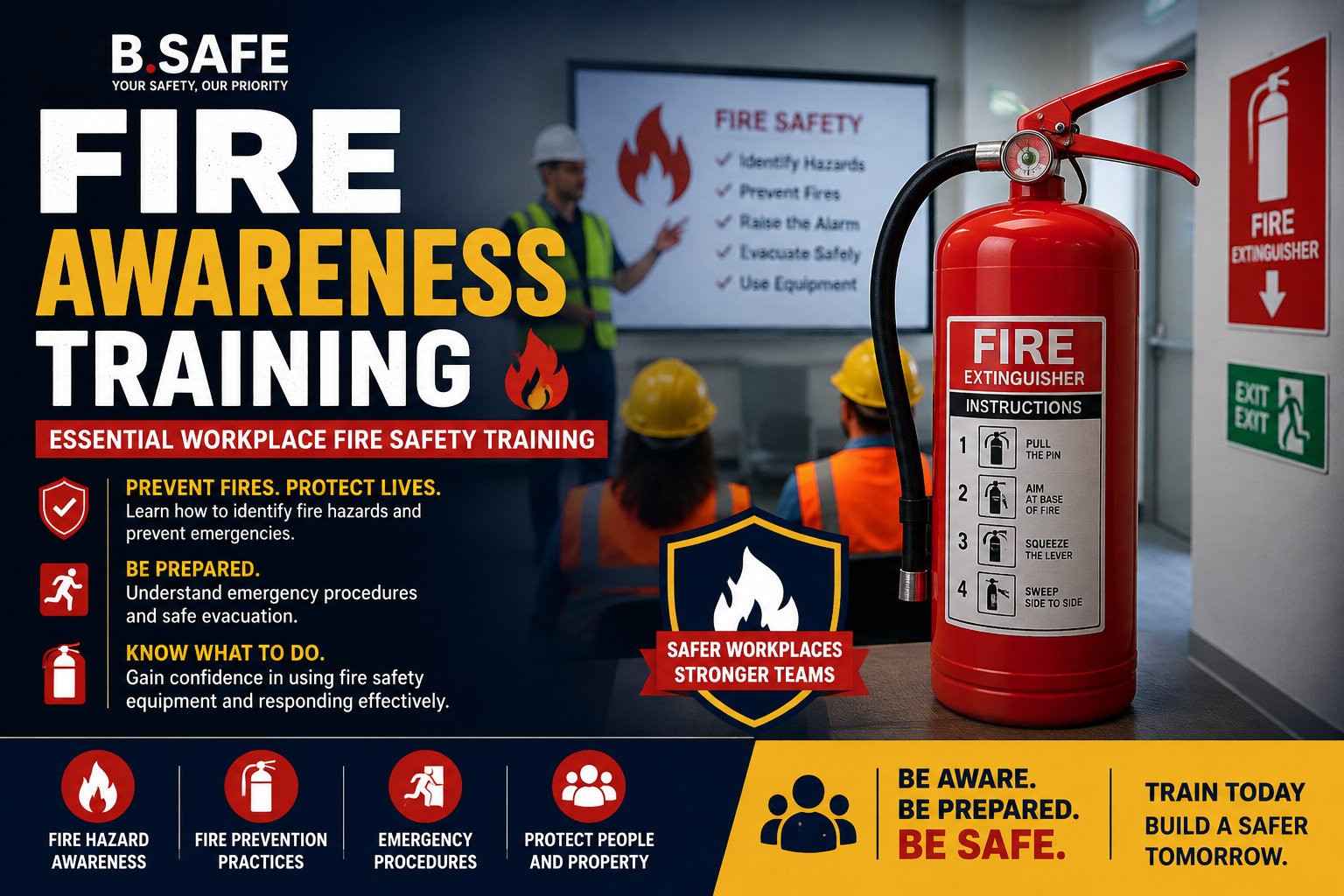
Fire Awareness Training: Essential Workplace Fire Safety Training
Workplace fires can develop quickly and put employees, visitors, equipment, and facilities at serious risk. A proper Fire Awareness Training program helps employees understand common fire hazards, recognize warning signs, follow emergency procedures, and respond appropriately when a fire occurs.
 Fire safety is not only about having fire extinguishers and emergency equipment available. Employees also need to know how to identify potential hazards, prevent unsafe situations, raise the alarm, evacuate safely, and understand their responsibilities during a fire emergency.
For this reason, Workplace Fire Safety Training should be an important part of every organization’s overall health and safety program.
What Is Fire Awareness Training?
Fire Awareness Training is a workplace safety training program designed to provide employees with the knowledge and awareness needed to prevent fires and respond appropriately during a fire emergency.
The training can cover topics such as:
- Common workplace fire hazards
- Fire prevention practices
- Basic fire safety principles
- Emergency alarm procedures
- Evacuation procedures
- Emergency exits and escape routes
- Fire extinguisher awareness
- Employee responsibilities during a fire
- Emergency communication
- Basic fire emergency response
The exact content of a fire safety program should be adapted to the workplace environment, its hazards, emergency procedures, and applicable requirements.
Why Is Fire Safety Training Important?
A fire can become an emergency within a very short period of time. Employees who understand what to do can respond more effectively and avoid actions that could increase the danger.
Effective Fire Safety Training can help organizations:
- Increase employee awareness of fire hazards
- Encourage safer workplace practices
- Improve emergency preparedness
- Help employees understand evacuation procedures
- Reduce unsafe behavior that could contribute to fires
- Improve communication during emergencies
- Support a stronger workplace safety culture
Training should complement, rather than replace, appropriate fire prevention measures, emergency planning, fire protection systems, and workplace procedures.
Common Causes of Workplace Fires
Fire hazards vary considerably between workplaces. Offices, warehouses, laboratories, construction sites, manufacturing facilities, and commercial buildings can all have different sources of ignition and combustible materials.
Common workplace fire hazards may include:
Electrical Equipment
Damaged electrical equipment, overloaded circuits, defective wiring, and inappropriate use of electrical devices can create fire risks.
Employees should understand the importance of reporting damaged equipment and following workplace procedures for electrical safety.
Flammable Materials
Flammable liquids, gases, chemicals, and other combustible materials require appropriate storage, handling, and control.
Employees should be aware of the materials present in their workplace and understand the relevant safety procedures.
Heat Sources
Hot surfaces, machinery, welding operations, open flames, and other heat-producing activities can become ignition sources when appropriate controls are not in place.
Poor Housekeeping
Accumulation of combustible waste, packaging materials, paper, dust, or other materials can increase the potential for fire to spread.
Good housekeeping is therefore an important component of Fire Prevention Training.
Fire Prevention Training
Preventing a fire is one of the most important objectives of workplace fire safety.
A Fire Prevention Training program can teach employees how to recognize hazards before they become emergencies.
Important practices may include:
- Keeping emergency exits clear
- Maintaining good housekeeping
- Reporting damaged electrical equipment
- Storing combustible materials appropriately
- Following procedures for flammable materials
- Controlling ignition sources
- Following hot-work procedures where applicable
- Keeping access to fire safety equipment clear
- Reporting unsafe conditions
Employees should also understand that fire prevention is a shared responsibility.
What Employees Should Do During a Fire Emergency
When a fire occurs, employees should follow their organization’s established emergency procedures.
Depending on the workplace emergency plan, this may include:
- Recognizing the emergency.
- Raising the alarm or notifying the appropriate emergency contact.
- Following the designated evacuation route.
- Leaving the building safely.
- Avoiding elevators where emergency procedures prohibit their use.
- Going to the designated assembly point.
- Following instructions from emergency personnel.
- Never re-entering an unsafe area unless authorized by the appropriate authorities.
The priority during a workplace fire is life safety.
Employees should not take unnecessary risks to retrieve personal belongings or attempt to fight a fire when doing so would place them in danger.
Fire Emergency Training and Evacuation
Fire Emergency Training should help employees understand what happens after a fire alarm is activated.
An effective emergency procedure should clearly communicate:
- Alarm methods
- Emergency exits
- Evacuation routes
- Assembly areas
- Emergency communication procedures
- Employee responsibilities
- Procedures for reporting emergencies
- Procedures for accounting for employees and visitors
Regular emergency exercises and drills can also help employees become familiar with evacuation procedures and identify potential problems in the emergency plan.
Fire Extinguisher Awareness
Fire extinguishers can be an important component of workplace fire protection, but employees must understand that extinguishers are not appropriate for every situation.
Fire extinguisher awareness may include understanding:
- Where extinguishers are located
- How they are identified
- What types of fires they are designed for
- When an extinguisher may be appropriate
- When employees should evacuate instead
- The importance of maintaining a clear escape route
Only employees who are appropriately trained and authorized under the organization’s procedures should attempt to use a portable fire extinguisher, and only when the fire is small, conditions are safe, and there is a clear means of escape.
Who Needs Fire Awareness Training?
Fire safety training can be relevant to employees across many different industries and workplaces.
It may be particularly important for:
- Office employees
- Warehouse workers
- Manufacturing employees
- Construction workers
- Laboratory personnel
- Hospitality employees
- Retail workers
- School and educational staff
- Healthcare employees
- Facility management teams
- Supervisors and managers
The training should be adapted to the specific risks and emergency arrangements of each workplace.
What Does Fire Safety Training Cover?
A comprehensive Fire Safety Training program may include several key areas.
Fire Hazards
Employees learn how to recognize common sources of fire and identify unsafe conditions.
Fire Prevention
Training explains practical measures that can reduce the likelihood of a workplace fire.
Emergency Procedures
Employees learn how to respond when a fire alarm or emergency notification is activated.
Evacuation
Participants learn about emergency exits, escape routes, assembly points, and workplace evacuation procedures.
Fire Safety Equipment
Training can introduce employees to the fire protection equipment available in their workplace and explain its intended purpose.
Emergency Communication
Employees should understand how to report a fire and communicate relevant information during an emergency.
Benefits of Workplace Fire Safety Training
Investing in Workplace Fire Safety Training can provide several benefits for organizations.
Improved Employee Awareness
Employees become more familiar with workplace fire hazards and safer working practices.
Better Emergency Preparedness
Training gives employees a clearer understanding of what to do when an emergency occurs.
Stronger Safety Culture
Regular safety education reinforces the importance of responsible behavior and hazard reporting.
More Effective Evacuation
Employees who understand emergency routes and procedures may be better prepared to evacuate when required.
Reduced Risk of Unsafe Response
Training can help employees understand when they should evacuate rather than attempt to control a fire themselves.
Building an Effective Fire Awareness Program
A workplace fire training program should reflect the actual conditions of the organization.
Before developing a training program, organizations should consider:
- The types of fire hazards present
- The size and layout of the workplace
- The number of employees
- The presence of visitors or contractors
- Emergency exits and escape routes
- Available fire protection equipment
- Emergency communication procedures
- Evacuation arrangements
- Applicable workplace requirements
Training should also be reviewed periodically to ensure that employees remain familiar with the organization’s emergency procedures.
Fire Awareness Training with B.SAFE
B.SAFE provides health, safety, and emergency response training designed to improve workplace safety, employee competency, and emergency preparedness.
The B.SAFE training program includes Fire Awareness Training alongside other workplace safety and emergency response courses.
The available training areas include:
- Basic Safety Training
- Fire Awareness Training
- First Aid Training
- Safety at Work
- Risk Assessment
- Accident Investigation
- Incident Command System (ICS)
Upon successful completion of the applicable training program, participants receive an accredited certificate recognizing successful completion and competency.
For organizations looking to strengthen their employees’ knowledge of workplace fire hazards and emergency procedures, Fire Awareness Training can be an important part of a broader workplace safety strategy.
Frequently Asked Questions
What is Fire Awareness Training?
Fire Awareness Training is workplace training that helps employees understand fire hazards, prevention practices, emergency procedures, and safe evacuation.
Why is Fire Safety Training important?
Fire Safety Training helps employees recognize hazards and understand how to respond appropriately during a workplace fire emergency.
Who should receive Fire Awareness Training?
Employees across different industries can benefit from fire awareness training, particularly those working in environments with significant fire hazards.
Does Fire Awareness Training include fire extinguisher training?
It can include fire extinguisher awareness and information about appropriate use. Practical extinguisher training should follow the organization’s procedures and applicable requirements.
How often should workplace fire safety training be provided?
Training frequency should be determined according to the organization’s risk assessment, workplace requirements, emergency plan, and applicable regulations.
Conclusion
Fire Awareness Training is an important component of workplace safety. By helping employees recognize fire hazards, understand prevention measures, follow emergency procedures, and evacuate safely, organizations can improve their overall emergency preparedness.
Effective Workplace Fire Safety Training should be practical, relevant to the workplace, and integrated with the organization’s wider emergency response and safety program.
For organizations seeking professional safety education, B.SAFE offers Fire Awareness Training as part of its wider range of health, safety, and emergency response training programs.