Safety Helmets: Complete Guide to Choosing the Right Hard Hat for Workplace Safety

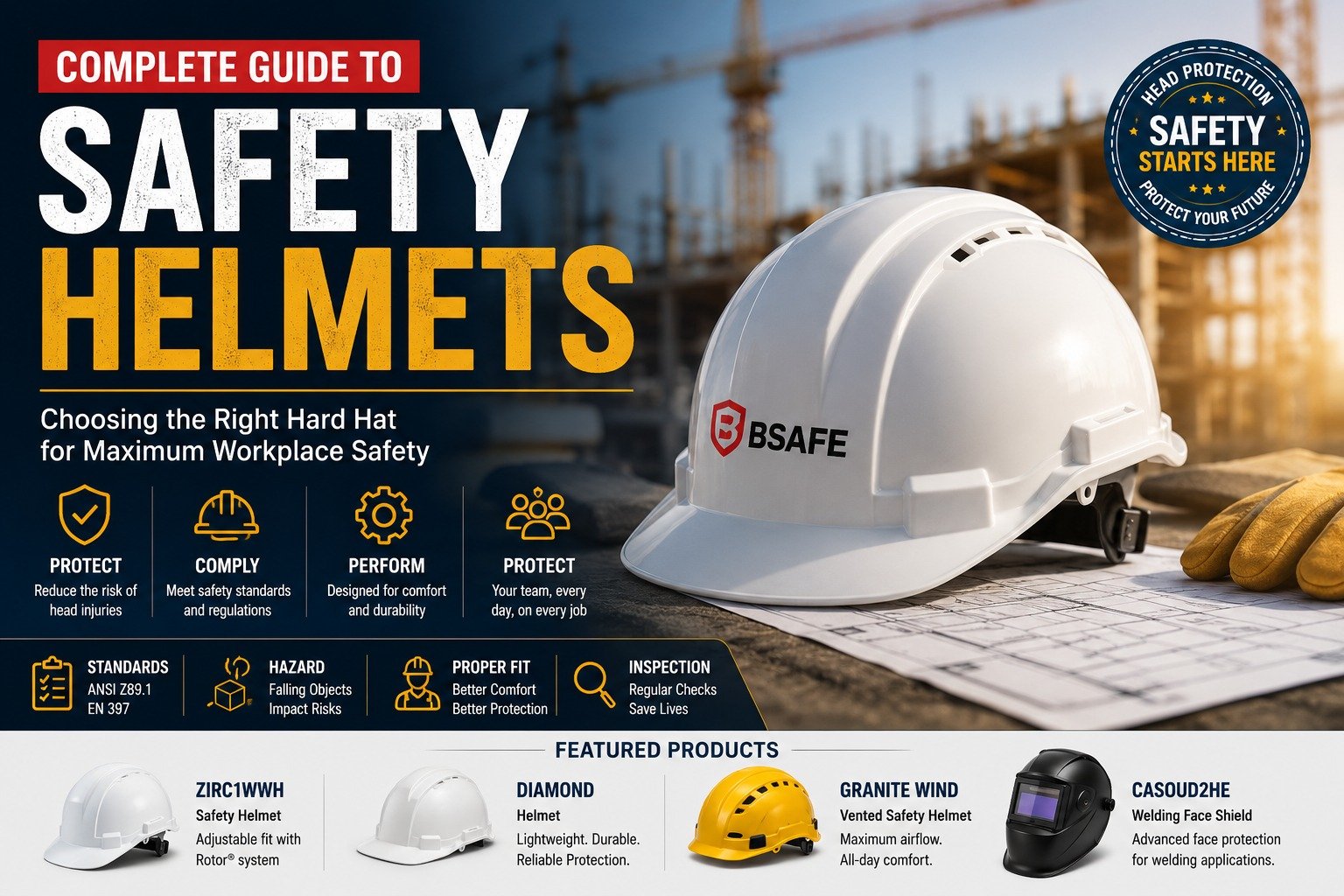
Safety Helmets: Complete Guide to Choosing the Right Hard Hat for Workplace Safety
Head injuries remain one of the most serious hazards in construction sites, industrial facilities, warehouses, and maintenance operations. Falling tools, moving machinery, overhead structures, electrical hazards, and accidental impacts can all result in severe injuries if workers are not wearing proper Safety Helmets.
 A high-quality safety helmet is far more than a simple hard hat. It is an essential piece of Personal Protective Equipment (PPE) designed to absorb impact energy, reduce the risk of head trauma, and protect workers in hazardous environments.
In this comprehensive guide, we’ll explain how safety helmets work, the different types available, the standards they should meet, and how to select the right helmet for your workplace.
Why Safety Helmets Are Essential
A worker’s head is particularly vulnerable to injury. Even relatively small falling objects can cause serious accidents, leading to lost workdays, permanent disability, or fatalities.
Safety helmets help protect against:
- Falling objects
- Flying debris
- Impact with fixed structures
- Electrical hazards (depending on helmet type)
- Slips, trips, and falls
- Construction site hazards
- Industrial maintenance risks
For this reason, safety helmets are mandatory PPE in many industries and are required under workplace safety regulations.
Industries That Require Safety Helmets
Safety helmets are commonly used in:
- Construction
- Manufacturing
- Warehousing
- Oil & Gas
- Mining
- Utilities
- Infrastructure Projects
- Mechanical Maintenance
- Heavy Industry
- Logistics
Different workplaces require different helmet features depending on the level of risk.
Types of Safety Helmets
Not all safety helmets are designed for the same workplace hazards. Selecting the correct helmet depends on the work environment, potential impact risks, electrical hazards, ventilation requirements, and compatibility with additional PPE.
Construction Safety Helmets
Construction helmets are the most commonly used hard hats. They are designed to protect workers from falling objects, accidental impacts, and overhead hazards found on construction sites.
Typical applications include:
- Building construction
- Road work
- Infrastructure projects
- Civil engineering
- Utility maintenance
Industrial Safety Helmets
Industrial environments often expose workers to moving machinery, suspended loads, confined spaces, and maintenance activities.
Industrial helmets provide dependable protection for:
- Manufacturing plants
- Warehouses
- Processing facilities
- Mechanical workshops
- Logistics operations
Vented Safety Helmets
Some workplaces involve prolonged outdoor work in hot climates.
Vented helmets improve airflow and wearer comfort by allowing heat to escape while maintaining impact protection for environments where electrical hazards are not present.
These helmets are ideal for:
- Construction
- Road maintenance
- Landscaping
- Outdoor utilities
Welding Protection
Workers performing welding operations require additional protection beyond standard hard hats.
A welding face shield protects against:
- Sparks
- Molten metal
- UV radiation
- Infrared radiation
- Flying particles
When combined with a compatible safety helmet, welding face shields provide comprehensive head and face protection.
Safety Helmet Standards
Choosing a certified helmet is essential for ensuring reliable protection.
Some of the most recognized standards include:
EN 397
The primary European standard for industrial safety helmets.
It evaluates helmets for:
- Impact absorption
- Penetration resistance
- Chin strap performance
- Flame resistance
ANSI Z89.1
The American standard covering industrial head protection.
ANSI helmets are classified according to:
- Impact protection
- Electrical insulation
- Performance testing
Always verify that workplace helmets comply with the safety standards required by local regulations.
How to Choose the Right Safety Helmet
Selecting the correct helmet involves more than simply choosing a color or style.
Consider the following factors:
Workplace Hazards
Identify whether workers face:
- Falling tools
- Impact hazards
- Electrical risks
- Welding operations
- Outdoor exposure
Helmet Material
Modern safety helmets are commonly manufactured from:
- High Density Polyethylene (HDPE)
- Polypropylene (PP)
These materials provide excellent impact resistance while remaining lightweight.
Suspension System
The suspension system absorbs impact energy before it reaches the wearer’s head.
An adjustable multi-point suspension provides:
- Better comfort
- Improved stability
- Enhanced impact distribution
Comfort
Workers wear helmets for many hours every day.
Look for helmets with:
- Adjustable headbands
- Sweatbands
- Lightweight construction
- Ventilation (when appropriate)
Comfort increases the likelihood that workers will wear PPE correctly throughout the shift.
Accessory Compatibility
Some helmets can accommodate additional PPE, including:
- Face shields
- Ear defenders
- Safety visors
- Chin straps
Using compatible accessories improves overall workplace protection.
Common Safety Helmet Colors
Although colors may vary between companies, many organizations use standard color coding.
| Color | Common Role |
|---|---|
| White | Engineers, Managers, Supervisors |
| Yellow | General Workers |
| Blue | Electricians, Technical Personnel |
| Green | Safety Officers |
| Red | Emergency Personnel |
| Orange | Road Construction Workers |
Always follow your company’s specific color policy.
How to Properly Wear a Safety Helmet
Even the highest-quality Safety Helmet cannot provide adequate protection if it is worn incorrectly.
Follow these best practices:
- Adjust the suspension system to achieve a snug but comfortable fit.
- Position the helmet level on your head, covering the forehead.
- Never wear the helmet backward unless it is specifically designed for reverse wear.
- Fasten the chin strap whenever required, especially when working at height or in windy conditions.
- Avoid placing hats, tools, or objects between the suspension system and your head.
- Always inspect the helmet before each use.
A properly fitted helmet significantly improves impact protection and overall workplace safety.
Safety Helmet Inspection Checklist
Regular inspections help ensure your helmet continues to provide reliable protection.
Before every shift, check for:
✔ Cracks or fractures in the shell
✔ Deep scratches or impact damage
✔ UV deterioration or discoloration
✔ Loose or damaged suspension straps
✔ Worn sweatband
✔ Broken adjustment system
✔ Missing accessories
If any damage is found, replace the helmet immediately.
When Should You Replace a Safety Helmet?
Many workers mistakenly believe that helmets only need replacement after a major accident.
In reality, helmets should be replaced whenever:
- The helmet has absorbed an impact.
- Cracks or structural damage are visible.
- The suspension system is worn.
- UV exposure has weakened the shell.
- The manufacturer’s recommended service life has been reached.
Routine inspections combined with timely replacement help maintain the highest level of worker protection.
Featured Safety Helmets Available at BSAFE
BSAFE offers professional head protection solutions suitable for construction, industrial, maintenance, and manufacturing environments.
ZIRC1WWH Safety Helmet
The ZIRC1WWH Safety Helmet features a UV-resistant HDPE shell, an 8-point suspension system, and the patented Rotor® adjustment mechanism for a secure and comfortable fit throughout the workday.
Recommended for:
- Construction
- Industrial maintenance
- Warehousing
- Utilities
- Manufacturing
DIAMOND Helmet
The DIAMOND Helmet provides dependable head protection with a lightweight design that balances comfort and durability for daily industrial use.
Suitable for:
- General industry
- Construction
- Logistics
- Maintenance
Granite Wind Vented Safety Helmet
For workers operating in hot outdoor environments, the Granite Wind Vented Safety Helmet improves airflow while maintaining reliable impact protection.
Ideal for:
- Road construction
- Outdoor utilities
- Infrastructure projects
- Civil engineering
CASOUD2HE Welding Face Shield
Head protection often needs to be combined with face protection during welding operations.
The CASOUD2HE Welding Face Shield helps protect workers from:
- Welding sparks
- Molten metal
- UV radiation
- Infrared radiation
It complements industrial head protection systems for welding professionals.
Best Practices for Workplace Head Protection
A comprehensive head protection program should include:
- Wearing certified safety helmets.
- Conducting routine inspections.
- Replacing damaged helmets immediately.
- Training employees on correct helmet use.
- Combining helmets with other PPE when required.
Employers should also perform regular workplace hazard assessments to determine the most appropriate protective equipment.
Conclusion
Safety helmets are one of the most important forms of personal protective equipment in industrial workplaces. Whether working on construction sites, manufacturing facilities, warehouses, or maintenance operations, wearing the correct Safety Helmet significantly reduces the risk of serious head injuries.
Choosing a certified helmet, ensuring proper fit, performing regular inspections, and replacing damaged equipment are essential steps toward maintaining a safe working environment.
At BSAFE, we provide reliable head protection solutions including the ZIRC1WWH Safety Helmet, DIAMOND Helmet, Granite Wind Vented Safety Helmet, and CASOUD2HE Welding Face Shield to help businesses protect their workforce across a wide range of industrial applications.
Frequently Asked Questions (FAQ)
What is the purpose of a safety helmet?
A safety helmet protects workers from head injuries caused by falling objects, impacts, and other workplace hazards commonly found in construction and industrial environments.
What is the difference between a hard hat and a safety helmet?
The terms are often used interchangeably. However, modern safety helmets generally provide improved fit, comfort, accessory compatibility, and enhanced protection compared to traditional hard hats.
How often should a safety helmet be replaced?
A helmet should be replaced after any significant impact, if it shows signs of damage, or when it reaches the manufacturer’s recommended service life.
Can safety helmets protect against electrical hazards?
Some helmets are specifically designed and certified for electrical protection. Always verify the product certification before using it near electrical hazards.
Are vented helmets suitable for every workplace?
No. Vented helmets improve airflow but may not be appropriate in environments where electrical hazards are present.
Reference
For official guidance on head protection requirements in the workplace, refer to the OSHA Personal Protective Equipment – Head Protection: