Labnori Eyewash Station and Emergency Shower: Selection Guide for Workplace Safety

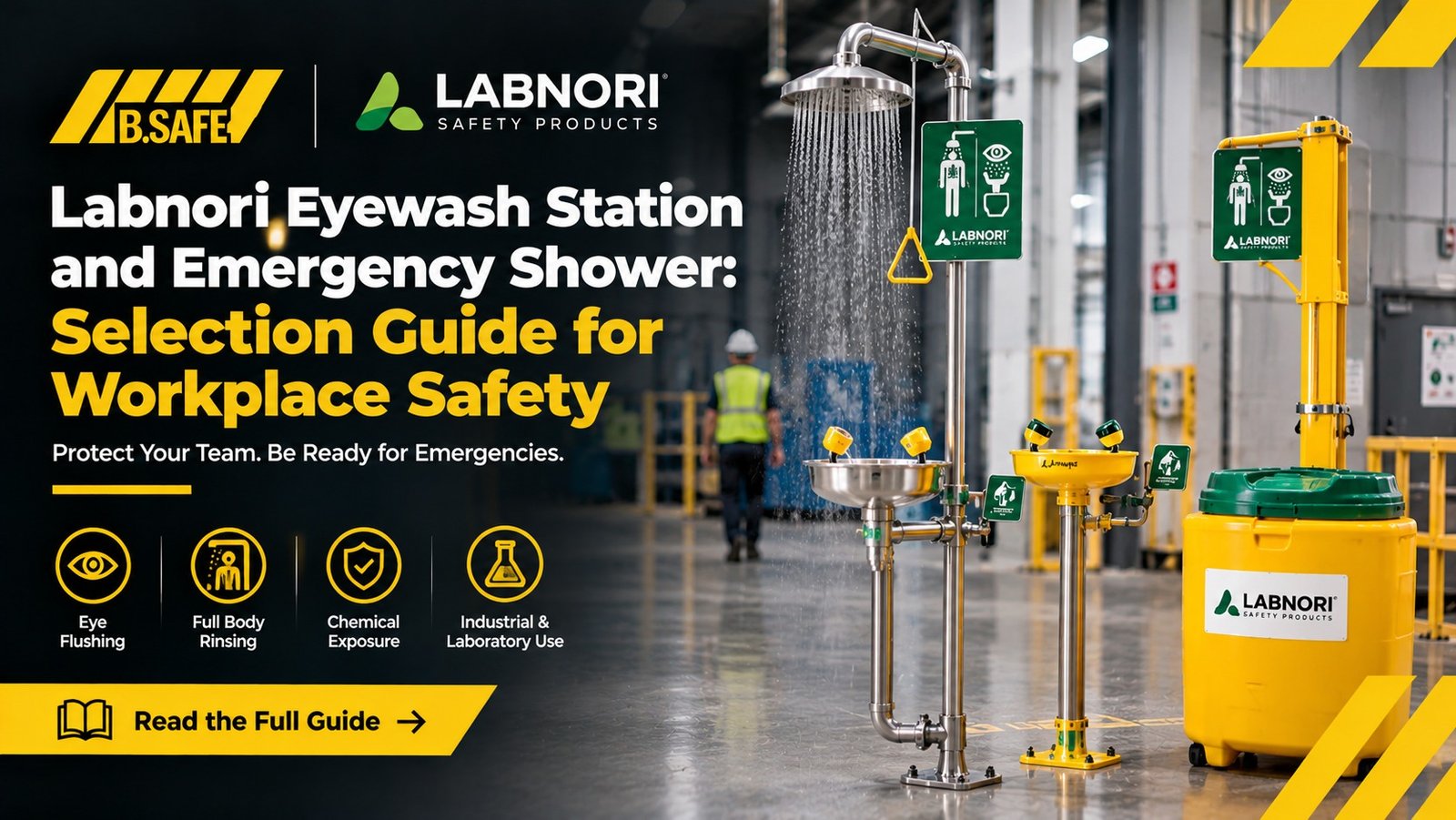
Labnori Eyewash Station and Emergency Shower: Selection Guide for Workplace Safety
In workplaces where hazardous chemicals, corrosive substances, or industrial contaminants are handled, immediate access to suitable emergency washing equipment is an important part of workplace safety planning.
 A Labnori eyewash station or emergency shower can help provide rapid flushing after accidental exposure to hazardous substances. The right equipment depends on the type of exposure risk, the work area, the water supply, installation requirements, and applicable safety standards.
For laboratories, manufacturing facilities, chemical storage areas, and industrial plants in Saudi Arabia, understanding the differences between eyewash stations and emergency showers can help safety managers make more informed purchasing decisions.
B.SAFE lists several Labnori emergency washing products, including combination shower and eyewash units and a pedestal-mounted eyewash station. You can explore the Labnori product range to review the available options.
What Is a Labnori Eyewash Station?
An emergency eyewash station is designed to provide immediate flushing of the eyes following accidental exposure to hazardous chemicals, dust, or other contaminants.
Depending on the model, an eyewash station may be installed on a pedestal, mounted in a fixed location, or supplied as a self-contained portable unit.
These systems are commonly considered for workplaces such as:
- Chemical laboratories and research facilities.
- Manufacturing and processing plants.
- Pharmaceutical production areas.
- Chemical storage and handling locations.
- Industrial maintenance workshops.
- Facilities where workers may be exposed to hazardous liquids or particulates.
The equipment must be suitable for the identified hazards and installed according to the manufacturer’s instructions and applicable requirements.
What Is an Emergency Safety Shower?
An emergency safety shower is designed to flush hazardous substances from a person’s body following certain types of accidental exposure.
Unlike an eyewash station, which focuses on the eyes, a safety shower provides full-body rinsing. Some models combine both functions in a single unit.
A combination emergency shower and eyewash station may be appropriate where a workplace risk assessment identifies the possibility of hazardous substances contacting both the eyes and the body.
Emergency washing equipment is intended for emergency response. It does not replace suitable personal protective equipment, safe chemical handling procedures, engineering controls, or employee training.
Types of Labnori Emergency Shower and Eyewash Equipment
1. Combination Emergency Shower and Eyewash Station
A combination unit integrates a full-body emergency shower and an eyewash station into one installation.
This configuration can be useful in chemical handling areas, laboratories, manufacturing plants, and other workplaces where different types of exposure may occur.
B.SAFE lists the following Labnori models:
The SS3001 combines a shower with an integrated eyewash station and uses stainless steel components. The SS3001Y offers a similar combination arrangement with high-visibility yellow safety components.
When comparing these models, review the construction materials, water connections, operating mechanisms, dimensions, installation conditions, and the manufacturer’s technical documentation.
2. Pedestal-Mounted Eyewash Station
A pedestal-mounted eyewash station provides a fixed location for emergency eye flushing without requiring a combined full-body shower.
It may be suitable for laboratories, production areas, and other locations where the primary identified risk involves potential eye exposure.
B.SAFE lists the SS3003 Pedestal-Mounted Eyewash Station.
This model is described as a stainless steel unit with dual aerated spray heads. Confirm its water supply, flow requirements, installation specifications, and suitability for the intended application before purchase.
A standalone eyewash station should not be selected as a substitute for an emergency shower where the risk assessment identifies a need for full-body flushing.
3. Portable Eyewash Station
A portable eyewash station may be useful where fixed plumbing is unavailable or the work area changes frequently.
B.SAFE also lists the SS3053 Portable Eyewash Station, described as a self-contained unit that does not require a permanent plumbing connection.
Portable equipment has specific limitations. Buyers should verify the flushing-fluid capacity, operating method, maintenance requirements, intended duration of use, and suitability for the hazard.
A portable eyewash unit should not automatically be considered an adequate replacement for a plumbed emergency system. Its suitability depends on the applicable requirements and the workplace risk assessment.
How to Choose the Right Labnori Eyewash Station
Selecting emergency washing equipment involves more than comparing product prices or appearances. Consider the following factors before making a purchase.
1. Identify the Exposure Risk
Start by reviewing the chemicals and processes used in the area.
Consider whether workers could experience:
- Chemical splashes to the eyes.
- Hazardous substances contacting the body.
- Exposure to corrosive liquids.
- Dust or particulate contamination.
- Other risks that require immediate flushing.
Consult the relevant safety data sheets (SDS) and workplace risk assessment to determine the appropriate type of emergency equipment.
2. Decide Between an Eyewash Station and a Combination Unit
An eyewash station is intended for eye flushing, while an emergency shower is designed for full-body rinsing.
A combination unit provides both functions. Where a risk assessment identifies the potential for both eye and body exposure, a combination system may be worth evaluating.
The choice should reflect the actual hazards, rather than relying on a general assumption that one configuration is suitable for every workplace.
3. Review Water Supply and Flow Requirements
Plumbed emergency washing equipment requires an appropriate flushing-fluid supply.
Before installation, verify the manufacturer’s requirements for water pressure, flow, connection size, water quality, and drainage. Confirm that the building’s water system can support the selected unit under its intended operating conditions.
Where flushing fluid could contain hazardous contaminants after use, drainage and disposal arrangements must also be assessed.
4. Consider the Installation Location
Emergency equipment should be readily accessible from the relevant hazard area, clearly identified, well lit, and free from obstructions.
The route should allow an exposed worker to reach the equipment quickly without encountering avoidable barriers.
Applicable standards and site-specific conditions determine the required placement. Do not use a generic distance as a substitute for checking the current standard and the manufacturer’s installation guidance.
5. Check Materials and Construction
Industrial environments may expose equipment to moisture, cleaning agents, chemicals, or corrosive conditions.
Review the materials used in the shower head, eyewash bowl, piping, valves, and other components. Stainless steel construction may be suitable for certain demanding environments, but material selection must account for the actual operating conditions.
Confirm chemical compatibility and corrosion resistance with the manufacturer.
6. Verify Applicable Standards
Emergency eyewash and shower requirements vary by jurisdiction, application, and workplace risk.
Before purchasing, review the applicable regulations and standards, such as ANSI/ISEA Z358.1 where relevant. Verify the exact model’s documented compliance rather than assuming that every product in a brand’s range meets the same requirements.
For projects requiring formal compliance documentation, request the relevant technical data and supporting documents from the supplier.
Where Should Emergency Eyewash Stations Be Installed?
The correct location depends on the hazard, the equipment type, and the applicable installation requirements.
Chemical Laboratories
Laboratories may require emergency eyewash equipment near activities involving hazardous liquids, corrosive chemicals, or other substances that could injure the eyes.
Chemical Storage Areas
Facilities storing and handling hazardous chemicals should assess the need for accessible emergency washing equipment near relevant handling and transfer operations.
Manufacturing and Processing Plants
Production lines and processing areas may require combination emergency showers and eyewash stations where a risk assessment identifies the possibility of eye and body exposure.
Pharmaceutical and Research Facilities
These workplaces should evaluate emergency equipment according to the chemicals, processes, hygiene requirements, and operational conditions present.
Oil, Gas, and Petrochemical Facilities
The choice and placement of emergency washing equipment should reflect the substances handled, potential exposure scenarios, environmental conditions, and site-specific emergency procedures.
In every setting, installation should follow the manufacturer’s instructions and applicable standards. The equipment must remain accessible and ready for use.
Inspection and Maintenance of Emergency Shower and Eyewash Equipment
Installing emergency equipment is only one part of an effective safety program. Regular inspection and maintenance help ensure that it remains accessible and functional.
A workplace maintenance program should address:
- Checking that access routes are clear.
- Verifying that identification signs are visible.
- Inspecting valves, activation mechanisms, and visible components.
- Checking the water supply and flushing-fluid condition as applicable.
- Testing and maintaining the equipment according to manufacturer instructions and relevant standards.
- Recording inspections, identifying defects, and arranging corrective action.
- Training workers to recognize and use emergency equipment.
Testing frequency and procedures should follow the applicable requirements and manufacturer’s instructions. Where testing may release water into the work area, suitable drainage and contamination controls should be considered.
Employees should also understand the site’s emergency response procedures and know how to report equipment defects.
Labnori SS3001 vs SS3001Y vs SS3003
The following comparison summarizes the main differences based on the product descriptions listed by B.SAFE.
| Feature | SS3001 | SS3001Y | SS3003 |
|---|---|---|---|
| Equipment type | Combination shower and eyewash | Combination shower and eyewash | Eyewash station |
| Primary function | Body and eye flushing | Body and eye flushing | Eye flushing |
| Installation | Floor-mounted | Floor-mounted | Pedestal-mounted |
| Construction described | Heavy-duty stainless steel | Stainless steel with yellow safety components | Stainless steel |
| Main consideration | Combined emergency washing | Combined washing with high-visibility components | Dedicated eye-flushing application |
This comparison is a starting point, not a substitute for technical evaluation. Verify the exact specifications, supply requirements, compliance documentation, and suitability for the intended workplace before choosing a model.
Why Explore Labnori Eyewash Stations at B.SAFE?
Choosing emergency washing equipment requires careful consideration of workplace hazards, installation conditions, and applicable safety requirements.
B.SAFE lists several Labnori products for emergency eye and body flushing, allowing buyers to compare combination units, fixed eyewash stations, and portable options.
Explore the following product pages:
- SS3001 Emergency Shower and Eyewash Station
- SS3001Y Emergency Shower and Eyewash Station
- SS3003 Pedestal-Mounted Eyewash Station
- SS3053 Portable Eyewash Station
You can also browse the complete Labnori brand page to explore other safety products, including spill control and chemical storage solutions.
Before ordering, confirm product availability, the exact model, technical specifications, and delivery or installation requirements with B.SAFE.
Frequently Asked Questions
What is a Labnori eyewash station used for?
A Labnori eyewash station is intended to provide emergency flushing of the eyes after exposure to hazardous substances or contaminants, depending on the selected model and its approved application.
What is the difference between an eyewash station and an emergency shower?
An eyewash station focuses on flushing the eyes, while an emergency shower provides full-body rinsing. Combination units integrate both functions where the identified workplace hazards require them.
What is the difference between the SS3001 and SS3001Y?
Both models are described as combination emergency shower and eyewash stations. The SS3001Y includes high-visibility yellow safety components. Check the individual product specifications for other differences before purchasing.
Can I use a portable eyewash station instead of a fixed unit?
Not in every situation. A portable unit may be appropriate for certain temporary or remote applications, but suitability depends on the hazard assessment, required flushing performance, applicable regulations, and the manufacturer’s documentation.
Where should an emergency eyewash station be installed?
It should be accessible from the relevant hazard area, clearly identified, well lit, and positioned according to the applicable standard and manufacturer instructions. The installation must not require workers to navigate avoidable obstacles.
How often should emergency eyewash equipment be inspected?
Inspection and testing should follow the applicable standards, workplace procedures, and manufacturer’s instructions. Keep records of checks and correct any defects promptly.
Where can I buy Labnori eyewash stations in Saudi Arabia?
You can explore the Labnori product range at B.SAFE and review individual product pages to identify equipment relevant to your workplace. Confirm availability and specifications before ordering.
Conclusion
A suitable emergency eyewash station or safety shower can play an important role in a workplace’s emergency response arrangements where hazardous exposure is possible.
Labnori offers different equipment configurations, including combination emergency showers and eyewash stations, fixed eyewash units, and portable eyewash equipment. Selecting the correct solution requires a clear understanding of the hazard, installation conditions, flushing requirements, maintenance needs, and applicable standards.
Explore the Labnori range at B.SAFE to compare available emergency washing equipment for laboratories, industrial facilities, and chemical handling workplaces.