JCB Safety Shoes in Saudi Arabia: Types, Features and How to Choose

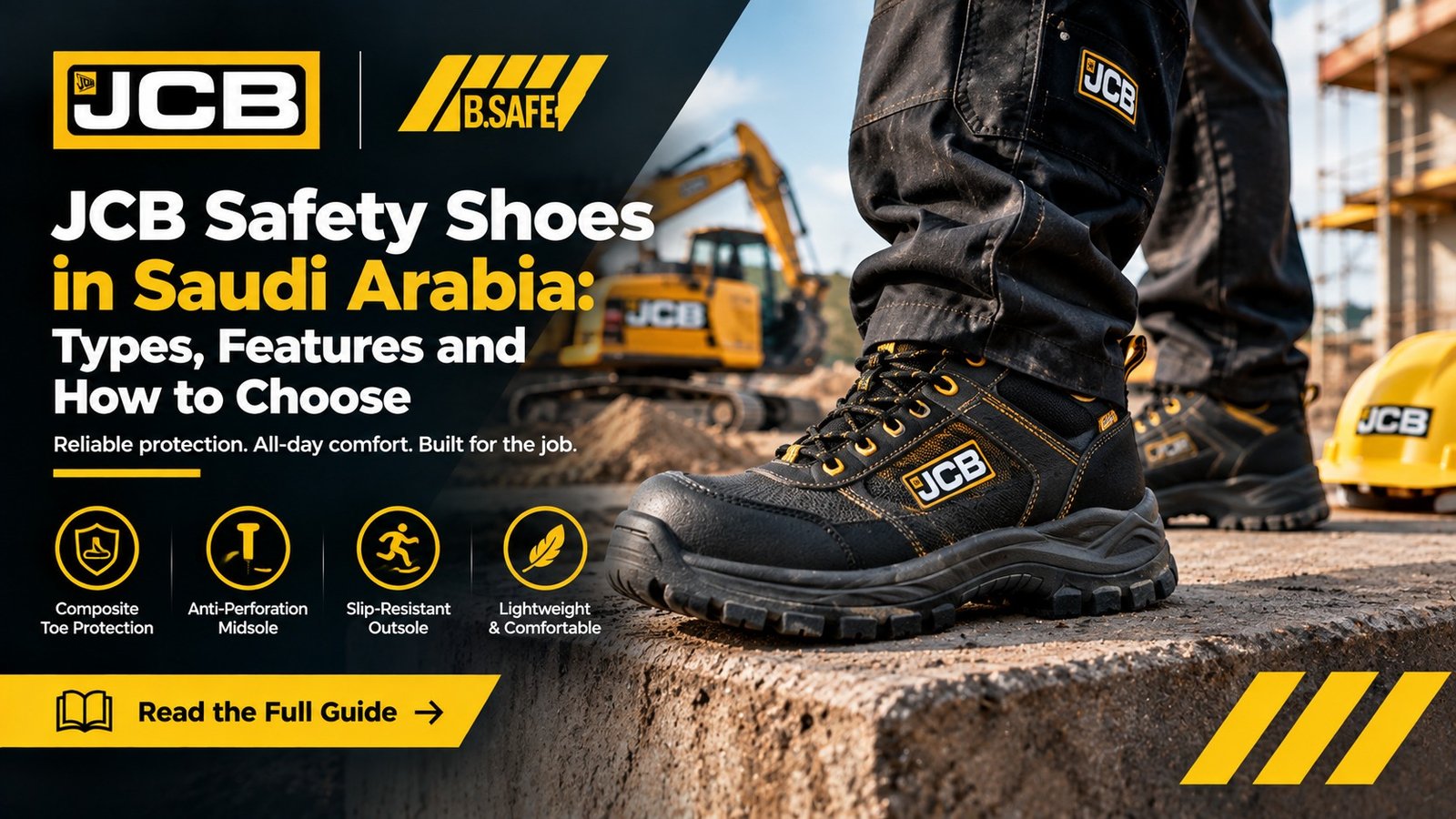
JCB Safety Shoes in Saudi Arabia: Types, Features and How to Choose
Choosing the right safety footwear is an essential part of workplace protection. In construction sites, warehouses, manufacturing plants, and maintenance facilities, workers may face hazards such as falling objects, sharp materials, slippery surfaces, and long hours of standing or walking. The right safety shoes can help reduce specific foot-injury risks while supporting comfort throughout the working day.
 JCB safety shoes are an option for professionals looking for protective work footwear. At B.SAFE, you can explore available JCB models and compare their features to identify footwear that suits your workplace requirements.
In this guide, we explain the key features to consider when choosing JCB safety footwear, the differences between common protective technologies, and how to select a suitable model for your job.
Why Choose JCB Safety Shoes?
JCB is a British brand widely recognized for its construction and industrial equipment. Its safety footwear range is designed for professional environments where foot protection, durability, and comfort are important considerations.
When comparing JCB safety shoes, focus on the specifications of each model rather than the brand name alone. Different shoes may offer different materials, toe protection, cushioning, and underfoot protection.
Potential benefits to look for include:
- Toe protection: Helps protect against certain impact and compression hazards when the shoe is designed and rated for those risks.
- Anti-perforation protection: A protective midsole can help reduce the risk of sharp objects penetrating the sole.
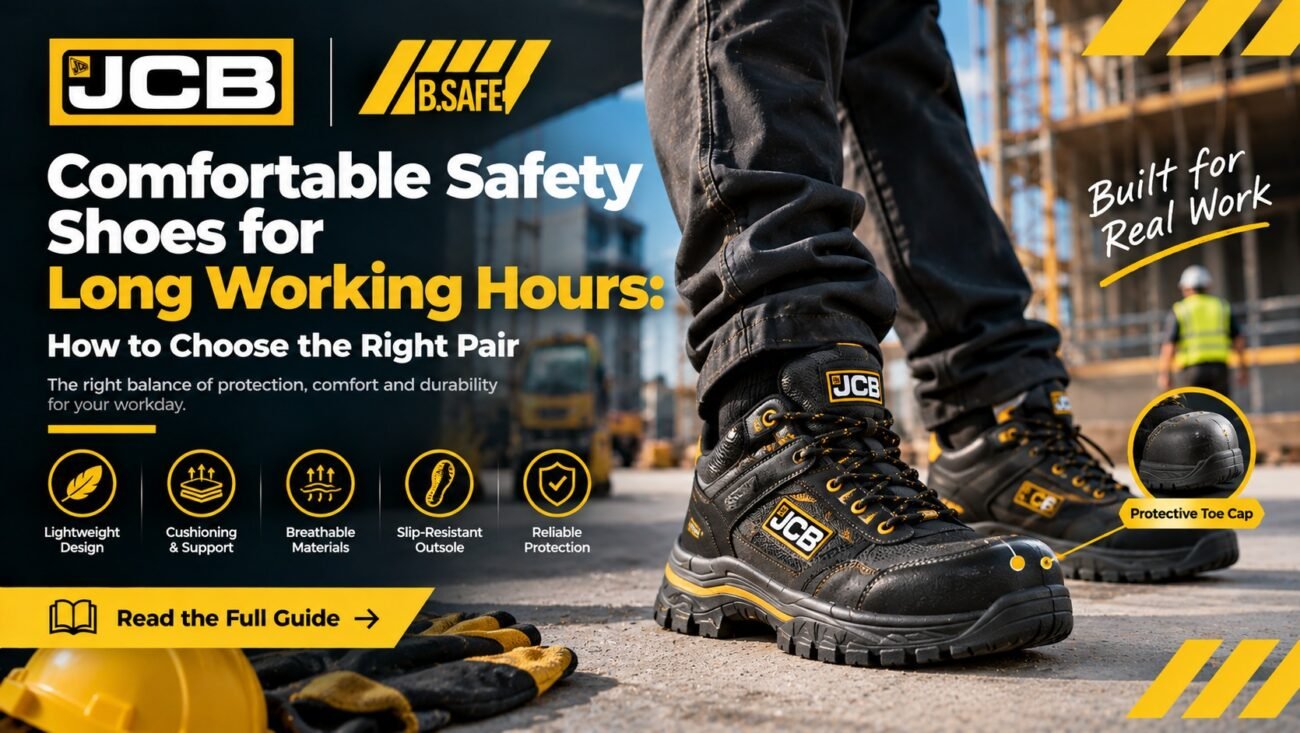
- Comfort for long shifts: Cushioning, supportive insoles, and appropriate fit can help make extended periods of standing and walking more comfortable.
- Breathable construction: Mesh linings and suitable materials may help improve airflow inside the shoe.
- Traction and stability: The outsole should be appropriate for the surfaces and conditions in your workplace.
The best choice depends on your job tasks, workplace risk assessment, and the exact protection offered by the selected model.
Types of JCB Safety Footwear
Safety footwear should be selected according to the hazards workers may encounter. Before purchasing, check the product specifications and confirm that the model meets your workplace’s required safety standards.
1. Composite Toe Safety Shoes
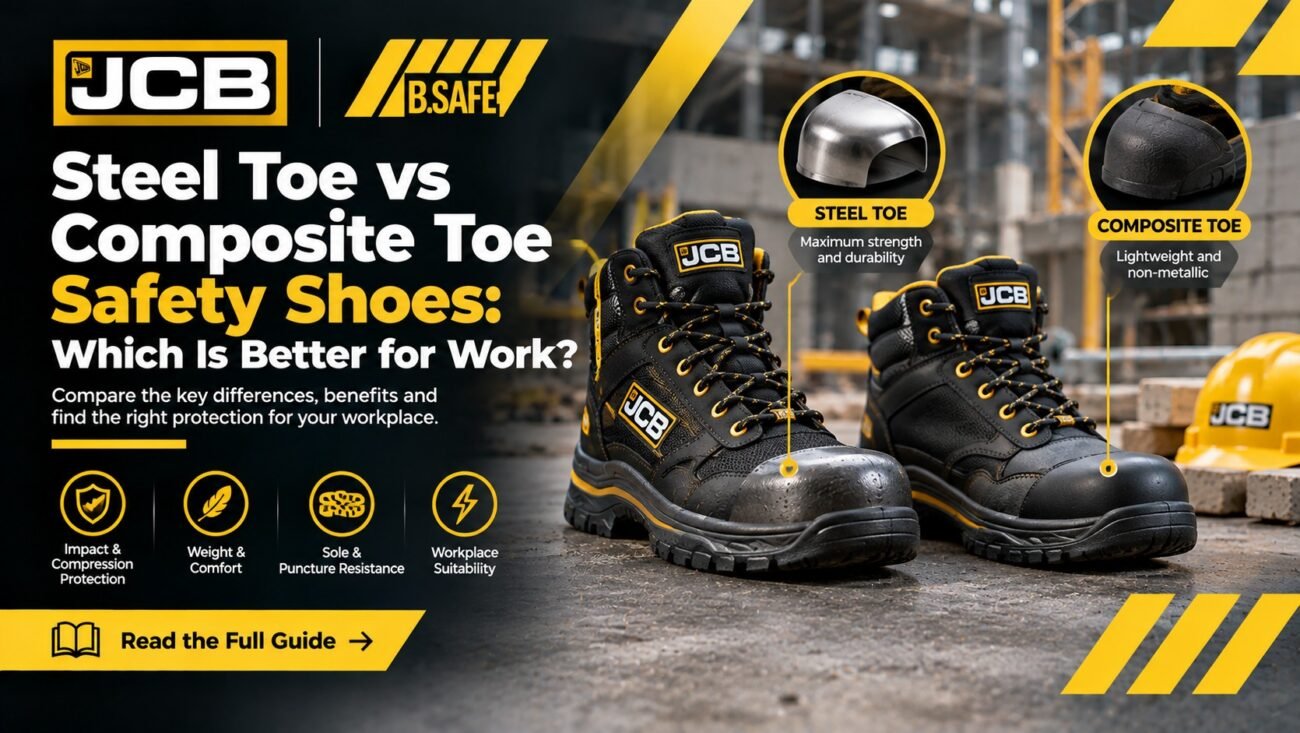
Composite toe safety shoes use a non-metallic protective toe cap. Depending on the design, this can provide impact protection while reducing the shoe’s weight compared with some traditional steel-toe models.
Composite toe footwear may be worth considering for workers who spend much of their shift walking or standing. However, the level of protection must be confirmed through the model’s documented rating.
For example, the JCB008A Safety Shoes feature a composite toe cap, a carbon-fiber anti-perforation midplate, a memory foam and mesh insole, and a rubber outsole.
These features make the model worth evaluating for suitable industrial and construction applications, provided its specifications match the hazards present at the worksite.
2. Safety Shoes with Anti-Perforation Protection
Some workplaces expose workers to nails, metal fragments, sharp waste, or other objects that could penetrate the sole.
In these environments, anti-perforation protection is an important feature to assess. Protective midsoles are designed to help reduce the risk of sharp objects reaching the underside of the foot.
The JCB008A model includes a carbon-fiber anti-perforation midplate according to its product specifications.
Before selecting any safety shoe, verify the documented level of penetration resistance and confirm that it is suitable for the specific workplace hazard. Not every safety shoe includes this feature.
3. Lightweight Safety Shoes for Daily Work
Workers in warehouses, logistics facilities, factories, and maintenance teams may walk long distances during a shift. In these situations, shoe weight and cushioning can influence day-to-day comfort.
When comparing lightweight safety shoes, consider:
- The overall weight and fit of the footwear.
- The insole and midsole cushioning.
- Breathability and lining materials.
- Outsole grip for the actual working surface.
- The required level of toe and underfoot protection.
A lightweight design should never replace the protection required by the job. Choose a model that balances comfort with the documented safety features needed for your workplace.
Which JCB Safety Shoes Are Suitable for Different Work Environments?
Different workplaces create different risks. Use the following guide as a starting point, then confirm the exact requirements through your site’s risk assessment.
| Work environment | Features to evaluate |
|---|---|
| Construction sites | Toe protection, underfoot protection, outsole grip, and durability |
| Warehouses and logistics | Comfort during walking, appropriate grip, and protection from dropped objects |
| Manufacturing plants | Toe protection, anti-perforation features where needed, and suitable outsole performance |
| Workshops and maintenance | Protection against tools, sharp materials, and other task-specific hazards |
| General industrial work | Appropriate protective rating, fit, durability, and comfort |
No single safety shoe is suitable for every environment. For example, a shoe designed for general indoor work may not be appropriate for wet surfaces, chemical exposure, electrical hazards, or specialized outdoor conditions unless its specifications explicitly cover those risks.
How to Choose the Right JCB Safety Shoes
Before buying JCB safety footwear, review these five factors.
1. Identify the Workplace Hazards
Start by identifying the hazards workers may encounter. These can include falling objects, compression risks, sharp objects underfoot, slippery floors, or extended periods of standing and walking.
Your workplace risk assessment should determine which protective features are necessary. Do not choose a shoe based on appearance or comfort alone.
2. Check the Toe Protection
Safety shoes may use steel, composite, or other protective toe-cap designs. Each model should be assessed according to its documented impact and compression protection.
If a non-metallic toe cap is important for your application, check the product specifications to confirm that the model uses a composite toe.
3. Evaluate the Sole and Underfoot Protection
The outsole and midsole perform different functions. The outsole contributes to grip, wear resistance, and contact with the walking surface, while a protective midsole may help guard against penetration hazards.
Look for documented slip-resistance or anti-perforation properties when these are required. Do not assume that every rubber outsole is certified for every slippery surface or that every safety shoe has a puncture-resistant midsole.
4. Prioritize Fit and Comfort
Poorly fitting safety footwear can cause discomfort and make long shifts more difficult. When choosing a pair:
- Select the correct size and allow suitable room for the toes.
- Check that the heel feels secure without excessive movement.
- Consider cushioning and arch support.
- Check whether the lining and upper materials suit your working conditions.
- Try the footwear with the socks normally worn at work, where possible.
Comfort is important, but it must be balanced with the required level of protection.
5. Verify Standards and Product Documentation
Check the product page or manufacturer documentation for the applicable safety standard and the specific protection provided by the model.
The B.SAFE product page for JCB008A states compliance with ASTM F2413-18 and identifies Intertek testing information. Confirm the relevant documentation and requirements for your application before purchasing.
A standard or test reference should not be assumed to cover every workplace hazard. Make sure the model’s documented performance matches your site’s safety requirements.
JCB Safety Shoes Available at B.SAFE
B.SAFE lists several JCB safety footwear models. You can review the product pages and request further details to compare the available options.
JCB008A Safety Shoes
The JCB008A Safety Shoes feature:
- Composite toe protection.
- Carbon-fiber anti-perforation midplate.
- Memory foam and mesh insole.
- 3D mesh lining.
- EVA midsole and rubber outsole.
This model may be worth evaluating for workplaces that require these features, subject to confirmation of the product’s suitability for your specific hazards.
JCB008B Safety Shoes
The JCB008B model is listed with a lightweight design, composite toe, carbon-fiber midplate, memory foam and mesh insole, and EVA and rubber outsole.
Compare its documented specifications with the JCB008A and your workplace requirements before making a selection.
Explore the JCB Range
You can also browse the full range on the JCB brand page at B.SAFE.
Compare the models, check their available specifications, and contact B.SAFE if you need assistance identifying suitable footwear for your application.
Why Buy JCB Safety Footwear from B.SAFE?
Choosing protective footwear involves more than selecting a brand. Buyers need to understand which features are available, whether the model meets the relevant workplace requirements, and how to obtain accurate product information.
B.SAFE provides a dedicated JCB brand page where you can explore listed models and access individual product pages.
Before placing an order, confirm the required size, current availability, pricing, and relevant product documentation with the supplier. This is particularly important when sourcing safety footwear for teams or larger industrial projects.
Frequently Asked Questions About JCB Safety Shoes
Are JCB safety shoes suitable for construction work?
Some JCB safety footwear models may be suitable for construction applications, depending on their documented protective features. Check the toe protection, underfoot protection, outsole performance, and applicable safety rating against the hazards at your site.
What is the difference between composite toe and steel toe safety shoes?
Composite toe shoes use non-metallic protective materials, while steel toe shoes use a steel protective cap. Both types may provide impact protection when properly rated. Their weight, construction, and suitability for particular working conditions vary by model.
Do JCB safety shoes provide anti-perforation protection?
Some models do. For example, the B.SAFE product information for JCB008A identifies a carbon-fiber anti-perforation midplate. Always check the individual model’s specifications rather than assuming this feature is included across the entire range.
Are lightweight safety shoes suitable for long working hours?
Lightweight construction, cushioning, breathable materials, and proper fit can contribute to comfort during extended shifts. However, workers should still choose footwear that provides the protection required for their specific tasks.
How can I choose the right size of JCB safety shoes?
Use the size information provided for the specific model and follow the supplier’s sizing guidance. The shoe should fit securely, provide adequate toe room, and avoid excessive heel movement. Where possible, try the footwear with your normal work socks.
Where can I find JCB safety shoes in Saudi Arabia?
You can explore the JCB safety footwear range at B.SAFE. Visit the individual product pages to review listed features, and contact B.SAFE to confirm current availability, sizing, pricing, and documentation.
Final Thoughts
Choosing the right JCB safety shoes starts with understanding the hazards workers face and matching those risks to the footwear’s documented protective features. Toe protection, anti-perforation performance, outsole grip, cushioning, and fit all deserve attention.
If you are comparing JCB safety footwear for construction, warehousing, manufacturing, or maintenance work, start by reviewing the available models at B.SAFE. Compare their specifications carefully and confirm that the selected footwear meets your workplace’s safety requirements before purchasing.
Explore the JCB safety footwear range at B.SAFE to compare available models and find an option suited to your workplace needs.