How to Improve Warehouse Traffic Management and Pedestrian Safety

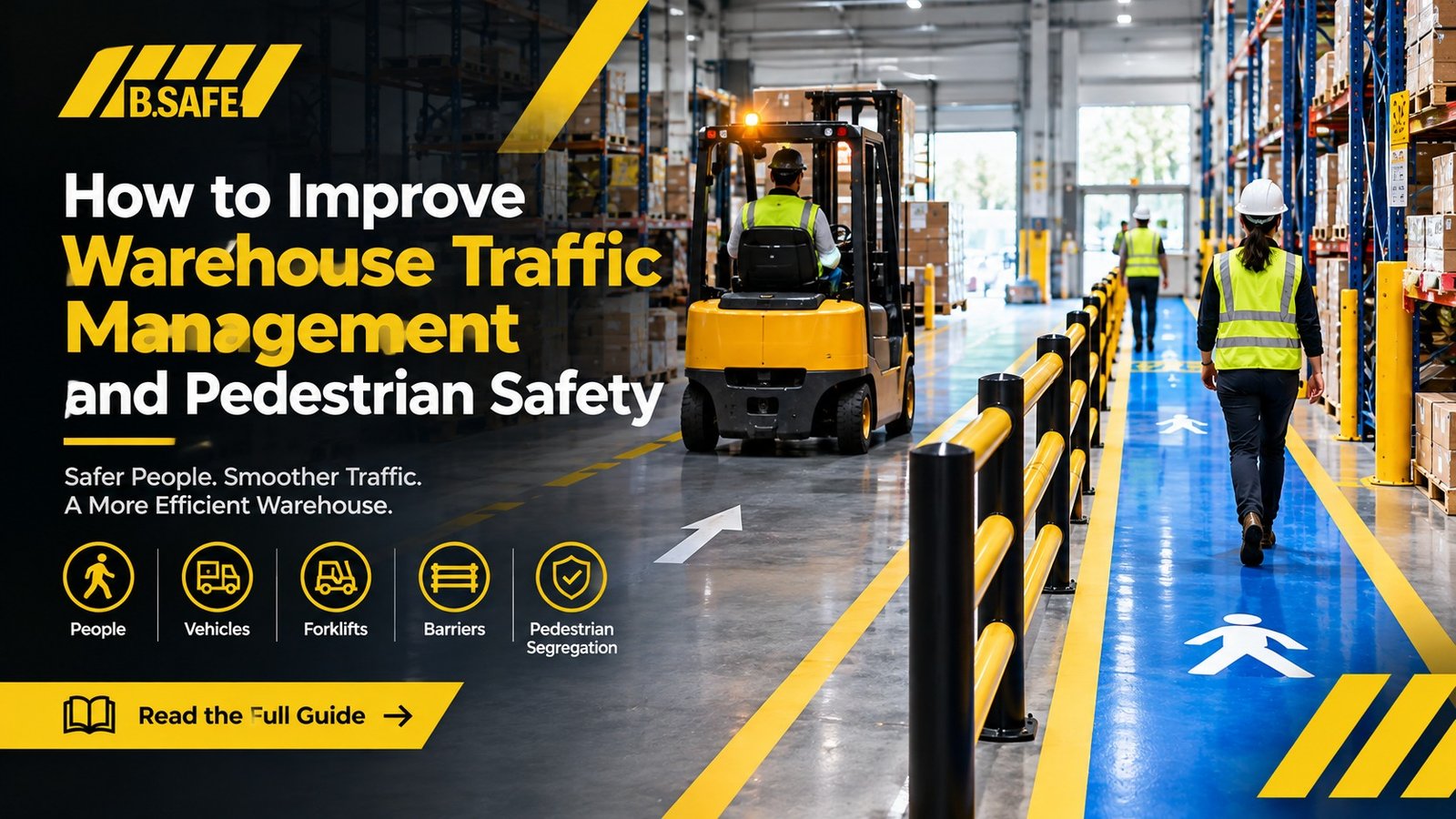
How to Improve Warehouse Traffic Management and Pedestrian Safety
Warehouses are busy environments where pedestrians, forklifts, pallet trucks, delivery vehicles, and material-handling equipment often operate within the same facility. Without a clear traffic management plan, these activities can create collision risks, disrupt operations, and expose employees to avoidable hazards.
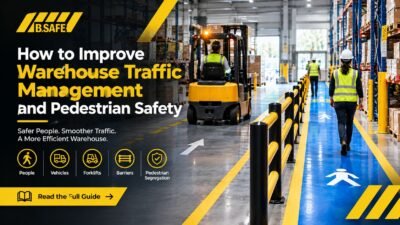 Warehouse traffic management is the process of planning, organizing, and controlling how people and vehicles move throughout a warehouse. It includes designated traffic routes, pedestrian walkways, forklift movement, physical safety barriers, crossing points, warning signs, and workplace procedures.
An effective system should consider more than forklift safety alone. It should help businesses manage the interaction between people, vehicles, equipment, and warehouse infrastructure.
In this guide, we explain how to improve warehouse traffic safety, reduce pedestrian and vehicle conflict points, and choose suitable industrial safety barriers as part of a broader workplace traffic management strategy.
What Is Warehouse Traffic Management?
Warehouse traffic management involves designing and maintaining safe, practical routes for pedestrians and vehicles inside and around a warehouse.
A warehouse may need to manage several types of movement at the same time, including:
- Employees walking between workstations and storage areas
- Forklifts transporting pallets and materials
- Pallet trucks moving goods through warehouse aisles
- Delivery vehicles entering loading and unloading zones
- Picking teams collecting products from storage racks
- Contractors and visitors accessing designated areas
- Vehicles moving near doors, machinery, and production zones
Without clearly defined routes and suitable controls, these activities may overlap in ways that create unnecessary risks.
A warehouse traffic management plan should identify where people need to walk, where vehicles need to operate, and where additional controls are required to manage interactions between them.
The goal is to make movement more predictable, reduce avoidable conflicts, and support safer warehouse operations.
Why Is Warehouse Traffic Safety Important?
Warehouse traffic safety is important because moving vehicles and pedestrians may share limited space, particularly in busy aisles, at intersections, and near loading areas.
Forklifts can have restricted visibility, require sufficient stopping distance, and create hazards when turning or reversing. Pedestrians may also be difficult for operators to see when loads, racks, equipment, or building structures obstruct the view.
The U.S. Occupational Safety and Health Administration (OSHA) recommends separating forklift traffic from workers and pedestrians where possible. Its guidance discusses pedestrian walkways, protective barriers, floor markings, traffic signs, speed limits, and visibility at blind intersections.
A well-planned warehouse traffic safety system can help organizations:
- Reduce unnecessary interaction between pedestrians and vehicles
- Establish clearer traffic routes
- Improve visibility at intersections and access points
- Protect workers in designated pedestrian areas
- Reduce the risk of vehicle impacts with warehouse infrastructure
- Organize loading, unloading, and material-handling activities
- Support consistent traffic rules and employee awareness
Traffic management should be based on the actual conditions in the facility. The appropriate controls will depend on the warehouse layout, vehicle types, traffic volume, pedestrian movement, and risks identified during a site-specific risk assessment.
The Main Elements of Effective Warehouse Traffic Management
An effective system combines workplace layout, physical protection, visual controls, and operating procedures. Relying on only one measure may leave important risks unaddressed.
1. Separate Pedestrian and Vehicle Routes
Where practical, pedestrians should have designated routes that do not require them to share vehicle aisles unnecessarily.
Pedestrian walkways can connect offices, workstations, picking areas, production zones, and other destinations employees regularly access.
Vehicle routes should also be clearly defined so forklift operators understand where they can travel, turn, reverse, and transport materials.
Where routes must cross, create clearly identified crossing points and assess whether additional visibility or traffic controls are necessary.
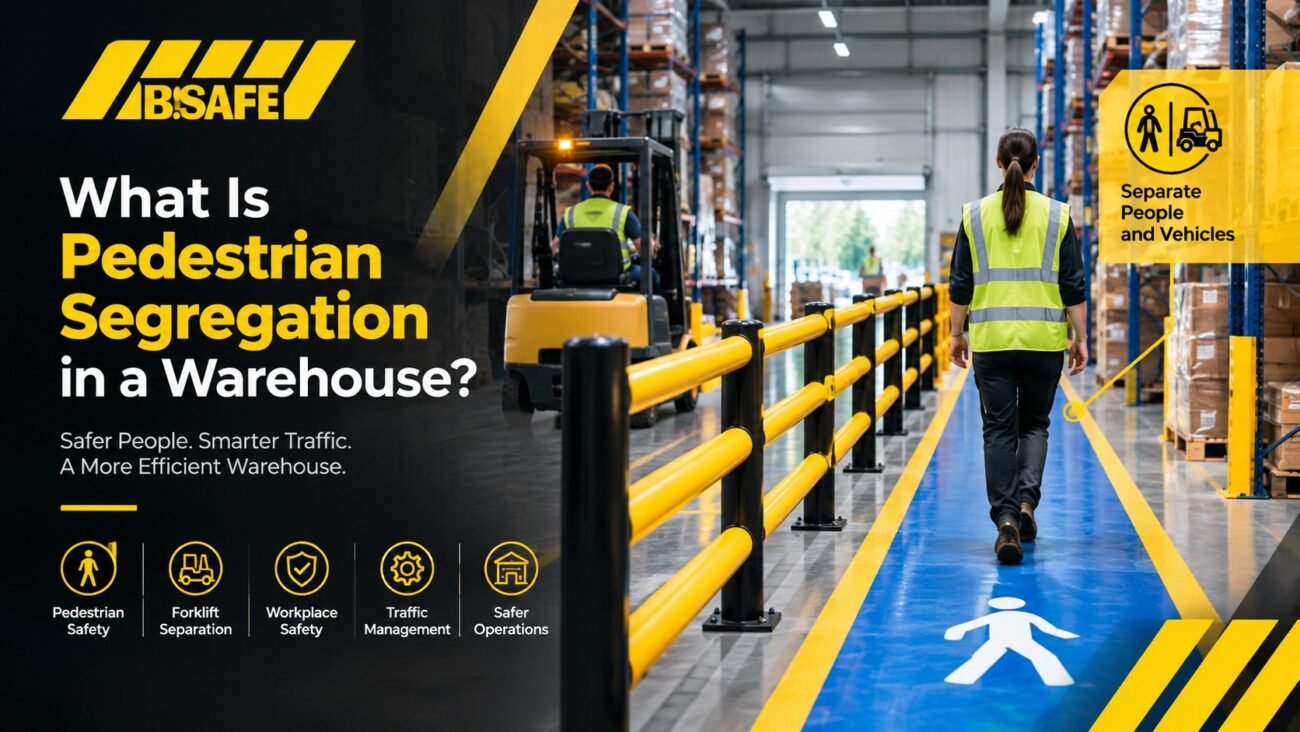
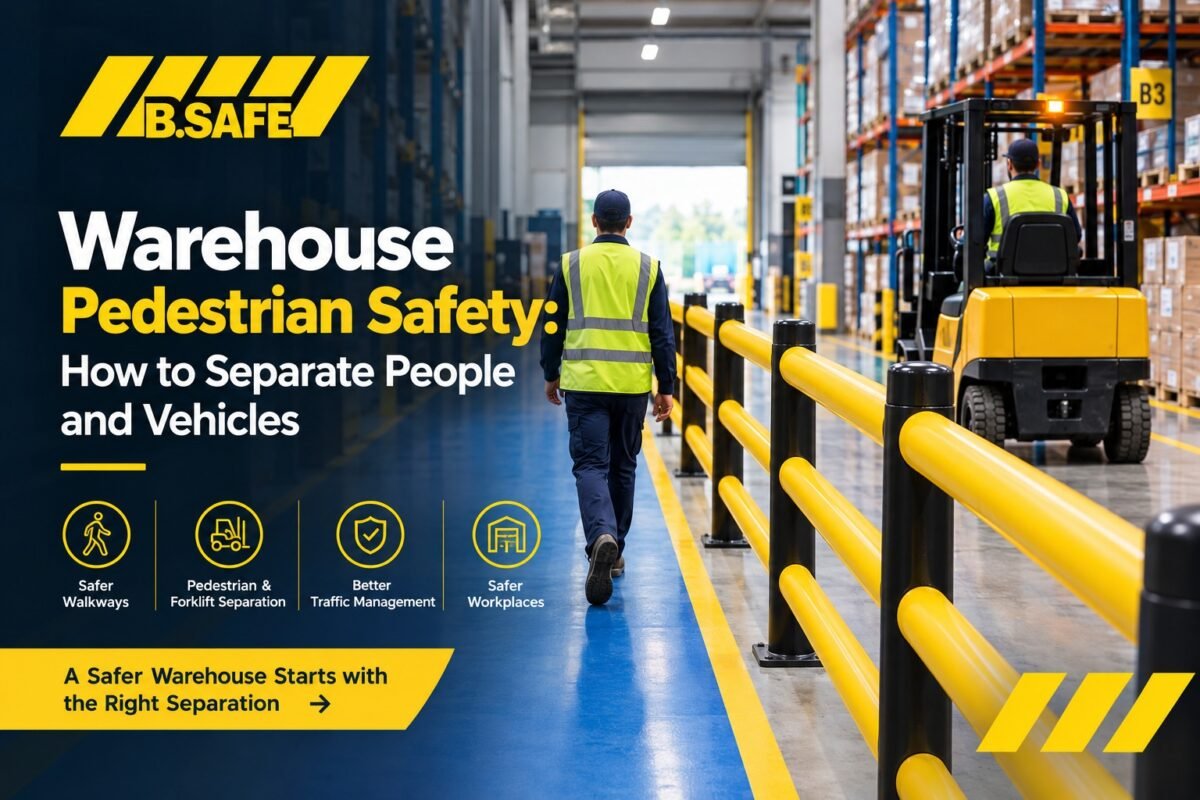
For more detail, read our guide to Warehouse Pedestrian Safety: How to Separate People and Vehicles.
2. Identify High-Risk Conflict Points
A conflict point is an area where pedestrian and vehicle routes cross or come close enough to create a potential hazard.
Common examples include:
- Blind corners and aisle intersections
- Warehouse entrances and doorways
- Loading and unloading areas
- Forklift turning and reversing zones
- Racking aisles used by both workers and vehicles
- Production entrances and material transfer points
- Areas where stacked goods restrict visibility
Review these locations during a workplace risk assessment. Consider how often people and vehicles use each area, whether operators have a clear view, and what could happen if a collision occurred.
The findings should guide the selection and placement of traffic controls.
3. Use Physical Safety Barriers Where Appropriate
Physical barriers can create a clear boundary between pedestrian routes, vehicle lanes, and vulnerable warehouse assets.
Depending on the application, a facility may need:
- Pedestrian safety barriers to define protected walkways
- Traffic barriers to help manage vehicle routes
- Bollards to protect columns, doors, or localized assets
- Rack-end barriers to protect the ends of storage racking
- Height restrictors to manage access where overhead clearance is a concern
- Safety gates to control access through designated openings
The right solution depends on the hazard being controlled. A barrier intended to define a pedestrian route should not automatically be assumed suitable for every vehicle impact scenario.
When specifying a barrier for impact protection, consider vehicle type, weight, speed, impact direction, and the manufacturer’s application guidance.
Explore B.SAFE Warehouse Solutions to review options for pedestrian separation, traffic management, and warehouse protection.
4. Improve Floor Markings and Traffic Signs
Floor markings and signs help communicate how people and vehicles should move through a facility.
Useful visual controls may include:
- Marked pedestrian walkways
- Forklift and vehicle lane markings
- Pedestrian crossing markings
- Directional arrows
- Stop lines and warning signs
- Restricted-access markings
- Loading-zone boundaries
Markings should be easy to see, maintained, and consistent throughout the workplace.
However, floor markings communicate boundaries; they do not physically prevent a vehicle from entering a pedestrian area. Where the risk assessment identifies a need for physical separation, markings should be supported by suitable additional controls.
5. Manage Forklift Movement
Forklift operating procedures are an important part of warehouse traffic safety.
A traffic management plan should address matters such as:
- Appropriate vehicle speed for the conditions
- Safe approaches to corners and intersections
- Visibility when carrying loads
- Reversing and warning procedures
- Pedestrian right-of-way
- Vehicle access restrictions
- Safe distances from workers and other vehicles
- Operator training and workplace-specific hazards
Forklift routes should be designed around the actual operating environment, including aisle width, floor conditions, turning space, loading areas, and visibility.
Training is essential, but it should work alongside suitable workplace design and physical or visual controls rather than being treated as the only safety measure.
6. Control Loading and Unloading Areas
Loading bays can be especially challenging because forklifts, trucks, materials, and workers may all operate in a confined area.
Review how employees access loading areas and whether they can avoid crossing active vehicle routes.
Consider clearly defined vehicle zones, protected pedestrian access, suitable barriers, visible dock edges, and procedures for loading and unloading.
The controls should reflect the specific activities taking place at the site, including vehicle positioning, material transfer, and pedestrian access.
7. Maintain Clear Visibility and Access
Obstructed visibility can make it harder for operators and pedestrians to anticipate each other’s movement.
Keep aisles and walkways free from unnecessary obstructions. Review blind corners, stacked goods, doors, racking layouts, and areas where vehicle loads may restrict the operator’s view.
Depending on the conditions, suitable controls may include mirrors at blind intersections, warning signs, lighting improvements, audible or visual warnings, and changes to the traffic layout.
Emergency exits, access routes, and designated pedestrian walkways should also remain clear.
What Is Pedestrian Traffic Management?
Pedestrian traffic management focuses on how people move through a workplace and how their routes interact with vehicles, equipment, and other hazards.
In a warehouse, it may involve:
- Providing designated walking routes
- Separating pedestrians from forklift traffic where practical
- Establishing controlled crossing points
- Using suitable barriers and floor markings
- Improving visibility at intersections
- Communicating pedestrian access rules
- Keeping walkways clear and accessible
Pedestrian traffic management is part of the wider warehouse traffic management system. It should be planned alongside vehicle routes rather than introduced as a separate activity after the warehouse layout has been established.
For a deeper explanation of the separation approach, read What Is Pedestrian Segregation in a Warehouse?.
Industrial Traffic Management: Protect People and Infrastructure
Industrial traffic management considers the movement of people, forklifts, vehicles, and equipment throughout industrial facilities, distribution centers, manufacturing sites, and warehouses.
Worker protection is a priority, but vehicle movements can also damage racking, machinery, doors, columns, stored goods, and other infrastructure.
A suitable protection plan may therefore combine several types of solutions.
Pedestrian Barriers
Pedestrian barriers help define walking routes and create separation between pedestrians and vehicle traffic.
The iFlex Pedestrian Barrier 3 Rail is one option designed to separate pedestrians from moving vehicles in warehouse and industrial environments.
Traffic Barriers
Traffic barriers can be used where vehicle movement needs to be controlled or where a specific area requires a suitable level of impact protection.
For applications involving wider vehicle routes, consider the iFlex Double Traffic Barrier.
The selected system should match the expected vehicle movements and the protection requirements identified by the site risk assessment.
Bollards
Bollards can provide localized protection around vulnerable assets or access points, depending on the product’s intended application.
For example, the iFlex Bollard can be considered when reviewing suitable protection for individual locations within a warehouse.
Rack-End Protection
Rack ends can be exposed to forklift movements, particularly where vehicles turn into or out of storage aisles.
The iFlex Single RackEnd Barrier is one option to evaluate when planning rack-end protection.
Gates and Access Control
Some warehouse layouts need designated openings for pedestrians, vehicles, or material movement. Suitable gates can help manage access while supporting the intended traffic layout.
Review the iFlex Slide Gate as one possible solution for applications where a compatible access-control arrangement is required.
These products serve different purposes. They should not be treated as interchangeable, and selection should be based on the site’s risks, layout, and product specifications.
How to Develop a Warehouse Traffic Management Plan
A practical traffic management plan starts with an assessment of the facility and the way it operates.
Step 1: Review the Warehouse Layout
Map storage racks, workstations, doors, loading bays, production areas, emergency exits, and main access routes.
Identify where pedestrians and vehicles currently travel and where their routes overlap.
Step 2: Identify the Vehicles in Use
Record the types of vehicles and equipment used in the facility, such as counterbalance forklifts, reach trucks, pallet trucks, and delivery vehicles.
Consider their dimensions, turning movements, operating speed, visibility, and the loads they carry.
Step 3: Map Pedestrian Movement
Identify the main destinations employees, contractors, and visitors need to reach.
Create practical walking routes that reduce unnecessary exposure to vehicle movement wherever possible.
Step 4: Assess Conflict Points and Risks
Inspect intersections, loading areas, doorways, blind corners, and busy storage aisles.
Assess the likelihood of unwanted interaction and the potential consequences. Use the findings to prioritize the locations that need attention.
Step 5: Select Appropriate Controls
Choose a suitable combination of route changes, pedestrian walkways, physical barriers, floor markings, warning signs, visibility controls, and operating procedures.
Where barriers are required, verify that the selected product is suitable for the intended application.
Step 6: Communicate and Train
Make sure employees and vehicle operators understand the traffic layout, designated routes, crossing rules, restricted areas, and reporting procedures.
Training should reflect the vehicles and hazards present in the workplace.
Step 7: Monitor and Review
Inspect the system regularly and review it whenever warehouse operations change.
New equipment, different storage arrangements, increased traffic, or revised work processes may introduce new conflict points. Update the plan when necessary.
Common Warehouse Traffic Management Mistakes
Some common problems can reduce the effectiveness of a warehouse traffic management system.
Relying Only on Floor Markings
Markings can guide movement but do not provide physical protection. Assess whether higher-risk locations require barriers or other controls.
Ignoring Blind Corners
Intersections and obstructed views should be identified and assessed. Depending on the conditions, mirrors, warning systems, route changes, or other controls may be appropriate.
Choosing the Same Barrier for Every Application
Pedestrian separation, rack-end protection, and vehicle impact protection may require different solutions. Match the product to the hazard rather than selecting barriers based on appearance alone.
Overlooking Loading Areas
Loading and unloading operations can involve several simultaneous activities. Include these areas in the traffic assessment and plan pedestrian access carefully.
Failing to Review Changes
A traffic layout that worked before a change in storage or production may no longer be suitable. Reassess the routes when conditions change.
Treating Training as the Only Control
Employee awareness matters, but it cannot replace suitable workplace design, clearly defined routes, and appropriate physical protection where required.
Warehouse Traffic Safety Checklist
Use this checklist as a starting point when reviewing your facility:
- Are pedestrian routes clearly identified?
- Are forklift and vehicle routes clearly defined?
- Can pedestrian and vehicle movement be separated where practical?
- Have blind corners and intersections been assessed?
- Are loading and unloading areas included in the traffic plan?
- Are signs and floor markings visible and maintained?
- Have high-risk locations been assessed for physical barriers?
- Are racks, doors, columns, and other vulnerable assets protected where needed?
- Are vehicle speeds and reversing procedures appropriate for the site?
- Do employees understand the traffic rules?
- Are walkways and emergency access routes kept clear?
- Is the plan reviewed when the layout or operations change?
This checklist does not replace a site-specific risk assessment, but it can help identify areas that need further review.
Frequently Asked Questions
What is warehouse traffic management?
Warehouse traffic management is the planning and control of pedestrian, forklift, and vehicle movement within a warehouse. It includes routes, crossings, signs, barriers, operating procedures, and other controls appropriate to the workplace.
How can warehouse traffic safety be improved?
Start by mapping pedestrian and vehicle routes, identifying conflict points, and assessing risks. Then implement suitable measures such as designated walkways, physical barriers where required, floor markings, visibility controls, vehicle procedures, and employee training.
What is the difference between warehouse traffic management and pedestrian traffic management?
Warehouse traffic management covers the movement of pedestrians, forklifts, and other vehicles throughout the facility. Pedestrian traffic management focuses specifically on people’s routes and how they interact with vehicle movement and other workplace hazards.
Why are safety barriers important in warehouse traffic management?
Suitable barriers can help define routes, separate pedestrians from vehicles, and protect vulnerable infrastructure. Their suitability depends on the intended application and the expected impact conditions.
Which barriers are used for warehouse traffic safety?
Depending on the site requirements, options may include pedestrian barriers, traffic barriers, bollards, rack-end barriers, and gates. The correct choice should be based on the risk assessment, vehicle characteristics, layout, and manufacturer’s specifications.
How often should a warehouse traffic management plan be reviewed?
Review the plan regularly and whenever significant changes occur, including changes to warehouse layout, storage arrangements, vehicles, traffic volumes, or work processes.
Conclusion
Improving warehouse traffic management requires a coordinated approach to people, vehicles, forklifts, pedestrian routes, and physical protection.
By mapping traffic movement, identifying conflict points, improving visibility, establishing practical routes, and selecting suitable safety barriers, businesses can build a more organized traffic system and address important workplace risks.
The right solution will depend on the facility’s layout, operating conditions, vehicle movements, and risk assessment.
Explore B.SAFE Warehouse Solutions to review pedestrian barriers, traffic barriers, bollards, rack-end protection, and other solutions that may support your warehouse traffic management requirements.
Further Reading: OSHA Pedestrian Traffic Safety
For additional guidance, consult the OSHA guide to pedestrian traffic around powered industrial trucks. It discusses separating forklift traffic from pedestrians where possible and provides practical guidance on walkways, protective barriers, floor markings, warning signs, and visibility at intersections.