Risk Assessment Training: A Complete Guide for Workplace Safety

Risk Assessment Training: A Complete Guide for Workplace Safety
Workplace safety depends on more than simply providing personal protective equipment or responding to accidents after they happen. A strong safety program begins with identifying hazards, evaluating risks, and taking effective preventive measures before incidents occur.
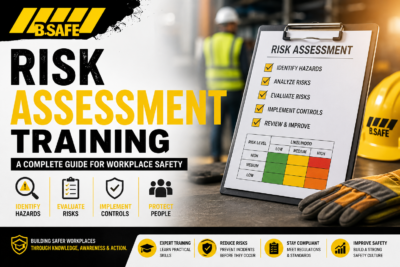 Risk Assessment Training helps employees, supervisors, managers, and safety professionals understand how to identify workplace hazards, evaluate the level of risk, and implement appropriate control measures. It is an essential part of Workplace Safety Training and can help organizations create safer and more controlled working environments.
For organizations operating in industrial, construction, commercial, manufacturing, and other high-risk environments, effective Workplace Risk Assessment can play an important role in reducing workplace incidents and improving overall safety performance.
What Is Risk Assessment?
Risk assessment is a systematic process used to identify hazards in the workplace, determine who may be exposed to those hazards, evaluate the level of risk, and establish appropriate control measures.
A workplace hazard can include anything that has the potential to cause injury, illness, property damage, or other negative consequences.
Examples include:
- Machinery and moving equipment
- Electrical hazards
- Chemicals and hazardous substances
- Working at height
- Slips, trips, and falls
- Manual handling
- Fire and emergency hazards
- Noise and vibration
- Confined spaces
- Biological hazards
- Ergonomic hazards
- Workplace vehicles and mobile equipment
A structured Safety Risk Assessment helps organizations understand these hazards and determine which risks require immediate attention.
Why Is Risk Assessment Training Important?
Employees may encounter hazards every day without fully understanding their potential consequences. Risk Assessment Training provides participants with a structured approach to recognizing and controlling these hazards.
Effective training can help organizations:
- Improve hazard identification
- Increase employee safety awareness
- Reduce the likelihood of workplace accidents
- Improve workplace safety procedures
- Support regulatory and organizational requirements
- Prioritize high-risk activities
- Improve emergency preparedness
- Strengthen safety culture
- Support continuous workplace improvement
Training also helps employees understand that workplace safety is a shared responsibility rather than something handled only by the safety department.
The Risk Assessment Process
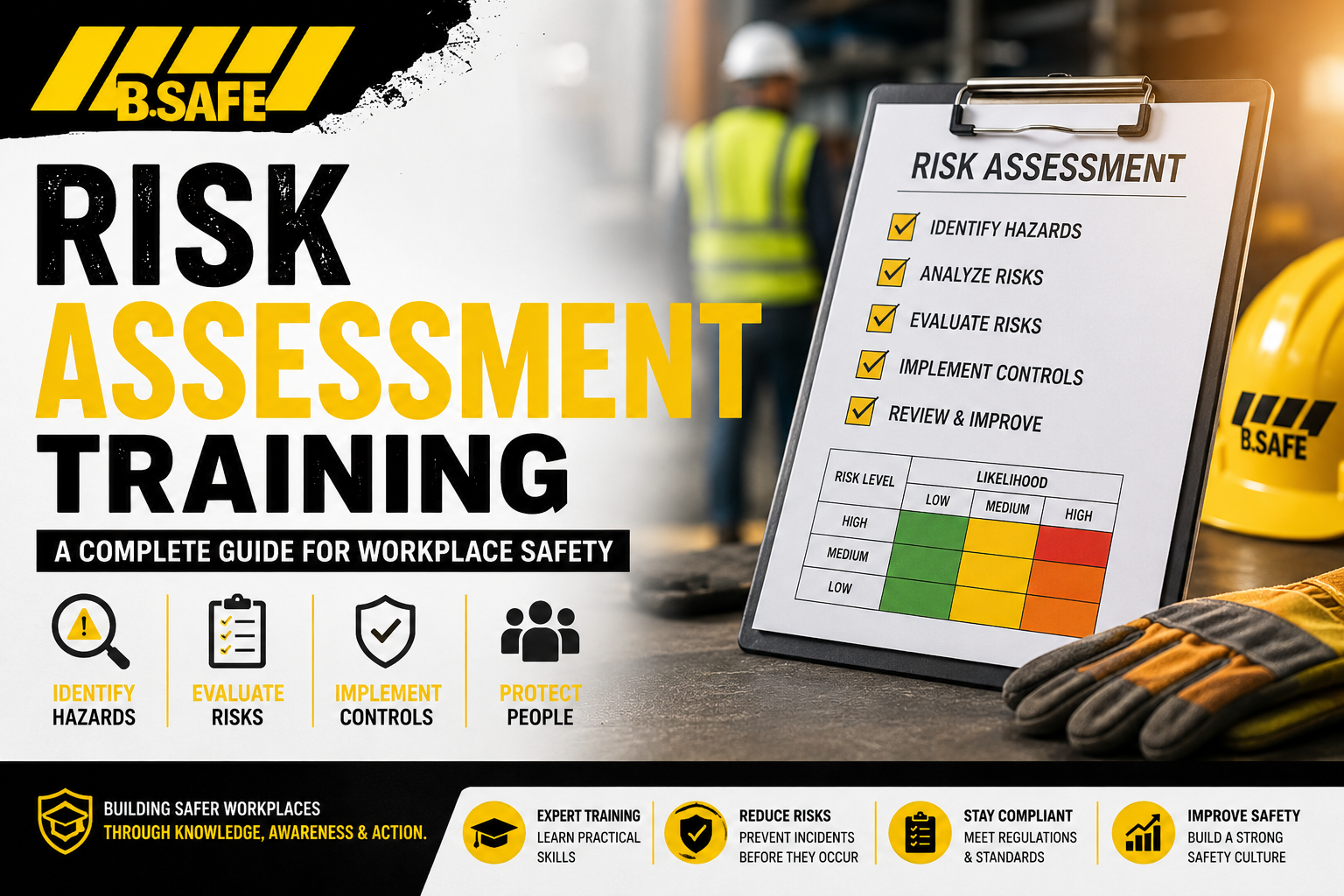
A typical Risk Assessment Process consists of several important steps.
1. Identify Workplace Hazards
The first step is to identify potential sources of harm.
This may involve workplace inspections, employee interviews, reviewing previous incidents, examining equipment, and observing work activities.
For example, a manufacturing facility may identify hazards associated with machinery, electrical systems, chemicals, noise, and material handling.
2. Identify Who May Be at Risk
After identifying hazards, the next step is determining who could be affected.
This may include:
- Employees
- Contractors
- Visitors
- Maintenance workers
- Temporary workers
- New employees
- Emergency responders
- Other people working near the hazard
Some workers may require additional consideration because of their tasks, experience, or working environment.
3. Evaluate the Level of Risk
Once hazards have been identified, their risks should be evaluated.
Risk evaluation generally considers factors such as the likelihood of an incident occurring and the potential severity of its consequences.
For example, a hazard that could cause serious injury and has a high likelihood of occurring should receive a higher priority than a low-probability, low-consequence hazard.
4. Implement Risk Controls
After evaluating the risks, appropriate control measures should be selected and implemented.
The preferred approach is to control hazards at their source whenever possible.
Examples of risk controls include:
- Eliminating the hazard
- Substituting a safer material or process
- Installing engineering controls
- Improving administrative procedures
- Providing appropriate personal protective equipment
Personal protective equipment can be an important part of workplace safety, but it should not automatically be considered the only solution.
5. Review and Update the Assessment
Workplaces change over time.
New equipment may be introduced, processes may change, chemicals may be replaced, or employees may begin performing new tasks.
For this reason, risk assessments should be reviewed periodically and whenever significant changes occur.
Common Types of Workplace Risk Assessment
Different workplaces may require different approaches to risk assessment.
General Workplace Risk Assessment
A general assessment considers the main hazards present throughout a workplace and identifies the controls required to manage them.
Task-Based Risk Assessment
A task-based assessment focuses on a specific job or activity.
For example, a company may conduct an assessment before employees perform maintenance on machinery or work at height.
Chemical Risk Assessment
Chemical risk assessments focus on hazardous substances and potential exposure routes.
They may consider storage, handling, transportation, personal protective equipment, ventilation, and emergency response procedures.
Construction Risk Assessment
Construction environments can contain rapidly changing hazards, including work at height, machinery, electrical systems, excavation, vehicles, and temporary structures.
Regular risk assessment is therefore particularly important on construction sites.
Emergency Risk Assessment
Organizations can also assess risks associated with emergency situations such as fires, chemical spills, equipment failures, and other incidents.
The Hierarchy of Controls
One of the most important concepts in Safety Risk Assessment is the hierarchy of controls.
The hierarchy generally prioritizes controls from the most effective to the least effective:
- Elimination
- Substitution
- Engineering Controls
- Administrative Controls
- Personal Protective Equipment
The objective is to select measures that provide effective and sustainable protection rather than relying solely on worker behavior.
For example, removing a hazardous process may be more effective than simply instructing workers to wear additional protective equipment.
Who Should Take Risk Assessment Training?
Risk Assessment Training can be valuable for a wide range of professionals, including:
- Health and safety officers
- Safety managers
- Supervisors
- Site managers
- Engineers
- Team leaders
- Maintenance personnel
- Construction professionals
- Industrial workers
- Emergency response personnel
- Employees responsible for workplace safety
Organizations can also use risk assessment courses as part of their broader employee Workplace Safety Training programs.
Benefits of Workplace Risk Assessment Training
Better Hazard Identification
Training helps participants recognize hazards that may otherwise be overlooked during routine work activities.
Improved Risk Control
Employees learn how to select appropriate control measures based on the nature and severity of the hazard.
Stronger Safety Culture
When employees understand how risks are identified and controlled, they can become more actively involved in workplace safety.
Reduced Accident Potential
Effective hazard identification and risk control can help reduce exposure to unsafe conditions and potentially prevent workplace incidents.
Improved Safety Decision-Making
Managers and supervisors can use structured risk assessment methods to make better decisions regarding workplace activities, equipment, and procedures.
Risk Assessment and Workplace Safety
Risk assessment should not be treated as a one-time document that is completed and then forgotten.
It should form part of an organization’s continuous safety management process.
Regular workplace inspections, employee feedback, incident investigations, safety training, and periodic reviews can all contribute to a stronger risk management system.
Organizations that consistently identify hazards and address risks before incidents occur are better positioned to create safer working environments.
Why Choose Professional Risk Assessment Training?
A structured Risk Assessment Course can provide participants with practical knowledge that can be applied to real workplace situations.
Professional training can cover hazard identification, risk evaluation, control measures, workplace inspections, documentation, and practical decision-making.
For companies, integrating risk assessment into their wider safety training program can help employees understand how their daily activities affect workplace safety.
B.SAFE offers a range of Health, Safety, and Emergency Response Training Courses designed to improve workplace safety awareness, employee competency, and emergency preparedness.
Its training programs include:
- Basic Safety Training
- Fire Awareness Training
- First Aid Training
- Safety at Work
- Risk Assessment
- Accident Investigation
- Incident Command System (ICS)
Upon successful completion of the training program, participants can receive an accredited certificate recognizing their successful completion of the relevant course.
Conclusion
Risk Assessment Training is an important component of an effective workplace safety program. By learning how to identify hazards, evaluate risks, and implement appropriate controls, employees and safety professionals can contribute to safer working environments.
A successful Workplace Risk Assessment process should be systematic, practical, and regularly reviewed. It should also be integrated into the organization’s wider safety management and training strategy.
Whether the workplace involves construction, manufacturing, industrial operations, chemicals, maintenance, or other potentially hazardous activities, effective risk assessment can help organizations identify problems before they become serious incidents.
Investing in Workplace Safety Training and professional risk assessment education can therefore support stronger safety awareness, better decision-making, and a more proactive approach to workplace risk management.
External Resource: OSHA Workplace Hazard Identification
Effective risk assessment begins with identifying workplace hazards, evaluating the potential risks, and implementing appropriate control measures. For additional guidance on workplace hazard identification and safety practices, readers can refer to the official Occupational Safety and Health Administration (OSHA) resources on hazard identification and assessment.
Learn more: https://www.osha.gov/hazards
Frequently Asked Questions
What is Risk Assessment Training?
Risk Assessment Training teaches participants how to identify workplace hazards, evaluate risks, and select appropriate control measures to improve workplace safety.
Why is workplace risk assessment important?
Workplace risk assessment helps organizations identify potential hazards and determine appropriate measures to reduce exposure to workplace risks.
Who should take a risk assessment course?
Safety professionals, supervisors, managers, engineers, team leaders, and employees responsible for workplace safety can benefit from a Risk Assessment Course.
What are the main steps of risk assessment?
The main steps include identifying hazards, determining who may be exposed, evaluating risks, implementing control measures, and reviewing the assessment regularly.
What is the hierarchy of controls?
The hierarchy of controls is a system for prioritizing hazard control methods, beginning with elimination and substitution, followed by engineering controls, administrative controls, and personal protective equipment.
Does risk assessment need to be reviewed?
Yes. Risk assessments should be reviewed when workplace conditions change, new equipment or processes are introduced, or new hazards are identified.
What industries can benefit from risk assessment training?
Risk assessment training can benefit construction, manufacturing, industrial, commercial, logistics, maintenance, healthcare, and many other industries.