Industrial Hygiene Equipment: Complete Guide to Workplace Monitoring

Industrial Hygiene Equipment: Complete Guide to Workplace Monitoring
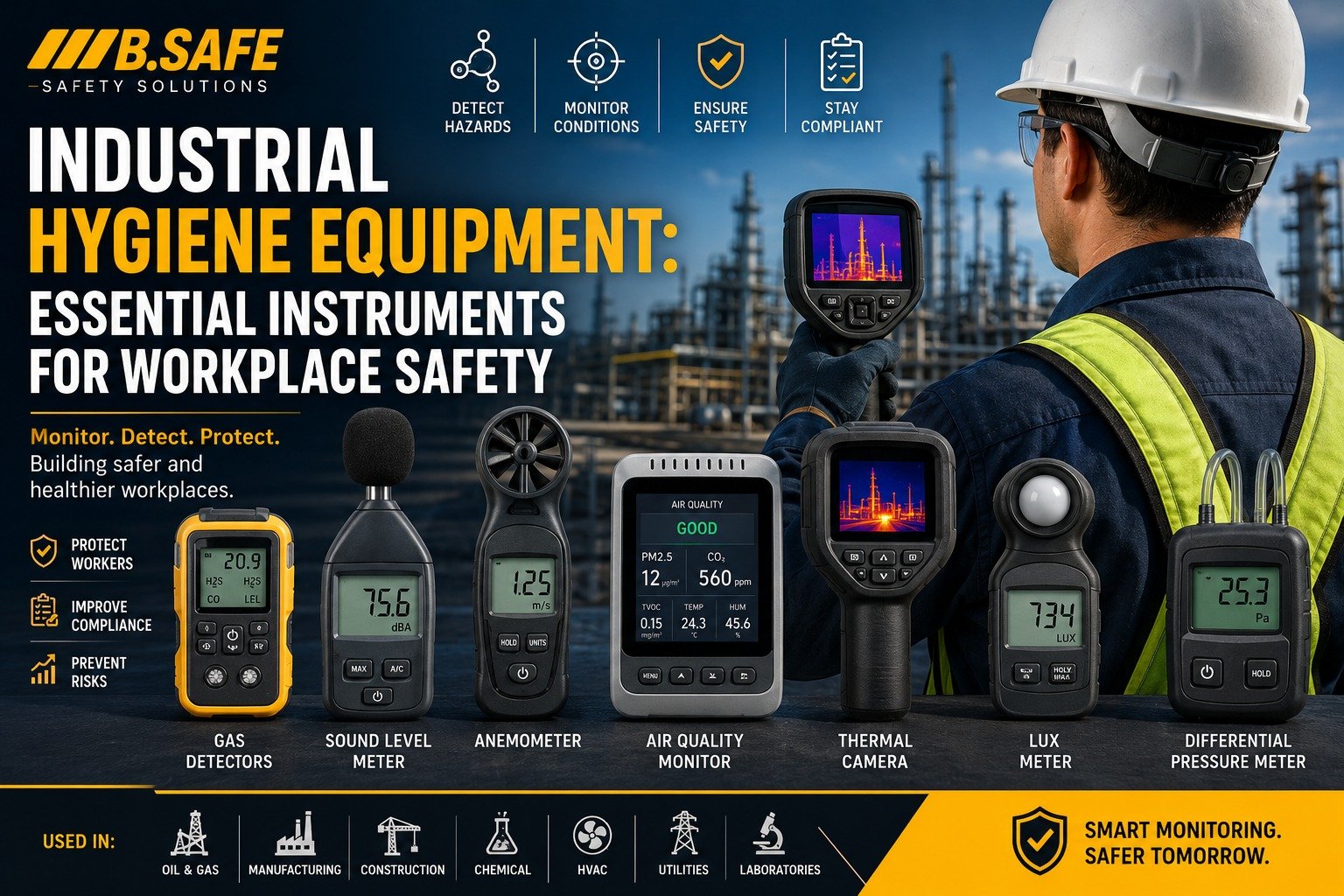
Industrial hygiene equipment helps safety professionals identify, measure, and monitor workplace hazards before they can cause occupational illness, injury, or unsafe working conditions.
From gas detectors and air quality monitors to sound level meters, anemometers, and environmental monitoring instruments, these tools help organizations evaluate worker exposure and workplace conditions across construction sites, manufacturing facilities, oil and gas operations, laboratories, warehouses, and other industrial environments.
Effective industrial hygiene monitoring allows employers to recognize hazards, evaluate exposure levels, implement appropriate controls, and verify that workplace conditions remain within applicable safety requirements.
This guide explains the most common industrial hygiene equipment and instruments, what they measure, where they are used, and how to choose the right monitoring equipment for your workplace.
Types of Industrial Hygiene Equipment
| Equipment | What It Measures | Common Applications |
|---|---|---|
| Gas Detectors | Toxic, combustible gases, oxygen | Oil & Gas, confined spaces |
| Air Quality Monitors | CO₂, VOCs, PM, temperature, humidity | Indoor workplaces |
| Sound Level Meters | Noise levels | Construction, manufacturing |
| Anemometers | Air velocity and airflow | HVAC, ventilation |
| Light Meters | Illumination | Warehouses, factories |
| Heat Stress Monitors | Heat exposure | Construction, industrial sites |
| Particle Counters | Airborne particles | Cleanrooms, laboratories |
| Vibration Meters | Equipment/hand-arm vibration | Manufacturing, maintenance |
What Is Industrial Hygiene Equipment?
Looking for industrial hygiene equipment for your workplace? B.SAFE offers a range of workplace monitoring products, including air quality monitors, gas detectors, sound level meters, light meters, and other environmental monitoring equipment.
Industrial hygiene equipment includes specialized instruments used to identify, evaluate, and monitor physical, chemical, biological, and environmental hazards in the workplace.
These instruments allow safety teams to:
- Detect dangerous gases before exposure occurs.
- Monitor indoor air quality.
- Measure workplace noise levels.
- Evaluate lighting conditions.
- Monitor temperature and humidity.
- Detect overheating equipment.
- Assess ventilation performance.
- Maintain compliance with occupational safety standards.
Companies that regularly monitor workplace conditions significantly reduce occupational illnesses, equipment failures, and workplace accidents.
Portable Gas Detectors and Multi Gas Detectors
Gas detection is one of the most critical aspects of industrial safety. Hazardous gases are often invisible and odorless, making continuous monitoring essential.
Portable gas detectors protect individual workers by providing real-time alerts whenever dangerous gas concentrations are detected.
Multi gas detectors can simultaneously monitor several gases such as:
- Oxygen (O₂)
- Carbon Monoxide (CO)
- Hydrogen Sulfide (H₂S)
- Methane (CH₄)
- Combustible gases
These instruments are commonly used in:
- Oil & Gas
- Petrochemical Plants
- Confined Spaces
- Utilities
- Mining
- Wastewater Treatment Facilities
Air Quality Monitors
Maintaining healthy indoor air quality is essential for protecting employees from airborne contaminants.
Air quality monitors continuously measure environmental conditions including:
- Carbon dioxide (CO₂)
- Temperature
- Humidity
- Volatile Organic Compounds (VOCs)
- Fine particulate matter
These devices help facility managers maintain comfortable and healthy working environments while identifying potential ventilation problems before they become hazardous.
Sound Level Meters
Excessive workplace noise is one of the leading causes of occupational hearing loss.
A sound level meter accurately measures environmental noise levels, helping employers determine whether workers require hearing protection or engineering controls.
Industries commonly using sound level meters include:
- Manufacturing
- Construction
- Airports
- Power Plants
- Heavy Equipment Operations
Routine noise monitoring also supports compliance with occupational safety regulations.
Anemometers
Proper airflow plays an important role in maintaining safe working conditions.
Anemometers measure:
- Air velocity
- Wind speed
- Air volume
- Ventilation performance
These instruments are widely used for:
- HVAC inspections
- Industrial ventilation
- Clean rooms
- Laboratories
- Environmental monitoring
Thermal Cameras
Thermal cameras have become one of the most valuable predictive maintenance tools in industrial facilities.
Rather than measuring visible light, thermal imaging cameras detect heat patterns that reveal hidden problems such as:
- Electrical overloads
- Motor overheating
- Mechanical failures
- Insulation defects
- Pipe leaks
By identifying problems before equipment fails, thermal cameras reduce downtime and improve workplace safety.
Lux Meters
Proper workplace lighting directly affects employee productivity, comfort, and safety.
Lux meters measure illumination levels to ensure compliance with recommended lighting standards for:
- Offices
- Warehouses
- Manufacturing plants
- Hospitals
- Laboratories
Insufficient lighting can increase accident risks and reduce operational efficiency.
Temperature and Humidity Monitoring
Temperature and humidity affect both employee comfort and equipment performance.
Digital thermo-hygrometers help organizations monitor environmental conditions in:
- Warehouses
- Pharmaceutical facilities
- Laboratories
- Data centers
- Manufacturing plants
Maintaining stable environmental conditions protects products, equipment, and workers.
Other Essential Industrial Hygiene Instruments
Industrial hygiene professionals often rely on additional monitoring devices depending on workplace risks, including:
- Particle Counters
- Vibration Meters
- Differential Pressure Meters
- Heat Stress Monitors
- Dust Monitors
- Environmental Data Loggers
Selecting the right equipment depends on the specific hazards present in each work environment.
Choosing the Right Industrial Hygiene Equipment
When selecting industrial hygiene instruments, consider the following factors:
- Type of workplace hazards
- Required measurement accuracy
- Environmental conditions
- Compliance requirements
- Calibration needs
- Ease of use
- Data logging capabilities
Working with trusted industrial safety suppliers ensures that monitoring equipment meets international quality and performance standards.
Compliance with International Safety Standards
Industrial hygiene monitoring supports compliance with globally recognized occupational safety regulations and standards.
Organizations should implement regular monitoring programs while following guidance from authorities such as the Occupational Safety and Health Administration (OSHA) and the National Institute for Occupational Safety and Health (NIOSH).
Conclusion
Industrial hygiene equipment is essential for creating safer, healthier, and more productive workplaces. From portable gas detectors and air quality monitors to sound level meters, thermal cameras, and anemometers, these instruments help organizations identify hazards before they cause injuries, illnesses, or equipment failures.
By investing in reliable industrial hygiene monitoring solutions and implementing regular workplace assessments, companies can improve regulatory compliance, reduce operational risks, and foster a stronger safety culture.
Frequently Asked Questions (FAQ)
What is industrial hygiene equipment?
Industrial hygiene equipment includes instruments used to monitor environmental conditions such as air quality, gas concentrations, noise levels, temperature, humidity, lighting, and ventilation to protect workers from occupational hazards.
Why are portable gas detectors important?
Portable gas detectors provide real-time monitoring of hazardous gases, helping workers avoid exposure to toxic or combustible gases in dangerous environments.
What does an air quality monitor measure?
Air quality monitors measure environmental factors such as carbon dioxide, humidity, temperature, volatile organic compounds (VOCs), and particulate matter.
Where are sound level meters commonly used?
Sound level meters are widely used in factories, construction sites, airports, power plants, warehouses, and manufacturing facilities to monitor workplace noise exposure.
Why is industrial hygiene monitoring important?
Regular monitoring helps employers identify hazards early, improve worker safety, comply with regulations, reduce occupational illnesses, and create healthier work environments.
Explore Industrial Hygiene Equipment
If you are looking for industrial hygiene equipment for workplace monitoring, you can explore the following products available from B.SAFE:
- M2000C 2nd Air Quality Monitor – for monitoring indoor air quality and environmental conditions.
- Extech Digital Sound Level Meter – for workplace noise measurement.
- EXTECH AN100 Thermo Anemometer – for measuring air velocity, temperature, and humidity.
- EXTECH RH350 Digital Hygro Thermometer – for temperature and humidity monitoring.
- EXTECH LT300 Light Meter – for measuring workplace light levels.
Explore the products above to find suitable industrial hygiene and workplace monitoring equipment for your needs.