Fall Protection Systems: Essential Equipment for Working at Heights

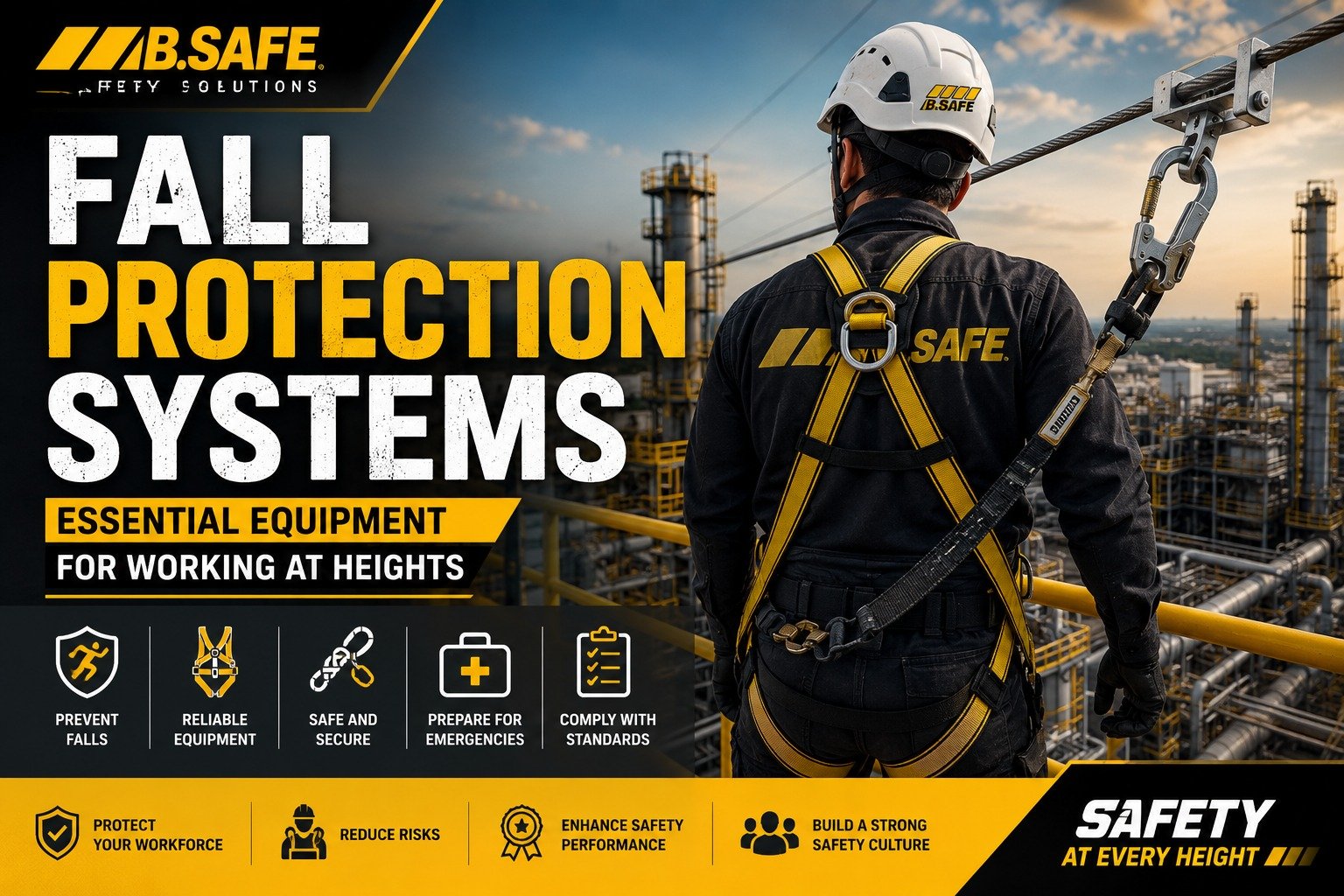
Fall Protection Systems: Essential Equipment for Working at Heights
Working at heights remains one of the leading causes of workplace injuries and fatalities across construction sites, industrial facilities, warehouses, and maintenance operations. Whether employees are working on rooftops, scaffolding, towers, or elevated structures, implementing effective fall protection systems is critical for ensuring worker safety and regulatory compliance.
 Modern fall protection equipment is designed to prevent falls, minimize injury risks, and provide reliable rescue solutions when emergencies occur. In this guide, we’ll explore the essential components of fall protection systems and how businesses can create safer working environments.
Why Fall Protection Matters
Falls from height are among the most common workplace accidents worldwide. Even a fall from a relatively low elevation can result in serious injuries, lost productivity, and significant financial costs.
An effective fall protection program helps organizations:
- Reduce workplace accidents.
- Improve employee safety.
- Meet occupational safety regulations.
- Increase worker confidence and productivity.
- Protect company reputation and reduce liability risks.
For industries such as construction, oil and gas, manufacturing, telecommunications, and facility maintenance, fall protection is not optional—it is a critical safety requirement.
Key Components of a Fall Protection System
A complete fall protection system consists of several integrated components that work together to protect workers.
1. Horizontal Lifeline Systems
Horizontal lifeline systems provide secure anchorage for workers operating across elevated work areas. These systems allow mobility while maintaining continuous fall protection.
Permanent horizontal lifelines are typically installed on rooftops, industrial structures, and facilities requiring long-term safety solutions. Temporary systems, on the other hand, offer flexibility for short-term projects and maintenance activities.
- ALTILIGNE Horizontal Lifeline System
- Permanent Horizontal Lifeline
- SPEEDLINE LV201 Temporary Horizontal Lifeline
2. Full Body Harnesses
A full body harness is one of the most important pieces of personal fall protection equipment. It distributes fall forces across the body and securely connects workers to lifeline systems or fall arrest devices.
Choosing the right harness depends on the work environment, duration of use, and required mobility.
3. Fall Arrest Systems
Fall arrest systems are designed to stop a worker safely in the event of a fall. These systems typically include lifelines, connectors, rope grabs, and energy-absorbing components.
Properly installed fall arrest systems significantly reduce injury severity and provide critical protection in high-risk environments.
4. Rescue Equipment
Fall protection does not end with preventing falls. Employers must also have rescue plans and equipment in place to recover workers quickly and safely after an incident.
Rescue kits, stretchers, tripods, and retrieval systems are essential components of any comprehensive working-at-heights safety program.
5. Anchor Points and Connectors
Anchor points serve as the foundation of every fall protection system. They must be properly designed, installed, and inspected to withstand potential fall forces.
Selecting certified anchorage systems ensures the effectiveness of all connected safety equipment.
Industries That Require Fall Protection Systems
Fall protection equipment is commonly used across various sectors, including:
- Construction projects.
- Industrial plants.
- Warehouses and logistics facilities.
- Telecommunications towers.
- Energy and utility infrastructure.
- Roof maintenance operations.
- Oil and gas facilities.
Organizations operating in these environments should regularly inspect equipment and provide ongoing safety training for employees.
How to Choose the Right Fall Protection Equipment
When selecting fall protection systems, consider the following factors:
- Working height.
- Number of users.
- Environmental conditions.
- Frequency of use.
- Rescue requirements.
- Regulatory compliance standards.
Conducting a professional risk assessment helps identify the most suitable safety solutions for each worksite.
Compliance and Safety Standards
Employers should ensure all fall protection equipment complies with recognized international safety standards and occupational regulations.
Regular inspections, employee training, and equipment maintenance are equally important for maintaining a safe working environment.
Occupational Safety and Health Administration (OSHA)
Conclusion
Working at heights presents serious risks, but those risks can be significantly reduced through proper planning and the use of certified fall protection systems. From horizontal lifelines and safety harnesses to rescue equipment and fall arrest devices, every component plays a critical role in protecting workers.
Investing in high-quality fall protection equipment not only improves workplace safety but also helps organizations meet compliance requirements and create a stronger safety culture.
Frequently Asked Questions (FAQ)
What is a fall protection system?
A fall protection system is a combination of equipment and procedures designed to prevent falls or minimize injuries when working at height.
When is fall protection required?
Fall protection is required whenever workers are exposed to fall hazards that meet local regulatory thresholds, typically on elevated work surfaces.
What equipment is included in a fall protection system?
Common equipment includes harnesses, lifelines, anchor points, rope grabs, fall arrest systems, and rescue equipment.
Why are rescue plans important?
A rescue plan ensures workers can be recovered quickly after a fall, reducing the risk of suspension trauma and other serious complications.