TSS Construction Rubbish Chute: A Guide to Safe Construction Waste Removal

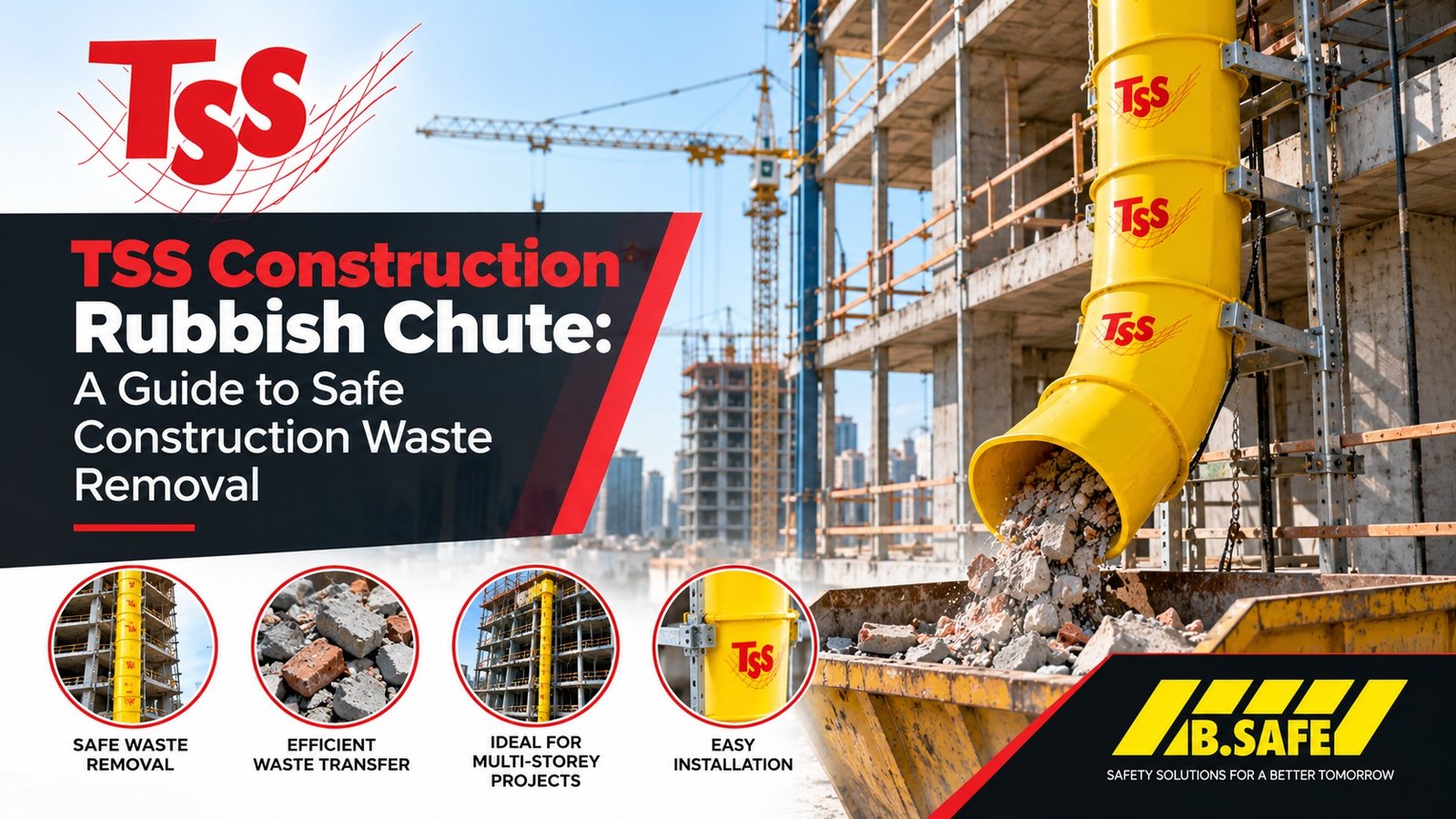
TSS Construction Rubbish Chute: A Guide to Safe Construction Waste Removal
Construction projects generate large amounts of waste, including broken bricks, plaster, concrete fragments, packaging, and other building materials. On multi-storey buildings, moving this waste from upper floors to ground level can create additional safety and logistical challenges.
 A TSS construction rubbish chute is a solution to consider when planning controlled waste removal on suitable construction sites. A properly selected and installed chute can help direct compatible construction debris from elevated work areas to a designated collection point, reducing the need to carry waste manually through buildings or along access routes.
In this guide, we explain what construction rubbish chutes are, how they work, their main benefits, what to consider when choosing a system, and how to evaluate the TSS Haemmerlin Chute available from B.SAFE.
What Is a Construction Rubbish Chute?
A construction rubbish chute is a vertical or angled passage used to transfer suitable building waste from an upper level to a lower collection area.
These systems are commonly considered for renovation projects, building demolition, refurbishment, and multi-storey construction where waste needs to be moved down from elevated floors.
Depending on the design, a chute may consist of connected sections, a loading opening, supporting attachments, and a discharge point positioned above a suitable waste container or collection area.
The exact configuration depends on the building, the type of waste, the available installation space, and the manufacturer’s instructions.
A construction chute is not suitable for every material or waste-handling task. Heavy, oversized, hazardous, or incompatible materials may require a different removal method.
Why Are Construction Rubbish Chutes Important?
Waste removal is an essential part of construction site management. Without a clear process, debris may accumulate in working areas, obstruct access routes, and create additional manual-handling and housekeeping risks.
A suitable rubbish chute can support a more organised approach to waste removal.
1. More Efficient Waste Transfer
A chute provides a defined route for transferring suitable debris from upper floors to a collection point below.
This can reduce the need for workers to carry compatible waste repeatedly through stairways, corridors, or other shared access routes.
2. Improved Site Housekeeping
Construction waste can obstruct walkways, interfere with work activities, and contribute to slip, trip, and other workplace hazards.
Using a designated waste-transfer route can help teams manage debris more systematically, provided that loading, discharge, and collection areas are properly controlled.
3. Reduced Manual Handling
Carrying construction debris by hand can expose workers to physical strain, sharp materials, awkward loads, and repetitive handling.
A suitable chute may reduce some of these handling tasks. However, workers still need safe procedures for collecting, loading, positioning containers, and managing waste at ground level.
4. Better Waste Collection Planning
A chute can direct debris toward a designated collection area, making it easier to coordinate waste containers and removal schedules.
The collection point must have enough capacity and be positioned to avoid obstructing pedestrian routes, vehicle movements, emergency access, or other site activities.
5. Support for Safer Construction Operations
When incorporated into a site-specific waste management plan, a rubbish chute can help separate waste-transfer activities from other work.
It does not remove every hazard. Falling debris, dust, noise, blocked chutes, and unsafe loading practices still require appropriate controls.
How Does a Construction Rubbish Chute Work?
The operating principle is straightforward, but safe use depends on the chute design and the conditions at the site.
Step 1: Select a Suitable Location
The chute should be positioned where waste can be loaded safely and where the discharge point can be controlled.
The installation must account for building access, structural support, nearby activities, pedestrian movement, and the location of waste containers.
Step 2: Install and Secure the System
The chute sections and supporting components must be assembled according to the manufacturer’s instructions.
Fixings, supports, loading openings, and discharge arrangements must be suitable for the specific installation. Do not improvise attachments or assume that a building element can support the system without verification.
Step 3: Load Compatible Waste
Workers should place only materials permitted by the chute manufacturer into the system.
Oversized objects, materials likely to become lodged, and prohibited waste should be handled using an alternative method.
Step 4: Control the Discharge Area
The lower discharge point should be managed so that people cannot inadvertently enter an area exposed to falling debris.
Suitable exclusion measures, container positioning, and site procedures should be established before the chute is used.
Step 5: Monitor and Maintain the System
Workers should follow the operating instructions and report blockages, damage, unusual movement, or loose connections.
The system must be inspected and maintained as required by the manufacturer and the site’s safety procedures.
What Types of Construction Waste Can Be Used in a Chute?
The materials accepted by a construction rubbish chute depend on its design, strength, dimensions, and manufacturer’s instructions.
Potentially suitable materials may include certain types of:
- Plaster and plasterboard offcuts.
- Small pieces of masonry.
- Lightweight renovation debris.
- Selected non-hazardous building waste.
- Other compatible materials specifically permitted for the chute.
Do not assume that every chute can handle concrete, large bricks, heavy rubble, long materials, or bulky demolition waste.
Hazardous waste, chemicals, liquids, hot materials, and other prohibited items must not be introduced unless the system is explicitly designed and approved for that use. In practice, these materials often require separate handling and disposal procedures.
Before using a chute, confirm the permitted waste types, maximum loading requirements, and any restrictions in the product documentation.
TSS Construction Rubbish Chute: What Should You Consider?
When evaluating a construction rubbish chute, it is important to select a system that matches the project’s needs rather than choosing solely on price or appearance.
The TSS Haemmerlin Chute is available through B.SAFE and is a product to consider when reviewing construction waste-transfer solutions.
Before specifying it for a project, confirm the exact product configuration, intended application, installation requirements, and permitted materials with the supplier.
The following factors can help guide the selection process.
1. Building Height and Installation Layout
The building’s height and layout affect the chute configuration, attachment requirements, and positioning of loading and discharge points.
Confirm the maximum permitted installation arrangement and the manufacturer’s requirements for supporting and securing the system.
2. Type and Volume of Waste
Consider the materials generated by the project and the expected volume of debris.
A chute must be suitable for the size, weight, and type of waste being transferred. If the project involves large or heavy demolition materials, a different waste-removal method may be more appropriate.
3. Chute Dimensions and Compatibility
The internal dimensions and section design affect which materials can pass through the system.
Check that the chute is compatible with the planned waste stream and that its configuration does not encourage workers to force unsuitable objects through the opening.
4. Supporting Structure and Fixings
The installation must be supported and secured according to the manufacturer’s specifications.
Evaluate the building structure, fixing points, connections, and installation sequence before work begins. Any required structural assessment should be completed by a competent professional.
5. Discharge and Collection Arrangements
The discharge point must be positioned above an appropriate collection area and managed to reduce the risk of people being struck by falling waste.
Plan the container location, waste removal schedule, vehicle access, and any required exclusion zone before the chute is put into service.
6. Dust and Environmental Controls
Construction waste can generate dust during loading, transfer, and collection.
Depending on the materials and work environment, additional dust-control measures, suitable personal protective equipment, and waste-handling procedures may be necessary.
7. Inspection and Maintenance
Inspect the chute and its supporting components according to the manufacturer’s instructions and the site’s procedures.
Look for damaged sections, loose connections, obstructions, or signs that the installation has moved or deteriorated. Stop using the system if a defect could compromise safe operation, and arrange an assessment before restarting.
Construction Rubbish Chutes vs. Manual Waste Removal
Both methods may be used on construction projects, but the appropriate choice depends on the building, waste materials, access, and site conditions.
| Consideration | Construction Rubbish Chute | Manual Waste Removal |
|---|---|---|
| Waste transfer | Provides a designated route for compatible debris | Workers carry waste to a collection point |
| Multi-storey projects | May be suitable when the installation is properly planned | Can require repeated movement through stairs or access routes |
| Manual handling | May reduce some carrying tasks | Can involve repetitive lifting and carrying |
| Site requirements | Needs suitable installation, supports, loading controls, and discharge management | Needs safe access, handling procedures, and suitable transport arrangements |
| Material restrictions | Only compatible waste should be loaded | Depends on the handling method and available equipment |
A rubbish chute is not automatically the safest or most efficient choice for every project. Compare the expected waste volume, material characteristics, installation requirements, and available alternatives before making a decision.
Common Mistakes to Avoid When Using Construction Rubbish Chutes
Incorrect selection or operation can introduce additional risks. Avoid these common mistakes:
- Loading unsuitable materials: Heavy, oversized, hazardous, or prohibited waste may damage the system or cause blockages.
- Using improvised fixings: The chute must be supported and secured in accordance with the manufacturer’s instructions.
- Ignoring the discharge area: People must be protected from exposure to falling debris at ground level.
- Allowing waste to accumulate: Collection containers should be managed to prevent overflow and disruption to site operations.
- Ignoring blockages: Workers should never attempt unsafe interventions inside a chute. Follow the manufacturer’s blockage-clearing procedure.
- Overlooking dust: Assess the materials and implement appropriate controls for dust exposure.
- Skipping inspections: Damaged sections, loose connections, and other defects must be addressed before continued use.
- Treating the chute as a complete safety solution: Safe loading, structural support, access control, housekeeping, and waste disposal procedures remain essential.
Frequently Asked Questions About Construction Rubbish Chutes
What is a construction rubbish chute used for?
It is used to transfer compatible construction waste from upper levels to a designated collection point, particularly on multi-storey building, renovation, and demolition projects.
What is the TSS Haemmerlin Chute?
The TSS Haemmerlin Chute is a product listed on B.SAFE’s website. Review its product documentation or contact B.SAFE to confirm its specifications, intended applications, and installation requirements.
Can a construction rubbish chute be used for heavy rubble?
Not every chute is designed for heavy rubble. Confirm the permitted material types, maximum loading requirements, and operating limitations before use.
Are construction rubbish chutes suitable for every building?
No. Suitability depends on building height, installation layout, supporting structure, waste type, available space, and the manufacturer’s requirements.
How can a rubbish chute improve construction site safety?
When correctly selected and managed, it can provide a designated route for compatible waste and may reduce some manual carrying tasks. The loading and discharge areas still require appropriate controls.
How should a construction rubbish chute be maintained?
Follow the manufacturer’s inspection and maintenance instructions. Check the chute sections, connections, supports, and discharge arrangements, and address any damage or blockage before returning the system to service.
Where can I find the TSS Haemmerlin Chute?
You can view the TSS Haemmerlin Chute at B.SAFE or visit the TSS brand page to explore other available products.
Conclusion
Construction rubbish chutes can help organise waste removal on suitable building projects by directing compatible debris from elevated work areas to a designated collection point.
Choosing the right system requires an assessment of building height, waste type, installation arrangements, supporting structure, discharge controls, and maintenance requirements. Safe operation also depends on following the manufacturer’s instructions and establishing clear site procedures.
If you are looking for a construction waste-transfer solution, explore the TSS Haemmerlin Chute at B.SAFE. Contact the team to request product information and confirm whether the system is suitable for your project.