Comfortable Safety Shoes for Long Working Hours: How to Choose the Right Pair

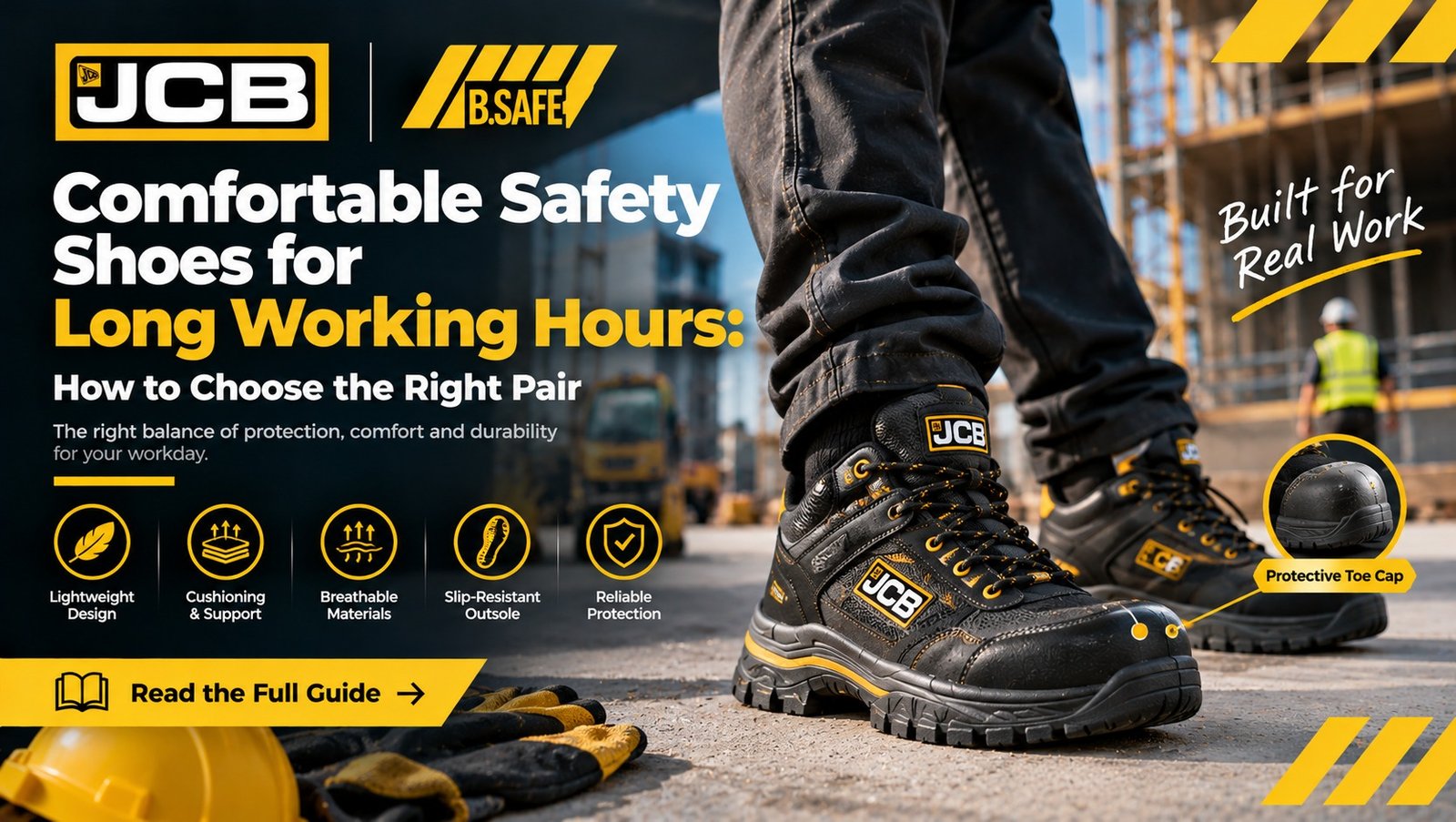
Comfortable Safety Shoes for Long Working Hours: How to Choose the Right Pair
Workers in construction, warehouses, manufacturing plants, and industrial facilities often spend most of their working day standing, walking, or moving between tasks. Wearing uncomfortable footwear can make these activities more difficult, especially during long shifts.
 Choosing the right comfortable safety shoes means finding a balance between protection, fit, cushioning, breathability, and grip. The shoes must also meet the safety requirements of the workplace.
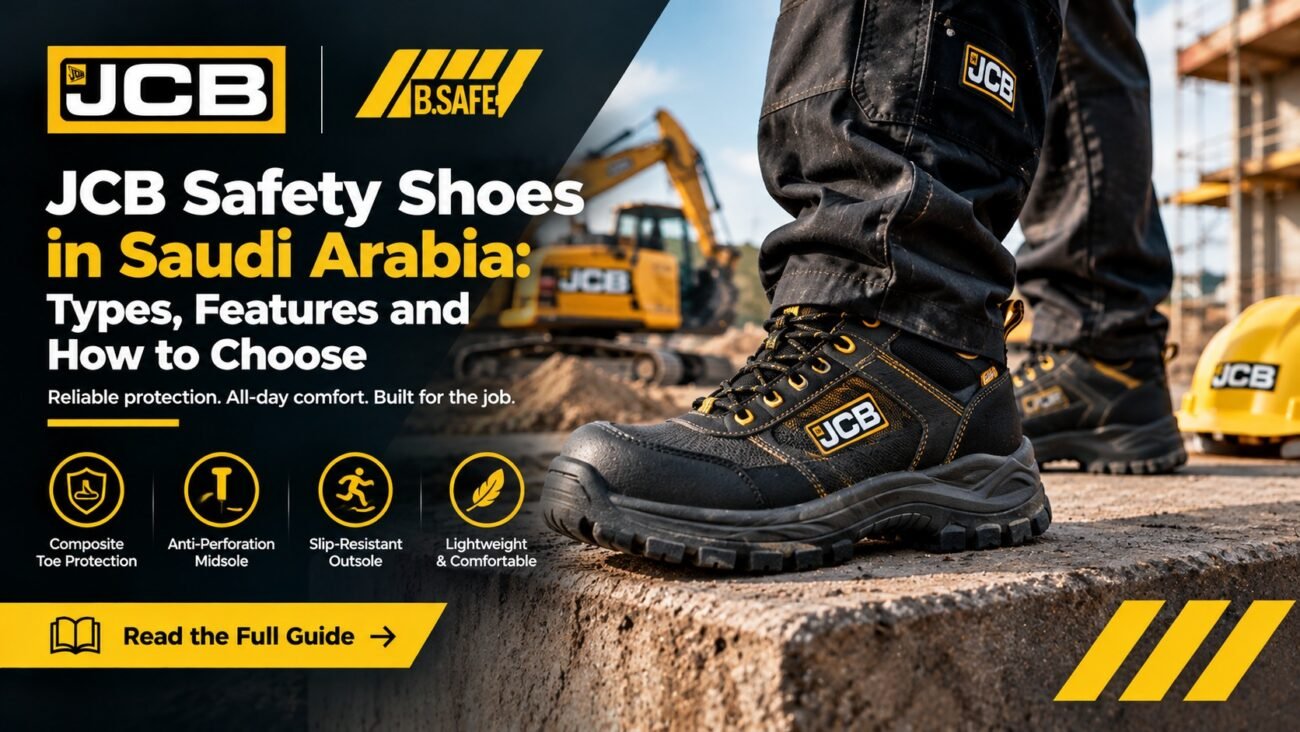
For professionals and businesses in Saudi Arabia, JCB safety footwear is one option to consider when comparing protective work shoes. B.SAFE offers a dedicated range of JCB products that buyers can explore when selecting footwear for their teams.
In this guide, we explain what makes safety shoes comfortable, which features matter most during long working hours, and how to choose suitable footwear for your job.
What Makes Safety Shoes Comfortable?
Comfort depends on several factors working together. A shoe may have a cushioned insole but still cause discomfort if it is too narrow, too heavy, or unsuitable for the working environment.
When comparing safety shoes, pay attention to these essential features.
1. Lightweight Construction
Lightweight safety shoes may help reduce the effort associated with repeated walking and movement during a shift.
However, weight alone does not determine comfort. The protective toe cap, outsole, midsole, upper materials, and overall construction all contribute to the final weight.
When comparing two models, check their actual specifications rather than assuming that every composite toe shoe is lighter than every steel toe shoe.
2. Cushioning and Insole Support
The insole and midsole influence how footwear feels during standing and walking.
Look for features such as:
- Cushioned insoles that provide a comfortable contact surface.
- Suitable support for the shape of your feet.
- Adequate cushioning for your daily activities.
- A secure fit that prevents excessive foot movement inside the shoe.
Memory foam insoles are included in some JCB safety footwear models listed by B.SAFE. Their suitability will depend on the individual model and the wearer’s needs.
3. Breathable Materials
Footwear worn for an entire shift can become warm, particularly in demanding working environments.
Breathable uppers and mesh linings may help improve airflow and manage heat and moisture inside the shoe.
When choosing breathable safety shoes, consider the workplace temperature, ventilation, exposure to water, and other environmental conditions. A highly breathable design may not be appropriate for every task if additional resistance to moisture or other hazards is required.
4. Proper Fit
A well-fitting shoe is essential for comfort and stability.
Safety footwear should provide enough room for the toes without allowing excessive movement at the heel. Shoes that are too tight may create pressure points, while oversized footwear may move around and cause friction.
Before purchasing, check the manufacturer’s sizing guidance and try the footwear with the socks normally worn at work whenever possible.
5. Suitable Outsole Grip
The outsole affects traction, stability, and how the shoe interacts with the floor.
Workers in warehouses and factories may encounter smooth concrete, dusty surfaces, wet areas, or contaminants. Construction workers may need footwear suitable for uneven ground.
Choose an outsole with documented performance appropriate to your working conditions. Do not assume that every rubber outsole provides the same slip resistance.
Why Comfortable Safety Shoes Matter During Long Shifts
Comfortable footwear can support workers who spend extended periods standing or walking. The right fit and suitable cushioning may help reduce pressure and friction associated with poorly fitting shoes.
However, safety shoes do not eliminate fatigue or guarantee that foot pain will be prevented. Workstation design, flooring, workload, breaks, and individual foot needs also influence comfort.
Here are some reasons to prioritize suitable safety footwear.
Supporting Daily Movement
Warehouse staff, maintenance technicians, production workers, and construction teams may walk frequently throughout the day. Footwear that fits well and suits the task can make movement more comfortable.
Reducing Unnecessary Pressure
Shoes that are too narrow, too short, or poorly secured can create pressure points. Correct sizing and suitable toe-box space are important, particularly when a protective toe cap limits the available space at the front of the shoe.
Maintaining Workplace Protection
Comfort should never come at the expense of safety. Workers still need appropriate protection against impact, compression, puncture, slipping, and other hazards identified in the workplace risk assessment.
The goal is to find footwear that meets the required protective specifications while remaining comfortable enough for the work being performed.
How to Choose Comfortable Safety Shoes for Your Job
Different occupations place different demands on footwear. Consider the following factors before selecting a model.
Comfortable Safety Shoes for Warehouse Workers
Warehouse employees may spend hours walking between storage areas, handling stock, and operating around moving equipment.
Important features to evaluate include:
- Comfortable fit for frequent walking.
- Suitable cushioning and insole construction.
- Appropriate outsole grip for warehouse flooring.
- Toe protection where required by the workplace.
- Anti-perforation protection where sharp objects pose a risk.
For warehouse teams, the shoe should be selected according to both the walking demands and the hazards associated with stored goods and material-handling activities.
Safety Shoes for Construction Workers
Construction environments may involve uneven surfaces, heavy materials, tools, and sharp debris.
When choosing footwear for construction work, assess:
- Protective toe-cap performance.
- Anti-perforation protection where required.
- Outsole grip and stability.
- Upper durability.
- Resistance to the specific environmental conditions expected on site.
A lightweight design can be useful, but the model must still provide the protection required by the construction site’s risk assessment.
Safety Shoes for Factory Workers
Manufacturing environments vary widely. Some involve long periods of standing at workstations, while others require frequent walking, handling components, or working around machinery.
Consider cushioning, fit, breathability, outsole performance, and the protective rating required for the specific task.
If workers are exposed to electrical, chemical, or other specialized hazards, verify that the footwear is explicitly documented as suitable for those conditions.
Safety Shoes for Maintenance Teams
Maintenance workers may move between workshops, equipment rooms, warehouses, and outdoor areas.
Their footwear requirements may vary depending on the work performed. Some tasks may require toe protection and anti-perforation features, while others may require additional specialized protection.
Choose footwear based on the full range of tasks rather than selecting a pair solely for its appearance or comfort.
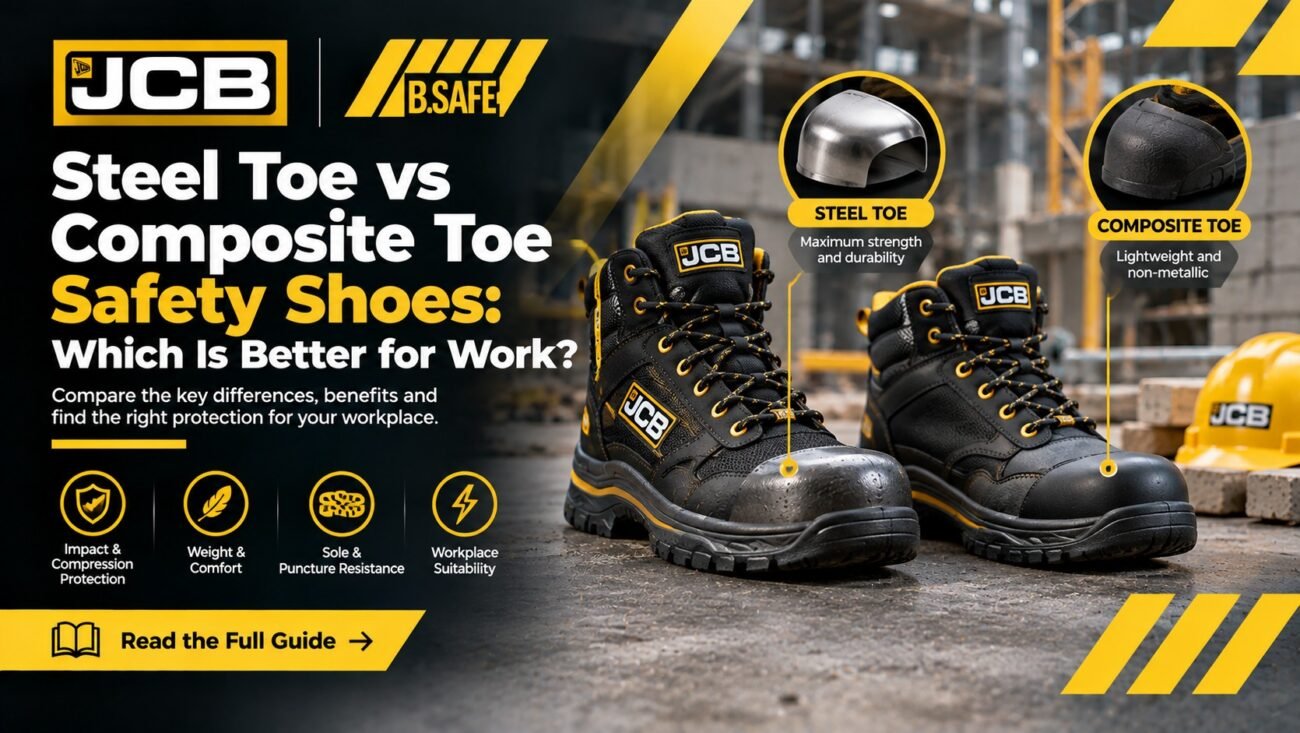
Composite Toe vs Steel Toe: Which Is More Comfortable?
The protective toe cap is one factor that may influence the weight and feel of a safety shoe.
Steel toe safety shoes use a steel protective cap, while composite toe shoes use non-metallic protective materials. Both can provide the required toe protection when appropriately designed and rated.
| Feature | Steel Toe Safety Shoes | Composite Toe Safety Shoes |
|---|---|---|
| Toe-cap material | Steel | Non-metallic composite material |
| Weight | May be heavier than comparable models | May be lighter, depending on construction |
| Comfort | Depends on fit, weight, cushioning, and design | Depends on fit, weight, cushioning, and design |
| Metal detection | The steel cap may trigger metal detectors | The composite cap is non-metallic, although other shoe components may contain metal |
| Protection | Depends on the model’s documented rating | Depends on the model’s documented rating |
Composite toe shoes may be worth considering if you prefer a non-metallic toe cap or find a particular composite model more comfortable.
However, composite toe footwear is not automatically lighter or more comfortable than every steel toe shoe. Compare the actual models, including their weight, fit, cushioning, and protective features.
Features to Check Before Buying JCB Safety Shoes
If you are considering JCB safety footwear, review the specifications of each model carefully.
JCB008A Safety Shoes
The JCB008A Safety Shoes product page lists the following features:
- Composite toe cap.
- Carbon-fiber anti-perforation midplate.
- Memory foam and mesh insole.
- 3D mesh lining.
- EVA midsole.
- Rubber outsole.
These features may be relevant for workers who need toe protection, underfoot protection, cushioning, and a mesh-lined design.
Confirm the product’s documented protective rating and suitability for your workplace before purchasing.
JCB008B Safety Shoes
The JCB008B Safety Shoes product page lists a composite toe cap, carbon-fiber midplate, memory foam and mesh insole, and EVA and rubber outsole.
Compare its specifications with other models to determine which option best matches your required protection and comfort preferences.
Explore More JCB Footwear
You can browse the full range through the JCB brand page at B.SAFE.
Review the available product information and contact B.SAFE if you need help comparing specifications, sizes, pricing, or availability.
How to Find the Right Fit for Long Working Hours
Even a well-designed safety shoe can be uncomfortable if it does not fit correctly.
Use this checklist when trying or purchasing safety footwear.
Check the Toe Box
Make sure your toes have adequate room inside the shoe. The protective toe cap should not press uncomfortably against your toes during normal movement.
Check the Heel
The heel should feel secure without excessive slipping. Too much movement can contribute to friction and discomfort.
Consider Your Normal Work Socks
Try the shoes with the socks you normally wear at work. Thick socks may change the fit, so choose a size that accommodates your usual working conditions.
Test the Fit While Moving
If possible, walk in the shoes before committing to them. Check for pressure points, rubbing, excessive movement, or discomfort when bending and walking.
Inspect the Footwear Regularly
Worn cushioning, damaged soles, loose components, or a deteriorated protective structure can affect comfort and safety.
Follow the manufacturer’s inspection and replacement guidance, and replace footwear when its protective performance or structural condition is compromised.
Common Mistakes When Buying Comfortable Safety Shoes
Choosing footwear based only on appearance or price can lead to the wrong purchase.
Avoid these common mistakes:
Choosing comfort over protection. A soft, lightweight shoe is not suitable if it lacks the safety features required for your job.
Assuming every lightweight shoe is comfortable. Fit, cushioning, stability, and personal foot shape all affect comfort.
Ignoring the working surface. Outsole performance should match the actual floor or ground conditions.
Buying the wrong size. A poorly fitting shoe may create pressure points or allow excessive movement.
Assuming all models have identical features. Protective ratings, toe-cap materials, and underfoot protection can differ between models from the same brand.
Overlooking product documentation. Confirm the applicable safety standard and protective features instead of relying on general descriptions.
Where to Buy JCB Safety Shoes in Saudi Arabia
If you are sourcing safety footwear for yourself or your organization, B.SAFE provides a dedicated JCB brand page where you can explore listed models.
The available JCB008A Safety Shoes and JCB008B Safety Shoes are useful starting points for comparing composite toe designs and other listed features.
Before placing an order, confirm:
- Available sizes.
- Current stock and availability.
- Pricing and purchasing arrangements.
- The required protective rating.
- Suitability for your workplace hazards.
For company purchases, it is particularly important to ensure that the selected footwear meets the safety requirements for each worker’s role.
Frequently Asked Questions About Comfortable Safety Shoes
What are the most comfortable safety shoes for long working hours?
The most suitable shoes depend on your foot shape, work environment, and required protection. Look for a secure fit, adequate toe room, suitable cushioning, appropriate weight, and an outsole designed for your working surface.
Are lightweight safety shoes better for standing all day?
Lightweight footwear may feel easier to wear during extended movement, but weight alone does not determine comfort. Cushioning, fit, support, and the nature of the work also matter.
Are composite toe safety shoes more comfortable than steel toe shoes?
Some composite toe models are lighter than comparable steel toe models, which may suit certain workers. However, comfort depends on the complete shoe design and fit, not just the toe-cap material.
Do breathable safety shoes work in hot environments?
Breathable materials and mesh linings may improve airflow and help manage moisture. The footwear must still provide the protection required for the workplace, particularly where water, chemicals, or other hazards are present.
Can comfortable safety shoes prevent foot pain?
Appropriately fitted footwear may help reduce discomfort caused by pressure and friction, but it cannot guarantee the prevention of foot pain. Persistent or recurring pain should be assessed by an appropriate healthcare professional.
Where can I find JCB safety shoes?
You can explore the JCB footwear range at B.SAFE. Review the specifications of individual models and confirm availability, sizes, pricing, and suitability before ordering.
Conclusion
Choosing comfortable safety shoes for long working hours requires more than finding a lightweight design. Fit, cushioning, breathability, outsole performance, and the required protective features all contribute to a suitable choice.
For construction workers, warehouse teams, factory employees, and maintenance professionals, the right footwear should balance daily comfort with the protection required by the job.
If you are comparing JCB safety footwear, start with the models listed by B.SAFE, review their specifications, and select a pair that matches your workplace requirements.
Explore the JCB safety footwear range at B.SAFE to compare available models for your work environment.