Steel Toe vs Composite Toe Safety Shoes: Which Is Better for Work?

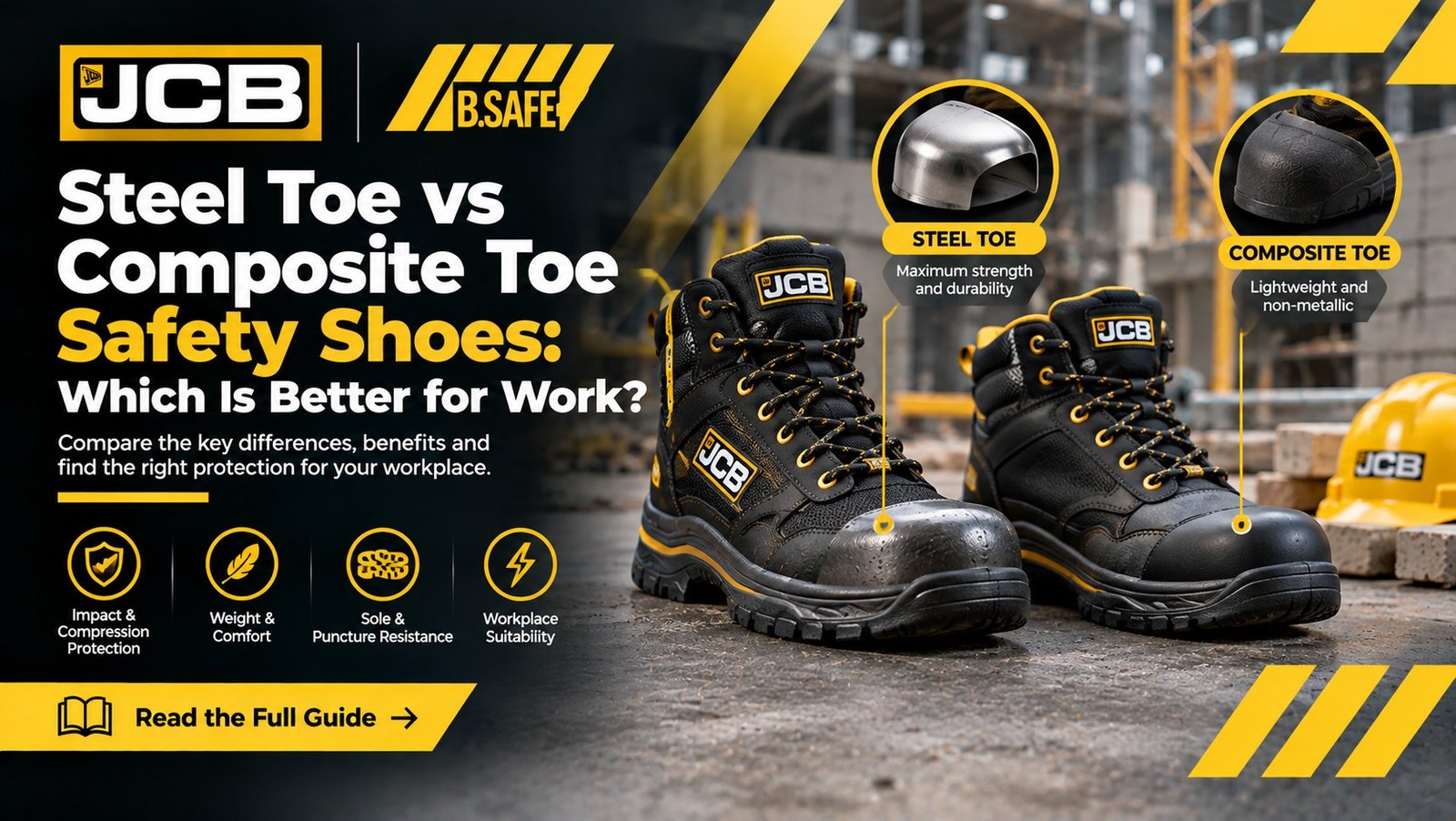
Steel Toe vs Composite Toe Safety Shoes: Which Is Better for Work?
Choosing the right safety footwear is an important part of workplace safety. In construction, manufacturing, warehousing, and industrial maintenance, workers may face hazards such as falling objects, compression injuries, sharp materials, and slippery surfaces.
Two common options are steel toe safety shoes and composite toe safety shoes. Both can provide protective toe caps when designed and tested to the appropriate safety requirements, but they differ in materials, weight, and suitability for particular working conditions.
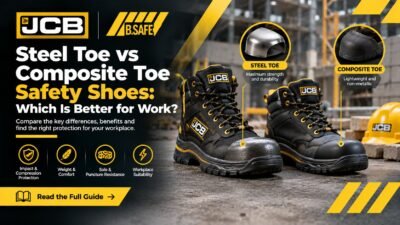 If you are comparing safety footwear for your workplace in Saudi Arabia, understanding these differences can help you make a more informed decision.
In this guide, we compare steel toe vs composite toe safety shoes, explain their advantages and limitations, and show you what to consider when choosing JCB safety footwear from B.SAFE.
What Are Steel Toe Safety Shoes?
Steel toe safety shoes contain a protective cap made from steel at the front of the footwear. The cap is designed to help protect the toes against specified impact and compression hazards.
These shoes are commonly considered for industrial environments where heavy materials, tools, or equipment may pose a risk of foot injury.
Advantages of Steel Toe Safety Shoes
- Protective toe cap: Provides impact and compression protection when the model meets the relevant safety requirements.
- Established design: Steel toe protection is widely used across industrial and construction applications.
- Suitable for demanding environments: Depending on the complete shoe design and its rating, steel toe footwear may be appropriate for workplaces with heavy-object hazards.
- Broad product availability: Steel toe designs are available across many styles of industrial footwear.
Potential Limitations
Steel toe shoes may be heavier than some comparable composite toe models, although the overall weight depends on the shoe’s construction.
Steel is also electrically conductive. Therefore, a steel toe cap should not be assumed to provide electrical insulation or protection against electrical hazards. Specialized footwear must be selected when electrical risks are present.
Steel toe shoes may also be less suitable for certain security-screening environments that require non-metallic footwear, depending on the equipment and screening procedures used.
What Are Composite Toe Safety Shoes?
Composite toe safety shoes use non-metallic materials in the protective toe cap. Depending on the product design, these materials may include reinforced polymers, fiberglass, or other composite materials.
Composite toe footwear is often considered by workers who want protective footwear with a non-metallic toe cap and potentially lower weight.
Advantages of Composite Toe Safety Shoes
- Non-metallic toe cap: Useful where non-metallic footwear is preferred or required by workplace procedures.
- Potentially lighter construction: Some composite toe models weigh less than comparable steel toe alternatives.
- No steel toe cap: Composite designs avoid the use of a steel protective toe cap, although other components of the shoe may still contain metal.
- Suitable protective performance: Properly tested composite toe caps can provide the impact and compression protection specified for the footwear.
Potential Limitations
Composite toe shoes are not automatically lighter than every steel toe model. The overall weight depends on the materials used throughout the shoe.
Composite toe caps may also be bulkier in some designs. In addition, the non-metallic construction does not automatically make a shoe electrically safe or suitable for every industrial hazard.
Always check the manufacturer’s documentation to confirm the protective rating and intended use.
Steel Toe vs Composite Toe Safety Shoes: Key Differences
The best option depends on your workplace requirements, comfort preferences, and the hazards identified in your risk assessment.
| Feature | Steel Toe Safety Shoes | Composite Toe Safety Shoes |
|---|---|---|
| Toe cap material | Steel | Non-metallic composite materials |
| Impact protection | Depends on the tested model and rating | Depends on the tested model and rating |
| Weight | May be heavier than comparable composite designs | May be lighter, depending on construction |
| Metal content | Contains a steel toe cap | No metal in the composite toe cap, but other shoe components may contain metal |
| Security screening | May trigger metal detectors | May be preferable for non-metallic screening requirements |
| Electrical hazards | Steel toe cap is conductive | Non-metallic toe cap does not automatically make the shoe electrically safe |
| Comfort | Depends on fit, cushioning, and overall design | Depends on fit, cushioning, and overall design |
| Best selection criteria | Required protection and workplace conditions | Required protection, workplace conditions, and non-metallic preferences |
Important: Neither type is universally safer than the other. The correct choice is the footwear model that meets the required safety rating and suits the hazards present in your workplace.
Which Is Better for Construction Work?
Construction workers may encounter falling tools, building materials, uneven surfaces, and sharp debris. The appropriate footwear depends on the tasks performed and the site’s safety requirements.
When to Consider Steel Toe Shoes
Steel toe footwear may be suitable when the workplace requires a steel protective cap and the selected model meets the required impact and compression standards.
Before purchasing, check the shoe’s overall construction, outsole performance, and any additional protection required by the site.
When to Consider Composite Toe Shoes
Composite toe shoes may be worth considering when workers prefer non-metallic toe protection or want to compare lighter footwear options.
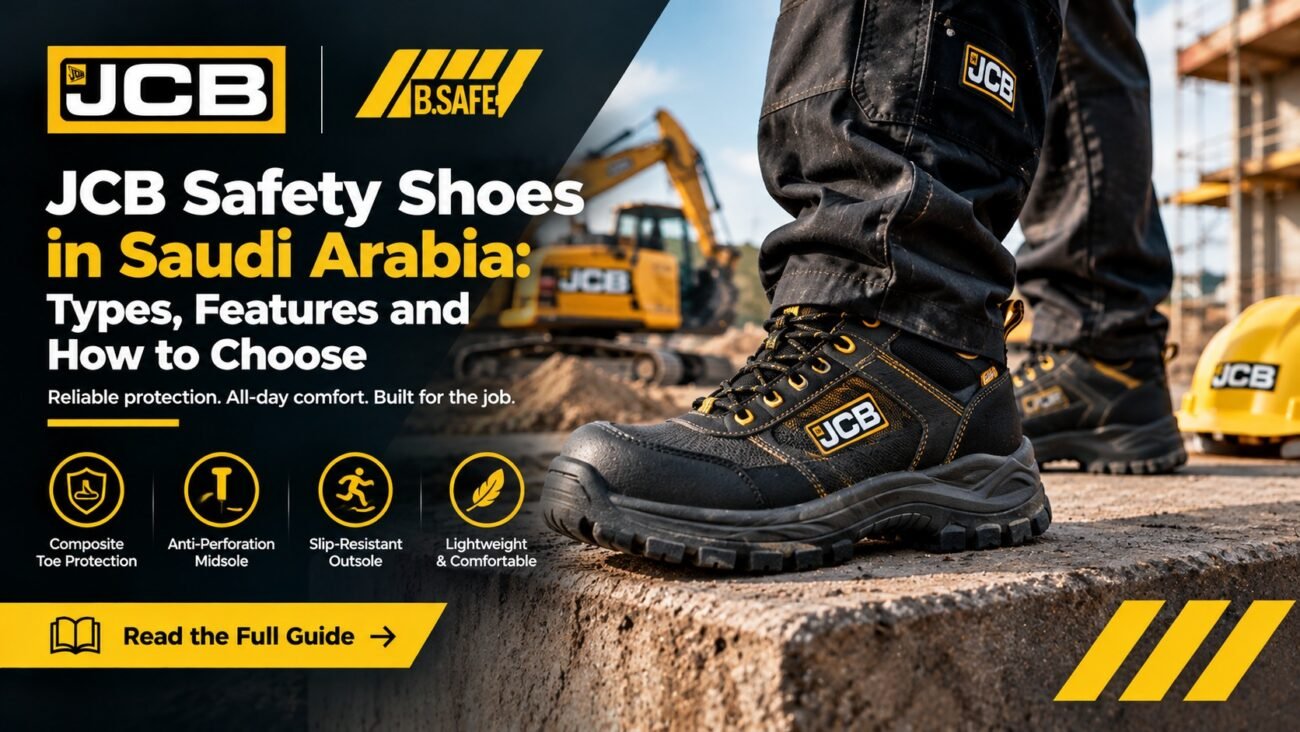
For example, the JCB008A Safety Shoes listed by B.SAFE feature a composite toe cap and a carbon-fiber anti-perforation midplate.
These features may be relevant for certain construction and industrial applications, but suitability should be confirmed against the model’s documented ratings and the specific hazards at the worksite.
Which Is Better for Warehouses and Factories?
Warehouse and factory workers may spend long periods standing, walking, handling goods, and moving between work areas.
When selecting footwear for these environments, consider the following factors.
1. Comfort During Long Shifts
Workers who walk for extended periods should consider shoe weight, cushioning, fit, and the amount of space available for the toes.
Neither steel toe nor composite toe footwear guarantees greater comfort. Try to compare the actual models rather than relying only on the toe-cap material.
2. Protection Against Falling Objects
Workers handling cartons, equipment, tools, or industrial materials may require protective toe caps.
Choose a model with a documented protective rating appropriate to the expected impact and compression risks.
3. Protection Against Sharp Objects
If nails, metal fragments, or other sharp objects may penetrate the sole, check whether the footwear includes suitable anti-perforation protection.
A protective toe cap and an anti-perforation midsole address different hazards. One should not be assumed to replace the other.
4. Grip and Floor Conditions
Warehouse and factory floors may be smooth, dusty, wet, or contaminated with oils and other substances.
Review the outsole’s documented performance and suitability for the actual floor conditions. Do not assume every rubber outsole provides the same slip resistance.
Are Composite Toe Safety Shoes Better for Long Working Hours?
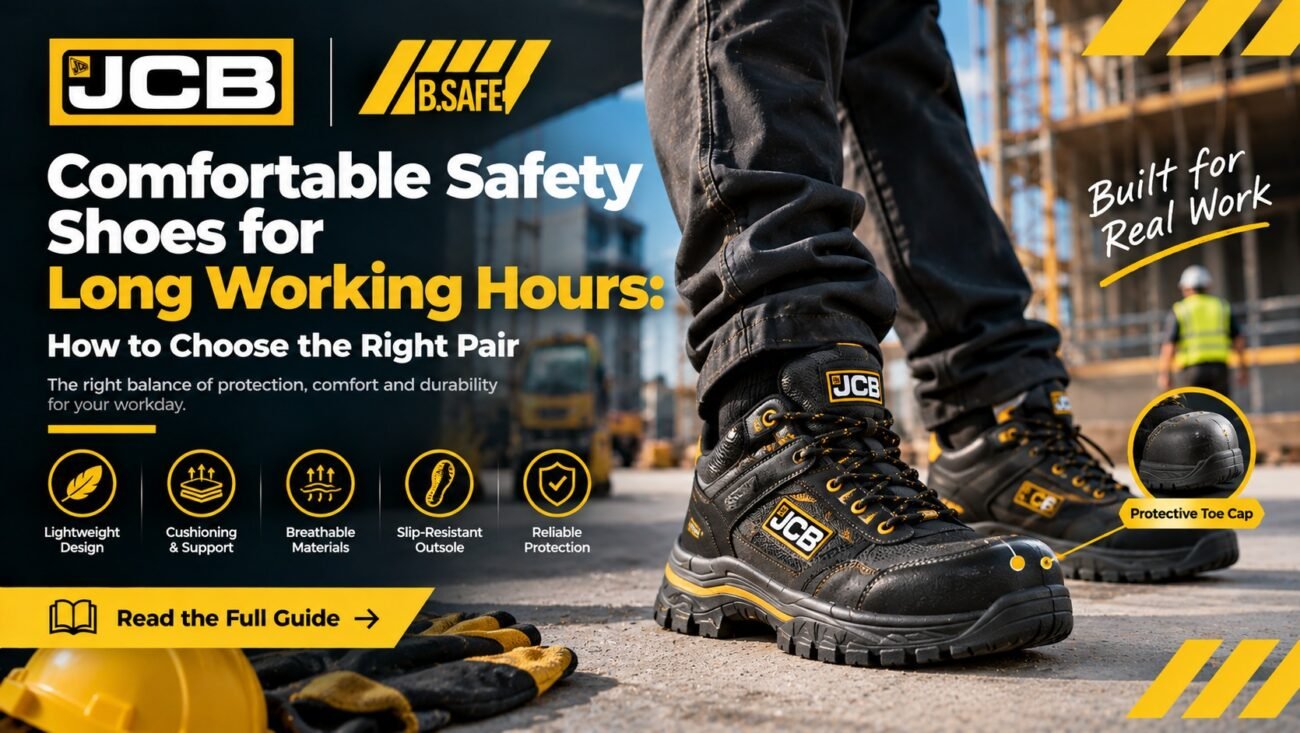
Composite toe safety shoes can be a good option for some workers who spend much of the day walking or standing, particularly when the chosen model has a suitable weight and comfortable construction.
However, the toe-cap material is only one factor in overall comfort.
When choosing safety footwear for long shifts, assess:
- Weight: Compare the actual weight of the models under consideration.
- Fit: Ensure the shoe provides adequate toe room and a secure heel fit.
- Cushioning: Look for suitable insoles and midsoles for your work routine.
- Breathability: Consider the upper and lining materials in relation to the working environment.
- Outsole design: Check grip, durability, and suitability for the walking surface.
- Protection: Confirm that the shoe meets the required workplace safety rating.
A comfortable shoe is not necessarily a protective shoe, and a protective shoe is not automatically comfortable. Both requirements matter.
What About Puncture-Resistant Safety Shoes?
Puncture resistance is an important consideration when workers may encounter sharp objects on the ground.
Some safety shoes incorporate a protective midsole designed to reduce the risk of penetration through the bottom of the footwear. The material and performance rating can vary by model.
The JCB008A Safety Shoes are listed with a carbon-fiber anti-perforation midplate.
When comparing products, verify the following:
- Whether the model includes an anti-perforation component.
- Which standard or test documents its performance.
- Whether the protection is appropriate for the sharp-object hazards in your workplace.
- Whether additional features are required for the specific job.
Remember that a composite toe cap does not itself provide underfoot puncture protection. These are separate components with different functions.
How to Choose the Right Safety Shoes for Your Workplace
Before deciding between steel toe and composite toe footwear, follow these practical steps.
Step 1: Identify the Main Hazards
Determine whether workers face impact, compression, puncture, slip, electrical, chemical, or other hazards.
Use your workplace risk assessment to identify the protective features required. A shoe designed for one hazard may not protect against another.
Step 2: Check the Required Safety Standard
Review the product documentation for the applicable safety standard and protective rating. Requirements can vary by workplace, industry, and jurisdiction.
Do not rely on general product descriptions alone when a specific certification or performance rating is required.
Step 3: Compare the Actual Models
Compare the complete footwear specifications, including toe protection, midsole construction, outsole, materials, weight, and fit.
Do not assume that every model from the same brand provides identical protection.
Step 4: Consider the Working Environment
Assess the floor conditions, exposure to moisture or contaminants, walking distances, temperature, and any site-specific requirements.
For specialized risks, such as electrical hazards or chemical exposure, select footwear explicitly documented as suitable for the intended application.
Step 5: Confirm Sizing and Availability
Check the available sizes, product specifications, pricing, and current availability before placing an order.
For team purchases, it is also useful to confirm that the selected model meets the requirements for each worker’s role.
Explore JCB Safety Shoes at B.SAFE
If you are comparing protective footwear for construction, manufacturing, warehousing, or maintenance, B.SAFE lists several JCB safety shoe models that you can review.
JCB008A Safety Shoes
The JCB008A product page lists a composite toe cap, carbon-fiber anti-perforation midplate, memory foam and mesh insole, 3D mesh lining, EVA midsole, and rubber outsole.
Review the product documentation to determine whether its features match your workplace requirements.
JCB008B Safety Shoes
The JCB008B product page lists a composite toe cap, carbon-fiber midplate, memory foam and mesh insole, and EVA and rubber outsole.
Compare its documented specifications with other available models before making your decision.
Browse the Full JCB Range
Visit the JCB brand page at B.SAFE to explore listed products and compare available options.
If you are sourcing footwear for a company or industrial project, contact B.SAFE to confirm product specifications, available sizes, pricing, and suitability for your application.
Frequently Asked Questions
Are steel toe safety shoes safer than composite toe shoes?
Not necessarily. Both can provide protective toe caps when designed and tested to the relevant requirements. The safer choice is the model that meets the required protective rating and is suitable for the hazards present in your workplace.
Are composite toe safety shoes lighter?
They can be lighter than comparable steel toe models, but this is not guaranteed. Weight depends on the entire shoe’s construction, including the outsole, midsole, upper, and other components.
Can composite toe shoes protect against punctures?
The composite toe cap protects the toe area against specified hazards. Puncture protection requires a separate protective component, such as an appropriately rated anti-perforation midsole. Check the individual product specifications.
Are composite toe safety shoes suitable for electrical work?
A non-metallic toe cap does not automatically make a shoe electrically protective. Electrical work may require footwear with a specific, documented electrical-protection rating. Choose according to the relevant risk assessment and applicable requirements.
Do all JCB safety shoes have composite toe caps?
Do not assume that every model has the same construction. Check the product page and manufacturer documentation for the exact toe-cap material, protective rating, and additional features.
Where can I buy JCB safety shoes in Saudi Arabia?
You can explore the JCB brand range at B.SAFE. Review individual product pages and confirm current availability, sizing, pricing, and technical specifications with the supplier.
Conclusion
When comparing steel toe vs composite toe safety shoes, focus on the protection your workplace requires rather than assuming one material is always better.
Steel toe footwear may be suitable for demanding environments requiring a steel protective cap, while composite toe footwear may appeal to workers seeking non-metallic toe protection or a potentially lighter design. Both must meet the appropriate safety requirements for the intended application.
If you are considering JCB safety footwear, explore the available models at B.SAFE, compare their documented features, and select a pair that balances protection, fit, comfort, and workplace suitability.
Explore JCB safety shoes at B.SAFE to compare available models for your workplace.