Lockout Tagout (LOTO): Complete Guide to Hazardous Energy Control

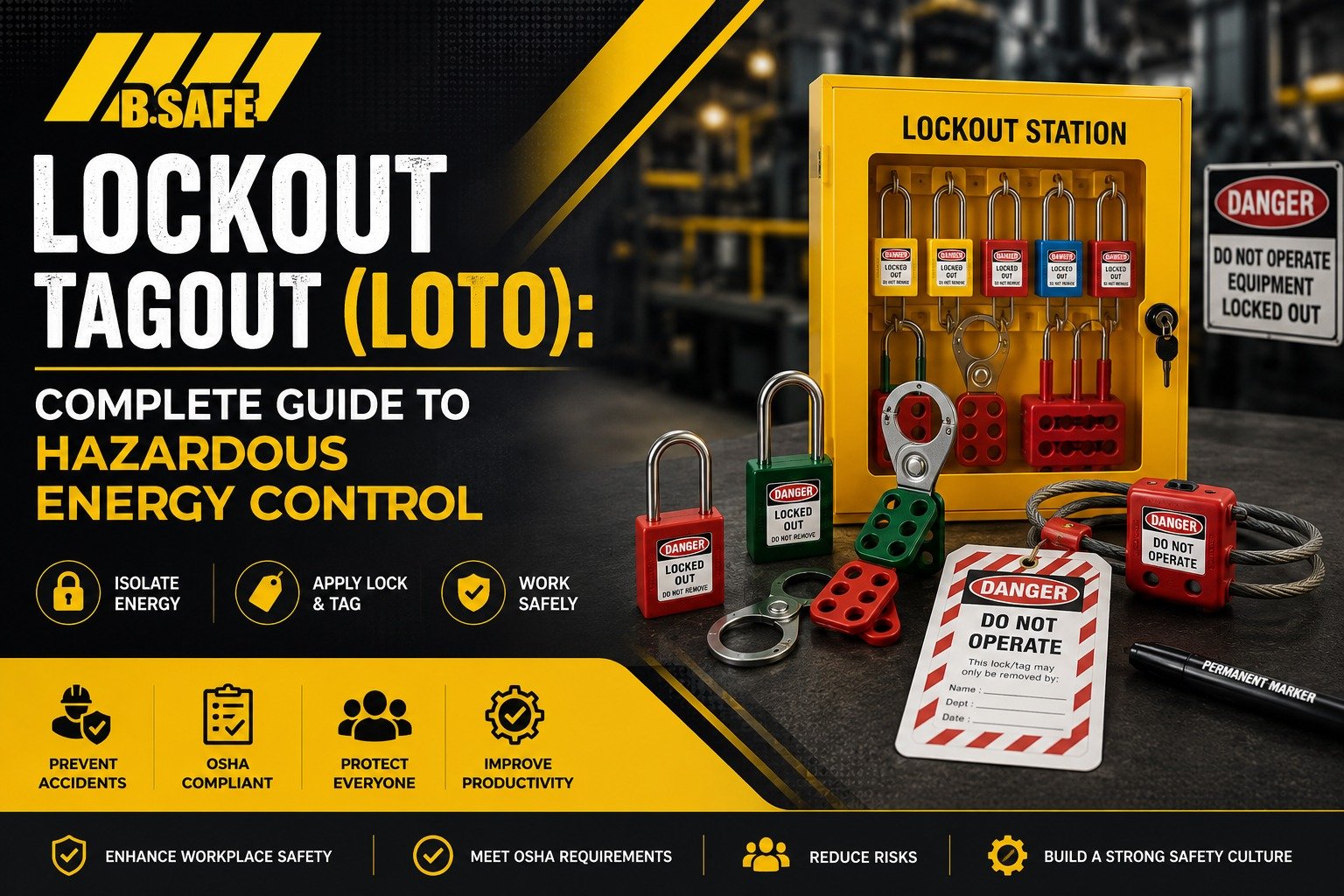
Lockout Tagout (LOTO): Complete Guide to Hazardous Energy Control
Every year, thousands of workplace injuries occur because machines are unexpectedly energized during maintenance, cleaning, inspection, or repair. These incidents often result in severe injuries including electrocution, crushing, burns, amputations, and fatalities.
 This is exactly why Lockout Tagout (LOTO) procedures have become one of the most important workplace safety practices across manufacturing plants, oil & gas facilities, chemical industries, construction sites, warehouses, utilities, and power generation facilities.
A properly implemented Lockout Tagout program ensures that hazardous energy is completely isolated before anyone performs maintenance or servicing on equipment.
This guide explains everything you need to know about Lockout Tagout systems, OSHA requirements, Lockout devices, and how to build a safer workplace.
What is Lockout Tagout?
Lockout Tagout (LOTO) is a hazardous energy control procedure that prevents machines or equipment from being accidentally started while maintenance or servicing is being performed.
The process involves physically isolating energy sources and securing them using specially designed safety locks and warning tags so that only authorized personnel can restore power.
These procedures are designed to eliminate exposure to hazardous energy such as:
- Electrical energy
- Mechanical energy
- Hydraulic pressure
- Pneumatic pressure
- Thermal energy
- Steam
- Compressed gas
- Chemical energy
- Stored mechanical energy
Without proper Lockout Tagout procedures, even a simple maintenance task can quickly become life-threatening.
Why is Lockout Tagout So Important?
Unexpected equipment startup remains one of the leading causes of industrial injuries worldwide.
Common accidents include:
- Electrical shock
- Arc flash incidents
- Crushing injuries
- Entanglement in rotating machinery
- Unexpected movement of hydraulic cylinders
- Release of compressed air
- Steam burns
- Chemical exposure
An effective Lockout Tagout program dramatically reduces these risks while improving maintenance safety and regulatory compliance.
Industries That Require Lockout Tagout
LOTO programs are used in almost every industrial sector, including:
- Manufacturing
- Oil & Gas
- Chemical Processing
- Pharmaceutical Plants
- Food Processing
- Water Treatment
- Mining
- Construction
- Utilities
- Warehouses
- Automotive Plants
- Power Generation Facilities
The Basic Lockout Tagout Procedure
Although procedures vary depending on equipment, a standard Lockout Tagout process generally includes the following steps:
1. Prepare for Shutdown
Review the machine, identify all hazardous energy sources, and notify affected employees.
2. Shut Down the Equipment
Follow the normal stopping procedure.
3. Isolate Energy Sources
Disconnect electrical circuits, close valves, isolate hydraulic systems, and block mechanical movement.
4. Apply Lockout Devices
Install approved Lockout devices on every energy isolation point.
5. Apply Safety Padlocks
Each authorized employee places their own Safety Padlock on the isolation device.
6. Attach Warning Tags
Tags communicate that maintenance is in progress and the equipment must not be operated.
7. Release Stored Energy
Residual pressure, electrical charge, hydraulic pressure, springs, or compressed air must also be safely released.
8. Verify Isolation
Attempt to start the equipment to confirm zero energy state before maintenance begins.
Essential Lockout Tagout Devices
A complete Lockout Tagout program consists of multiple specialized devices.
Safety Padlocks
Safety padlocks are the foundation of every LOTO system.
Unlike ordinary locks, Lockout padlocks feature:
- Non-conductive bodies
- Key retaining mechanisms
- Unique key systems
- High visibility colors
- OSHA compliance
- Permanent warning labels
Lockout Hasps
Hasps allow multiple workers to lock the same energy source simultaneously.
Each employee installs their own personal padlock, ensuring that equipment cannot be restarted until every worker has completed their task.
Valve Lockout Devices
Industrial facilities contain numerous valves controlling steam, compressed air, chemicals, gases, and liquids.
Valve lockout devices prevent unauthorized valve operation during servicing.
Cable Lockout Devices
Some equipment requires flexible cable systems capable of locking multiple energy points simultaneously.
Cable Lockout systems provide excellent versatility for complex machinery.
Lockout Stations
Centralized Lockout Stations keep all LOTO equipment organized and easily accessible.
They typically store:
- Safety padlocks
- Lockout tags
- Hasps
- Valve lockouts
- Circuit breaker lockouts
- Pens
- Cable lockouts
Lockout Kits
Portable Lockout Kits allow maintenance personnel to carry essential Lockout devices anywhere within the facility.
Typical kits include:
- Safety locks
- Tags
- Cable lockouts
- Valve lockouts
- Circuit breaker lockouts
- Hasps
- Identification labels
Group Lockout
When several technicians work on the same equipment, Group Lockout ensures every individual applies their own personal lock.
This prevents accidental re-energization before all workers have safely completed their tasks.
Benefits of a Complete Lockout Tagout Program
Implementing a comprehensive LOTO program provides numerous benefits:
- Reduces workplace injuries
- Prevents fatalities
- Improves maintenance safety
- Protects expensive equipment
- Supports OSHA compliance
- Reduces downtime
- Improves employee confidence
- Demonstrates strong safety culture
Common Lockout Tagout Mistakes
Many accidents occur because organizations fail to follow proper procedures.
Common mistakes include:
- Using ordinary padlocks
- Skipping energy verification
- Forgetting stored energy
- Sharing keys
- Missing employee training
- Improper documentation
- Incomplete isolation
Best Practices
Successful Lockout Tagout programs include:
- Written procedures
- Annual inspections
- Employee training
- Authorized personnel only
- Standardized devices
- Regular audits
- Equipment-specific instructions
- Clear labeling
Choosing the Right Lockout Equipment
When selecting LOTO equipment, consider:
- Energy source
- Environment
- Temperature
- Corrosion resistance
- Chemical exposure
- Number of authorized employees
- Locking points
- OSHA compliance
Building a Complete Lockout Tagout Program
An effective program combines:
- Safety Padlocks
- Lockout Stations
- Valve Lockouts
- Circuit Breaker Lockouts
- Cable Lockouts
- Lockout Tags
- Employee Training
- Written Procedures
- Regular Inspections
A well-designed system protects employees while improving operational efficiency and reducing costly accidents.
External Safety Standard
Implementing a comprehensive Lockout Tagout (LOTO) program is one of the most effective ways to prevent unexpected machine start-up and hazardous energy release during maintenance. Employers should follow the requirements outlined in the OSHA 29 CFR 1910.147 Lockout/Tagout Standard to establish proper energy isolation procedures, employee training, and the correct use of lockout devices. Following these guidelines helps reduce workplace accidents, improve regulatory compliance, and strengthen overall industrial safety.
Conclusion
Lockout Tagout is far more than a regulatory requirement—it is one of the most effective systems for protecting workers from hazardous energy. By using certified safety padlocks, lockout stations, valve lockouts, cable lockouts, and comprehensive Lockout procedures, organizations can significantly reduce workplace injuries while improving operational reliability and compliance.
Investing in a complete Lockout Tagout program creates a safer workplace, protects valuable equipment, and demonstrates a long-term commitment to employee safety.