3M 6006 Multi Gas/Vapor Cartridge: Uses, Compatibility and Selection Guide

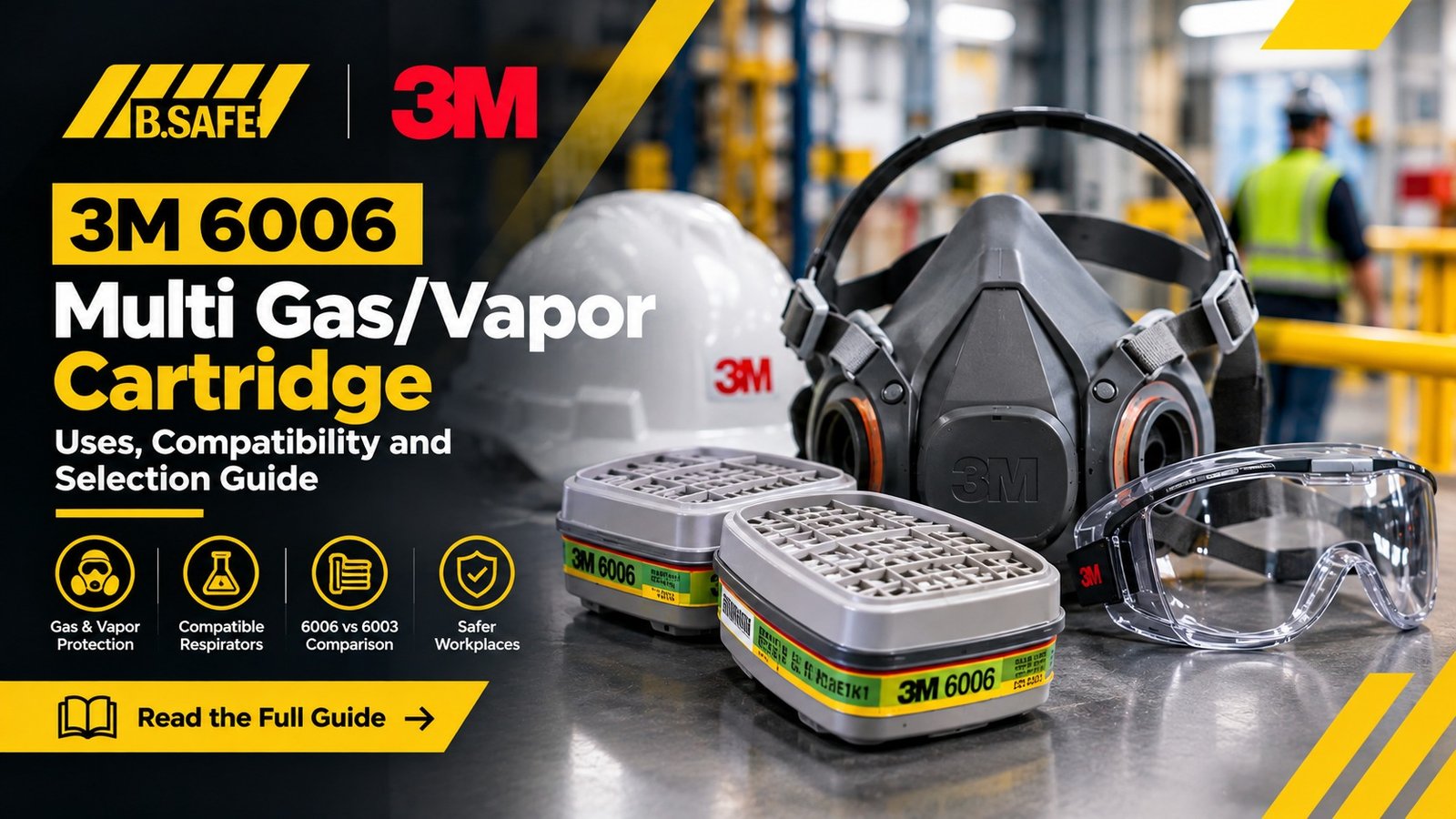
3M 6006 Multi Gas/Vapor Cartridge: Uses, Compatibility and Selection Guide
Choosing the correct respirator cartridge is essential for workplace respiratory protection. Different gases and vapors require different types of cartridges, and using an unsuitable cartridge can expose workers to serious health risks.
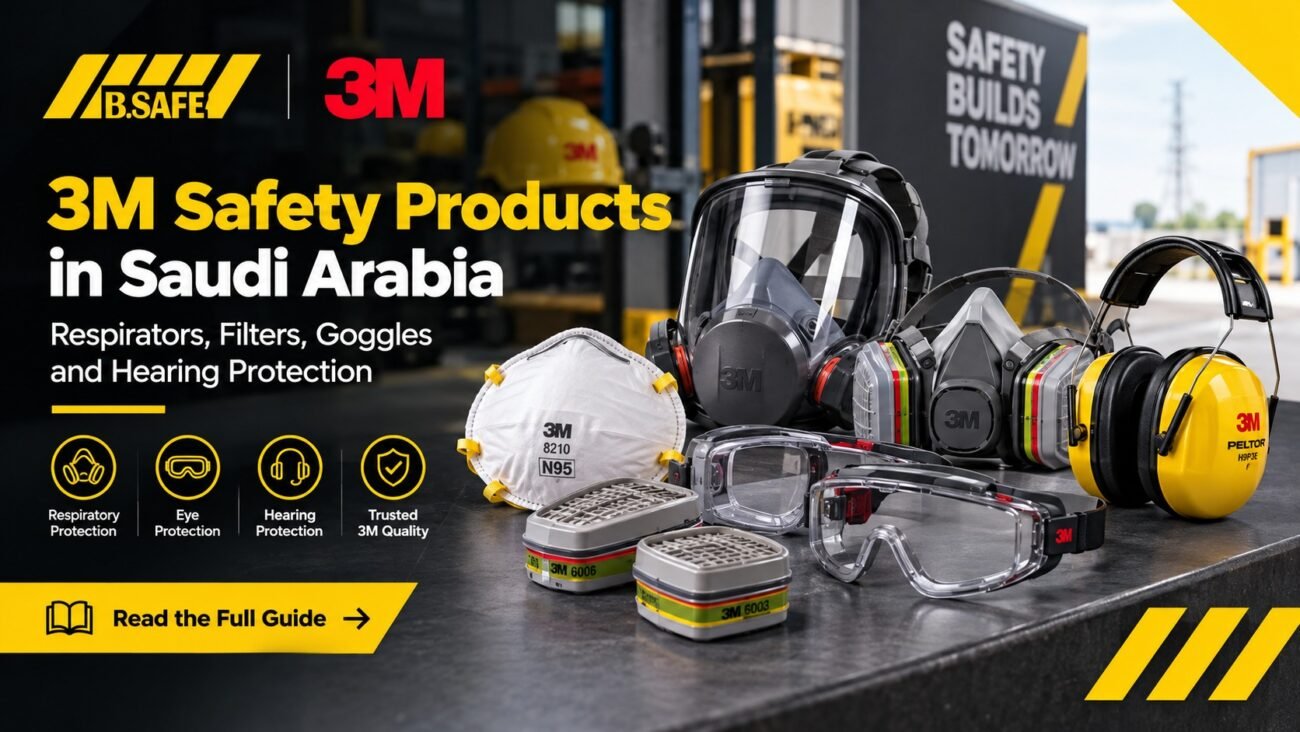
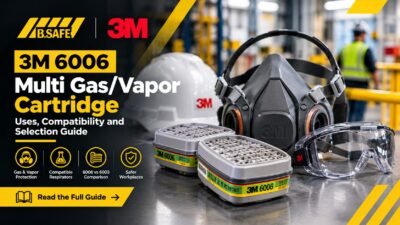 The 3M 6006 Multi Gas/Vapor Cartridge is designed to provide respiratory protection against specified gases and vapors when used with a compatible, approved respirator. It is one of the respiratory protection products available from B.SAFE, alongside the 3M 6003 cartridge and several reusable half-facepiece and full-facepiece respirators.
In this guide, we explain what the 3M 6006 cartridge is used for, how it compares with the 3M 6003, which factors matter when selecting a compatible respirator, and how to choose the right solution for your workplace.
What Is the 3M 6006 Multi Gas/Vapor Cartridge?
The 3M 6006 Multi Gas/Vapor Cartridge is a replacement cartridge designed for use with compatible 3M reusable respirators.
It contains an adsorbent material designed to help capture specified gases and vapors as air passes through the cartridge. Its intended protection depends on the contaminant, exposure conditions, the approved cartridge configuration, and the respirator with which it is used.
The 3M 6006 is intended for certain multi-gas and vapor applications. It should not be treated as a universal solution for every chemical, gas, or industrial atmosphere.
Before selecting a cartridge, employers should identify the workplace contaminants and consult the manufacturer’s documentation to confirm that the product is appropriate for the exposure.
What Is the 3M 6006 Cartridge Used For?
According to 3M’s product information, the 6006 cartridge is designed for specified gas and vapor hazards that can include:
- Certain organic vapors.
- Ammonia.
- Chlorine.
- Chlorine dioxide.
- Formaldehyde.
- Hydrogen chloride.
- Hydrogen fluoride.
- Hydrogen sulfide.
- Methylamine.
- Sulfur dioxide.
This list describes specified applications, not a guarantee that the cartridge is suitable for every concentration or workplace condition involving these substances. Always verify the exact chemical, its concentration, the applicable approval, and the manufacturer’s instructions before use.
Industries that may assess gas and vapor respiratory protection include chemical processing, industrial maintenance, manufacturing, and other operations where hazardous airborne contaminants may be present.
The correct choice must be based on a documented hazard assessment rather than the industry name alone.
To review the product, visit the 3M 6006 Multi Gas/Vapor Cartridge page at B.SAFE.
3M 6006 vs. 3M 6003: What Is the Difference?
The 3M 6006 and 3M 6003 are both gas and vapor cartridges, but their specified protection applications differ. The correct choice depends on which contaminants are present in the workplace.
3M 6006 Multi Gas/Vapor Cartridge
The 3M 6006 is designed for a range of specified gases and vapors, including certain organic vapors and the additional substances listed in the manufacturer’s product documentation.
It may be considered when a workplace hazard assessment identifies contaminants covered by the cartridge’s approved applications.
View the 3M 6006 Multi Gas/Vapor Cartridge for product details.
3M 6003 Organic Vapor/Acid Gas Cartridge
The 3M 6003 Organic Vapor/Acid Gas Cartridge is designed for certain organic vapors and specified acid gases.
Its listed applications include certain organic vapors, chlorine, hydrogen chloride, hydrogen fluoride, hydrogen sulfide, and sulfur dioxide, subject to the product’s approval and use limitations.
Which Cartridge Should You Choose?
Do not choose between the 6006 and 6003 simply because one has a broader-sounding product name. Instead, compare the actual workplace contaminants with the manufacturer’s approved protection information.
Consider these factors:
- Chemical identity: Determine the exact gas or vapor present.
- Exposure concentration: Confirm that the cartridge and respirator are suitable for the expected concentration.
- Respirator compatibility: Verify that the cartridge is approved for the specific facepiece.
- Exposure duration: Assess the expected exposure and establish a suitable replacement schedule.
- Workplace conditions: Consider humidity, temperature, workload, and other factors that may affect cartridge service life.
If the contaminant or exposure conditions are unknown, seek qualified occupational health and safety guidance before selecting respiratory protection.
Which 3M Respirators Can Be Used With the 6006 Cartridge?
The 3M 6006 uses a bayonet-style connection and is listed by 3M for use with compatible reusable respirators, including specified 3M 6000 Series half-facepiece and full-facepiece models.
B.SAFE lists several reusable respirators that may be relevant when evaluating a compatible configuration. Confirm the exact model and approval before pairing any cartridge with a facepiece.
3M Half-Facepiece Reusable Respirators
B.SAFE offers the following models:
- 3M 6200 Half-Facepiece Reusable Respirator – Medium
- 3M 6300 Half-Facepiece Reusable Respirator – Large
The 6200 is the medium-size model, while the 6300 is the large-size model. The selected facepiece must fit the wearer correctly and be used in accordance with the manufacturer’s instructions and applicable fit-testing requirements.
3M Full-Facepiece Reusable Respirators
B.SAFE also lists these full-facepiece models:
- 3M 6700 Full-Facepiece Reusable Respirator – Small
- 3M 6800 Full-Facepiece Reusable Respirator – Medium
- 3M 6900L Full-Facepiece Reusable Respirator – Large
A full-facepiece respirator covers the eyes, nose, and mouth. Its intended protection depends on the complete approved configuration, correct fit, and proper use.
When purchasing a cartridge and facepiece separately, confirm compatibility with the manufacturer’s documentation rather than relying on product names alone.
How to Select the Right Respirator Cartridge
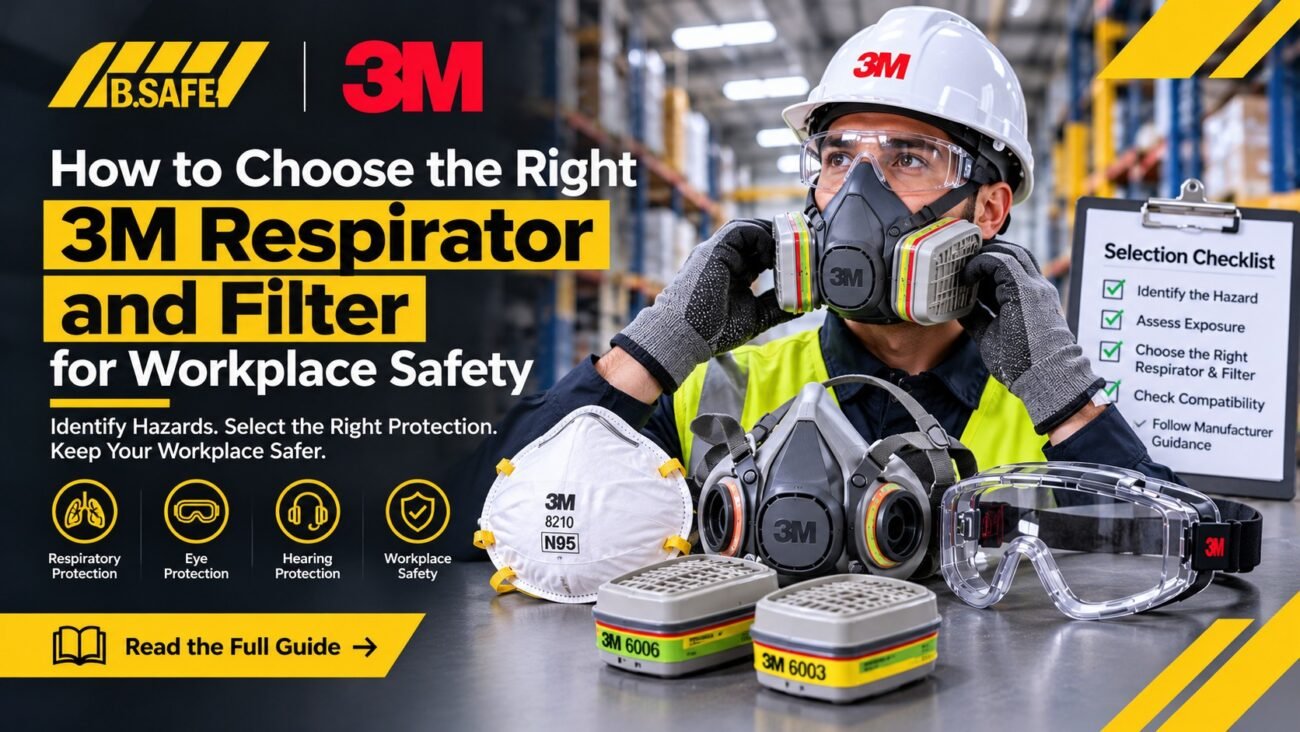
Selecting a gas and vapor cartridge should be part of a workplace respiratory protection program. The following steps can help organize the selection process.
1. Identify the Contaminant
Determine which chemical or airborne contaminant is present. Consult the relevant safety data sheet (SDS), workplace monitoring results, and hazard assessment.
A cartridge designed for one group of gases or vapors may not protect against another.
2. Assess the Exposure
Identify the expected concentration and duration of exposure. Also determine whether oxygen levels are adequate and whether the atmosphere could become immediately dangerous to life or health.
Air-purifying respirators with cartridges must not be used in oxygen-deficient or immediately dangerous to life or health (IDLH) atmospheres unless a specifically approved respiratory protection system and the applicable requirements permit the use.
3. Confirm Cartridge and Facepiece Compatibility
Check that the cartridge and respirator form an approved combination. For example, review the manufacturer’s instructions for the 3M 6006 cartridge and the selected 3M reusable half-facepiece respirator.
The medium-size 6200 model is one option listed by B.SAFE, but suitability still depends on fit, hazard assessment, and the approved configuration.
4. Establish a Cartridge Replacement Schedule
Cartridge service life depends on several factors, including the contaminant, concentration, humidity, temperature, breathing rate, and use conditions.
Employers should establish a documented change-out schedule using appropriate manufacturer guidance and exposure information. Odor or irritation must not be used as the sole indicator that a cartridge needs replacement.
5. Train Workers in Correct Use
Workers should understand how to inspect, fit, use, clean, store, and maintain their respirators. They should also know the limitations of the selected cartridge and when to leave an area if conditions change.
Common Mistakes When Using Gas and Vapor Cartridges
Even a suitable cartridge may not provide its intended protection if it is selected or used incorrectly. Avoid these common mistakes:
- Choosing a cartridge without identifying the specific contaminant.
- Assuming that all gas and vapor cartridges protect against the same substances.
- Using a cartridge with an incompatible facepiece.
- Ignoring fit-testing and facepiece seal requirements.
- Replacing cartridges without a documented schedule.
- Using an air-purifying respirator in an oxygen-deficient or IDLH atmosphere.
- Assuming that a gas and vapor cartridge automatically provides particulate protection.
- Failing to follow manufacturer instructions and workplace respiratory protection procedures.
A proper respiratory protection program should address product selection, training, fit, maintenance, and replacement procedures.
Where to Buy 3M 6006 and Other 3M Respiratory Protection Products
B.SAFE offers selected 3M respiratory protection products for workplaces evaluating reusable respirators and replacement cartridges.
You can explore the following products:
- 3M 6006 Multi Gas/Vapor Cartridge
- 3M 6003 Organic Vapor/Acid Gas Cartridge
- 3M 6200 Half-Facepiece Reusable Respirator – Medium
- 3M 6300 Half-Facepiece Reusable Respirator – Large
- 3M 6700 Full-Facepiece Reusable Respirator – Small
- 3M 6800 Full-Facepiece Reusable Respirator – Medium
- 3M 6900L Full-Facepiece Reusable Respirator – Large
You can also browse the complete selection of 3M products at B.SAFE to explore other workplace safety equipment.
Frequently Asked Questions About the 3M 6006 Cartridge
What is the 3M 6006 cartridge used for?
The 3M 6006 is a multi-gas and vapor cartridge designed for specified contaminants listed in the manufacturer’s product documentation. Its suitability depends on the exact chemical, exposure conditions, respirator configuration, and applicable approval.
What is the difference between the 3M 6006 and 6003?
The 6006 is intended for a range of specified gases and vapors, including additional substances such as ammonia, chlorine dioxide, formaldehyde, and methylamine in its listed applications. The 6003 is intended for certain organic vapors and specified acid gases. Always verify the current manufacturer’s documentation before selecting either cartridge.
Can the 3M 6006 be used with a 3M 6200 respirator?
The 3M 6006 is listed for compatible 3M 6000 Series half-facepiece respirators. The 3M 6200 is a 6000 Series half-facepiece model, but the exact cartridge and facepiece combination must still be confirmed against the applicable manufacturer documentation and approval.
Does the 3M 6006 protect against dust and particles?
The 6006 is a gas and vapor cartridge. It should not be assumed to provide particulate filtration on its own. If particulate protection is also required, verify an approved compatible filter combination for the specific hazard.
How often should a 3M 6006 cartridge be replaced?
There is no single replacement interval suitable for every workplace. Follow the manufacturer’s guidance and use a documented change-out schedule based on the chemical, concentration, environmental conditions, and expected service life.
Is the 3M 6006 suitable for every chemical?
No. The cartridge is intended for specified gases and vapors. It must not be selected for an unidentified chemical or an exposure outside its approved applications.
Where can I find the 3M 6006 cartridge in Saudi Arabia?
You can view the 3M 6006 Multi Gas/Vapor Cartridge at B.SAFE and browse the available 3M respiratory protection products through the B.SAFE website.
Conclusion
The 3M 6006 Multi Gas/Vapor Cartridge is a respiratory protection component designed for specified gas and vapor hazards. Choosing it correctly requires identifying the contaminants, assessing exposure conditions, verifying respirator compatibility, and following an appropriate cartridge replacement schedule.
B.SAFE lists the 3M 6006 alongside the 3M 6003 cartridge and several reusable half-facepiece and full-facepiece respirators, giving businesses options to evaluate for their workplace requirements.
Explore the 3M 6006 Multi Gas/Vapor Cartridge at B.SAFE and review the manufacturer’s guidance before selecting respiratory protection for your application.