Spill Pallet Guide | Secondary Spill Containment Solutions

Spill Pallets: Complete Guide to Secondary Spill Containment for Hazardous Chemicals
Protect Your Workplace, Employees, and Environment with the Right Spill Containment Solutions
Chemical leaks and hazardous liquid spills are among the most serious safety risks in industrial facilities, warehouses, laboratories, manufacturing plants, and oil & gas sites. Even a small leak from a drum or IBC container can contaminate the environment, damage equipment, create slip hazards, and lead to costly regulatory penalties.
 A Spill Pallet is one of the most effective secondary containment solutions available today. Designed to capture leaks before they spread, spill pallets help organizations safely store hazardous chemicals, oils, fuels, acids, and other industrial liquids while complying with environmental regulations.
Whether you’re managing chemical storage, handling oil drums, or operating a warehouse that stores hazardous substances, choosing the correct spill containment pallet is essential for maintaining workplace safety and protecting the environment.
What Is a Spill Pallet?
A Spill Pallet, also known as a Spill Containment Pallet or Secondary Containment Pallet, is a specially engineered platform designed to safely support chemical drums, containers, and Intermediate Bulk Containers (IBCs) while collecting accidental leaks and spills underneath.
Unlike ordinary pallets, spill pallets include an integrated containment sump capable of holding leaked liquids before they reach floors, drains, or surrounding work areas.
These systems are widely used wherever hazardous liquids are stored, transferred, or handled.
Typical liquids include:
- Industrial chemicals
- Corrosive acids
- Caustic solutions
- Petroleum products
- Hydraulic oils
- Diesel fuel
- Lubricants
- Cleaning chemicals
- Solvents
- Paints
- Agricultural chemicals
By preventing liquids from escaping into the workplace or environment, spill pallets reduce cleanup costs and significantly improve workplace safety.
Why Spill Pallets Are Essential
Many companies underestimate the consequences of a small chemical leak.
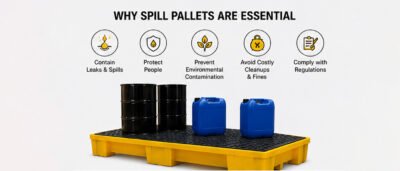 However, even minor spills may cause:
- Employee injuries
- Slip and fall accidents
- Fire hazards
- Environmental contamination
- Damage to flooring
- Equipment corrosion
- Expensive cleanup operations
- Regulatory fines
- Production downtime
Installing spill containment pallets creates a controlled storage area that captures leaks immediately before they become serious incidents.
Organizations that store hazardous materials should always consider spill containment part of their overall chemical safety strategy.
How Does a Spill Containment Pallet Work?
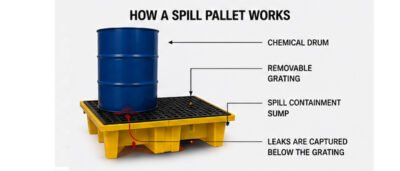 A spill pallet operates through a simple but highly effective design.
The chemical drum or container is placed on a removable grating positioned above a built-in sump.
If leakage occurs from a valve, fitting, or damaged container, the liquid flows through the grating into the containment reservoir below instead of reaching the floor.
This design allows operators to:
- Continue storing containers safely
- Prevent environmental contamination
- Reduce cleanup time
- Improve housekeeping
- Meet workplace safety requirements
Many industrial facilities combine spill pallets with Chemical Spill Kits for rapid emergency response.
Industries That Need Spill Pallets
Almost every industry that stores hazardous liquids can benefit from spill containment systems.
Common industries include:
Chemical Manufacturing
Chemical plants frequently store corrosive liquids, acids, and solvents that require secondary containment.
Oil & Gas Facilities
Fuel storage areas require spill pallets to contain leaks from drums, lubricants, and hydraulic fluids.
Warehouses
Distribution centers often store chemicals for extended periods before shipment.
Spill pallets help keep warehouse floors clean while reducing environmental risks.
Pharmaceutical Facilities
Medical manufacturers and laboratories use spill containment pallets to safely store chemical reagents.
Food Processing Plants
Cleaning chemicals, disinfectants, and maintenance fluids require secure storage to prevent contamination.
Laboratories
Research laboratories frequently handle hazardous chemicals that demand proper spill containment.
Automotive Workshops
Motor oils, brake fluids, lubricants, and fuels are commonly stored on spill pallets.
Manufacturing Plants
Industrial production facilities often use numerous chemicals throughout manufacturing processes.
Main Types of Spill Pallets
Different workplaces require different spill containment solutions.
Understanding the available options helps you choose the right equipment.
Single Drum Spill Pallets
Designed to safely contain one drum while providing compact storage in limited spaces.
Ideal for:
- Small workshops
- Maintenance rooms
- Laboratories
- Chemical storage cabinets
Two Drum Spill Pallets
Suitable for medium-sized chemical storage areas.
Provides additional storage while maintaining easy access.
Four Drum Spill Pallets
The most common solution for industrial facilities.
Supports four 200-liter drums while providing a large spill containment sump.
Ideal for:
- Factories
- Warehouses
- Chemical storage rooms
- Oil storage areas
Poly Spill Pallets vs Steel Spill Pallets
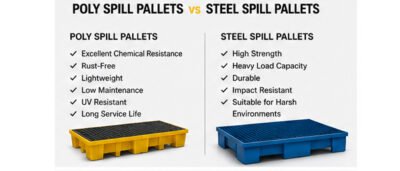 One of the most common questions safety professionals ask is whether to choose poly spill pallets or traditional steel spill containment systems.
Both options provide secondary spill containment, but each is designed for different working environments.
Poly Spill Pallets
Polyethylene spill pallets are highly resistant to corrosion, chemicals, acids, and harsh industrial liquids. They are lightweight, durable, and require very little maintenance.
Advantages include:
- Excellent chemical resistance
- Rust-free construction
- Lightweight and easy to move
- UV-resistant materials
- Long service life
- Suitable for corrosive chemicals
Steel Spill Pallets
Steel spill pallets are commonly used where mechanical strength and heavy load capacity are the primary requirements.
Advantages include:
- High structural strength
- Suitable for extremely heavy loads
- Excellent impact resistance
- Ideal for industrial environments with non-corrosive liquids
For facilities storing aggressive chemicals, poly spill pallets are generally the preferred solution because they offer superior chemical resistance and longer service life.
Why Secondary Spill Containment Matters
Secondary containment is not simply an optional safety measure—it is an essential layer of protection for facilities handling hazardous materials.
Without secondary containment, a leaking drum can quickly contaminate:
- Warehouse floors
- Drainage systems
- Soil
- Groundwater
- Nearby equipment
- Production areas
Using a properly sized spill containment pallet minimizes environmental risks while helping organizations comply with workplace safety regulations.
Secondary containment is particularly important when storing:
- Acids
- Bases
- Solvents
- Oils
- Fuels
- Cleaning chemicals
- Corrosive liquids
Spill Pallets for Oil Storage
Oil storage presents unique spill risks because leaked petroleum products can spread rapidly across floors and enter drainage systems.
A properly selected oil spill pallet helps contain leaks from:
- Engine oil
- Hydraulic oil
- Lubricants
- Diesel
- Fuel additives
- Industrial oils
Using spill pallets together with an Oil Spill Kit creates a complete spill response system that allows personnel to contain, absorb, and safely dispose of leaked liquids.
Spill Pallets for Chemical Storage
Chemical storage areas often contain multiple incompatible substances.
Without proper containment, even a small leak can create dangerous reactions between chemicals.
Chemical spill pallets provide protection for storing:
- Acids
- Alkalis
- Solvents
- Laboratory chemicals
- Industrial cleaners
- Process chemicals
- Hazardous liquids
When combined with a Chemical Spill Kit, facilities can respond quickly while minimizing exposure to workers.
Choosing the Right Spill Pallet
Selecting the appropriate spill pallet depends on several important factors.
1. Number of Containers
Determine whether you need containment for:
- One drum
- Two drums
- Four drums
- Multiple IBC containers
2. Type of Liquid
Different liquids require different containment solutions.
Consider:
- Chemical compatibility
- Corrosiveness
- Viscosity
- Flash point
- Environmental hazards
3. Storage Capacity
The containment sump should be capable of safely holding leaked liquids according to applicable regulations.
Larger storage areas often require larger containment capacities.
4. Material
Polyethylene is recommended for:
- Acids
- Corrosives
- Chemical storage
Steel may be suitable for:
- Heavy industrial loads
- Mechanical workshops
- Non-corrosive materials
5. Indoor or Outdoor Installation
Outdoor spill pallets should provide:
- UV resistance
- Weather resistance
- Rainwater management
- Long-term durability
Workplace Regulations
Many environmental and workplace safety regulations require facilities to prevent hazardous liquids from reaching the environment.
Secondary containment systems help organizations comply with industry requirements while reducing environmental liability.
Well-designed spill containment systems support compliance with internationally recognized standards including:
- EPA spill prevention guidelines
- SPCC requirements
- Environmental protection regulations
- Workplace chemical safety programs
- Hazardous material storage best practices
Best Practices for Spill Containment
To maximize workplace safety, companies should follow several best practices.
 Inspect Spill Pallets Regularly
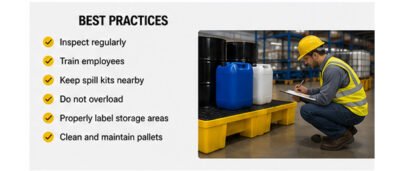 Inspect Spill Pallets Regularly
Check for:
- Cracks
- Damage
- Chemical degradation
- Overflow
- Blocked drainage
Train Employees
Workers should understand:
- Spill response procedures
- Emergency reporting
- Chemical handling
- Safe drum storage
Keep Spill Kits Nearby
Every chemical storage area should include an appropriate Spill Kit for emergency response.
Avoid Overloading
Never exceed the manufacturer’s load capacity.
Proper weight distribution extends equipment life and improves workplace safety.
Label Storage Areas
Clearly identify:
- Hazardous chemicals
- Oil storage
- Corrosive materials
- Emergency response equipment
Common Applications
Spill containment pallets are widely used in:
- Chemical plants
- Oil & Gas facilities
- Warehouses
- Manufacturing plants
- Laboratories
- Pharmaceutical companies
- Universities
- Water treatment plants
- Mining operations
- Power generation facilities
- Marine terminals
- Aviation maintenance
- Automotive workshops
- Food processing facilities
- Waste management centers
Mistakes to Avoid
Many organizations reduce the effectiveness of spill containment by making avoidable mistakes.
Avoid:
- Using damaged pallets
- Mixing incompatible chemicals
- Ignoring routine inspections
- Exceeding weight limits
- Storing drums outside the containment area
- Delaying spill cleanup
- Using the wrong absorbent material
- Neglecting employee training
How to Build a Complete Spill Response System
While a Spill Pallet provides effective secondary containment, it should always be part of a comprehensive spill response strategy. Combining spill containment pallets with absorbents, emergency equipment, and employee training significantly reduces the impact of hazardous spills.
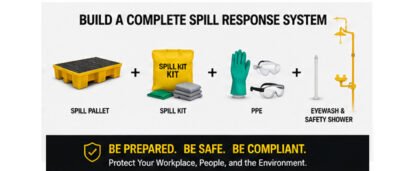 A complete spill response system typically includes:
- Spill Containment Pallets
- Chemical Spill Kits
- Oil Spill Kits
- Universal Absorbents
- Hazardous Chemical Absorbents
- Emergency Shower & Eyewash Stations
- Personal Protective Equipment (PPE)
- Chemical Resistant Gloves
- Chemical Suits
- Hazardous Waste Containers
Using these solutions together ensures that leaks are contained immediately, hazardous liquids are safely absorbed, and workers are protected during spill cleanup operations.
Why Choose High-Quality Spill Containment Equipment?
Investing in high-quality spill containment products offers long-term operational and financial benefits.
Premium spill pallets are designed to provide:
- Long service life
- Excellent chemical resistance
- High load capacity
- Reliable secondary containment
- Easy cleaning and maintenance
- Enhanced workplace safety
- Compliance with environmental regulations
Choosing quality equipment reduces replacement costs while minimizing the risk of environmental incidents and workplace accidents.
Complete Spill Control Solutions for Every Workplace
Different workplaces require different spill control products depending on the liquids they handle.
For example:
Chemical Storage Areas
Recommended products:
- Poly Spill Pallets
- Chemical Spill Kits
- Hazmat Absorbents
- Emergency Shower & Eyewash Stations
Oil Storage Facilities
Recommended products:
- Oil Spill Pallets
- Oil Spill Kits
- Oil Absorbent Pads
- Oil Absorbent Rolls
- Oil Absorbent Socks
Warehouses
Recommended products:
- Drum Spill Pallets
- Universal Absorbents
- Spill Kits
- Hazardous Material Storage Equipment
Laboratories
Recommended products:
- Chemical Spill Kits
- Poly Spill Pallets
- Emergency Eyewash Stations
- Chemical Storage Cabinets
Manufacturing Plants
Recommended products:
- Spill Containment Pallets
- Industrial Absorbents
- Hazmat Spill Kits
- Emergency Safety Equipment
Frequently Asked Questions (FAQ)
What is a Spill Pallet used for?
A spill pallet is used to provide secondary containment for chemical drums, oil containers, and hazardous liquid storage, preventing accidental leaks from contaminating the workplace or environment.
What liquids can be stored on a spill pallet?
Spill pallets are suitable for storing:
- Chemicals
- Acids
- Alkalis
- Solvents
- Oils
- Diesel
- Lubricants
- Cleaning chemicals
- Hazardous liquids
What is the difference between a Spill Pallet and a Spill Kit?
A Spill Pallet is designed to prevent spills from spreading by containing leaks beneath stored containers.
A Spill Kit is used after a spill occurs to absorb, contain, and safely clean leaked liquids.
Are Spill Pallets required by environmental regulations?
Many environmental and workplace safety regulations require secondary containment when storing hazardous liquids to reduce environmental contamination and improve workplace safety.
Can Spill Pallets be used outdoors?
Yes. Polyethylene spill pallets are suitable for both indoor and outdoor use because they resist corrosion, chemicals, and weather exposure.
How often should Spill Pallets be inspected?
Regular inspections should be performed to ensure the pallet remains free from damage, cracks, excessive contamination, or accumulated liquids.
Can Spill Pallets be used with IBC containers?
Yes.
Large IBC Spill Containment Pallets are specifically designed to safely support Intermediate Bulk Containers while providing sufficient containment capacity.
What materials are Spill Pallets made from?
Most industrial spill pallets are manufactured from high-density polyethylene (HDPE), offering excellent resistance to chemicals, corrosion, and impact.
Why should Spill Pallets be combined with Spill Kits?
While spill pallets prevent leaks from spreading, spill kits allow workers to quickly absorb and remove spilled liquids, creating a complete spill response system.
Which industries commonly use Spill Pallets?
They are widely used in:
- Chemical plants
- Oil & Gas
- Manufacturing
- Warehouses
- Laboratories
- Pharmaceutical facilities
- Mining
- Food processing
- Water treatment
- Logistics centers
Related Products
To build a complete spill management system, consider combining spill containment pallets with:
- Poly Spill Containment Pallets
- IBC Spill Containment Pallets
- Chemical Spill Kits
- Oil Spill Kits
- Universal Spill Kits
- Hazmat Absorbents
- Oil Absorbent Pads
- Oil Absorbent Rolls
- Universal Absorbents
- Emergency Shower & Eyewash Stations
Following internationally recognized safety guidelines is essential for reducing fall-related accidents in construction and industrial environments. In addition to using certified Safety Nets, Fall Arrest Systems, and other protective equipment, employers should regularly review the latest HSE Working at Height Guidance to ensure compliance with best practices for working safely at height. Combining quality safety equipment with proper training and regulatory guidance creates a safer workplace and helps protect workers from serious injuries.
Conclusion
Effective spill management begins long before a leak occurs. Investing in high-quality Spill Pallets, Chemical Spill Kits, Oil Spill Kits, and other spill control equipment helps organizations protect employees, maintain regulatory compliance, and prevent costly environmental incidents.
Whether you manage a warehouse, laboratory, manufacturing plant, or chemical storage facility, implementing a complete spill containment strategy is one of the smartest investments you can make for workplace safety.
Explore Bsafe’s comprehensive range of spill containment products, absorbents, emergency response equipment, and industrial safety solutions to create a safer and more compliant working environment.